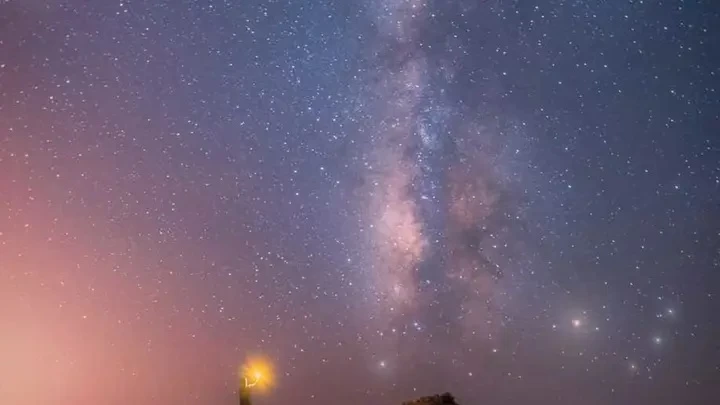
تشهد سماء أكتوبر 2026 سلسلة من الظواهر الفلكية اللافتة؛ تشمل وصول كوكب زحل إلى حالة التقابل مع الشمس، واقتراب القمر من المريخ والمشتري، وعبور المريخ أمام عنقود النثرة، إلى جانب نشاط زخة شهب الجباريات المرتبطة ببقايا مذنب هالي، مع فرص واسعة لرصد النجوم والمجرات من المواقع المظلمة البعيدة عن التلوث الضوئي.
أوضح رئيس الجمعية الفلكية بجدة المهندس ماجد أبو زاهرة أن زحل يبلغ حالة التقابل يوم 4 أكتوبر، فيشرق مع غروب الشمس ويبقى ظاهرًا طوال الليل، في واحدة من أفضل فرص السنة لرصده، إذ تبلغ المسافة بينه وبين الأرض نحو 1.26 مليار كيلومتر، ويمكن رؤيته بالعين المجردة جرمًا لامعًا مائلًا إلى الأصفر، فيما تكشف التلسكوبات الصغيرة حلقاته وبعض أقماره.
وأضاف أن المريخ والمشتري يواصلان الظهور في سماء ما قبل الفجر، ويقترب القمر من المريخ يوم 5 أكتوبر، ثم من المشتري يوم 6 أكتوبر، مع حدوث احتجاب قمري للمشتري في بعض مناطق العالم، بينما تشاهد مناطق أخرى اقترانًا قريبًا بحسب موقع الراصد.
ويظهر المريخ وسط نجوم عنقود النثرة خلال الفترة من 11 إلى 13 أكتوبر، في مشهد يمكن متابعته بالمنظار أو التلسكوب الصغير، فيما يبدأ الزهرة بالظهور بوضوح في سماء الفجر قرب نهاية الشهر، منخفضًا فوق الأفق الشرقي، مع التنبيه إلى الاكتفاء برصده بالعين المجردة ما دامت الشمس تحت الأفق.
وفي ما يتعلق بالشُّهب، تنشط زخة التنينيات بين 6 و10 أكتوبر وتبلغ ذروتها ليلة 8 و9 أكتوبر بمعدل يقارب خمسة شهب في الساعة، فيما تستمر الثوريات الجنوبية بنشاطها خلال أكتوبر، وتبلغ الجباريات ذروتها ليلة 21- 22 أكتوبر بمعدل نظري يصل إلى 20 شهابًا في الساعة، رغم تأثير ضوء القمر في رؤية الشهب الخافتة.
وتتيح ليالي أكتوبر مشاهدة كوكبة الفرس الأعظم ومربعها النجمي، ومجرة أندروميدا التي تظهر كتوهج ضبابي خافت، إلى جانب عنقود الثريا المعروف بـ(الشقيقات السبع)، فيما يكتمل القمر بدرًا يوم 26 أكتوبر في ما يعرف تقليديًا بـ(قمر الصياد)، وهو اسم تراثي لا يرتبط بظاهرة فيزيائية خاصة.
وأكد أبو زاهرة أن معظم هذه الظواهر يمكن رصدها بالعين المجردة من المواقع المظلمة، مع منح العين نحو 20 دقيقة للتكيف مع الظلام.
أكتوبر يقدّم عرضًا سماويًا يجمع الكواكب والمجرات واقترانات القمر
The sky in October 2026 witnesses a series of remarkable astronomical phenomena; these include the arrival of Saturn at opposition with the sun, the moon's approach to Mars and Jupiter, and Mars's transit in front of the Pleiades cluster, along with the active Orionids meteor shower associated with the remnants of Halley's comet, providing ample opportunities to observe stars and galaxies from dark locations away from light pollution.
The head of the Astronomical Society in Jeddah, Engineer Majid Abu Zahra, explained that Saturn reaches opposition on October 4, rising with sunset and remaining visible throughout the night, representing one of the best opportunities of the year for observation, as the distance between it and Earth is about 1.26 billion kilometers. It can be seen with the naked eye as a bright object leaning towards yellow, while small telescopes reveal its rings and some of its moons.
He added that Mars and Jupiter continue to appear in the pre-dawn sky, with the moon approaching Mars on October 5, and then Jupiter on October 6, with a lunar occultation of Jupiter occurring in some parts of the world, while other areas will see a close conjunction depending on the observer's location.
Mars will appear among the stars of the Pleiades cluster from October 11 to 13, in a scene that can be followed with binoculars or a small telescope, while Venus begins to appear clearly in the dawn sky near the end of the month, low above the eastern horizon, with a note to observe it with the naked eye as long as the sun is below the horizon.
Regarding the meteors, the Draconids meteor shower will be active between October 6 and 10, peaking on the night of October 8 and 9 with a rate of about five meteors per hour, while the Southern Taurids continue their activity throughout October, and the Orionids peak on the night of October 21-22 with a theoretical rate of up to 20 meteors per hour, despite the moonlight affecting the visibility of faint meteors.
The nights of October allow for the observation of the constellation of Orion and its stellar square, the Andromeda galaxy which appears as a faint hazy glow, along with the Pleiades cluster known as the "Seven Sisters." The full moon occurs on October 26, traditionally known as the "Hunter's Moon," a heritage name not associated with a specific physical phenomenon.
Abu Zahra confirmed that most of these phenomena can be observed with the naked eye from dark locations, allowing the eyes about 20 minutes to adapt to the darkness.
October presents a celestial display that brings together planets, galaxies, and lunar conjunctions.