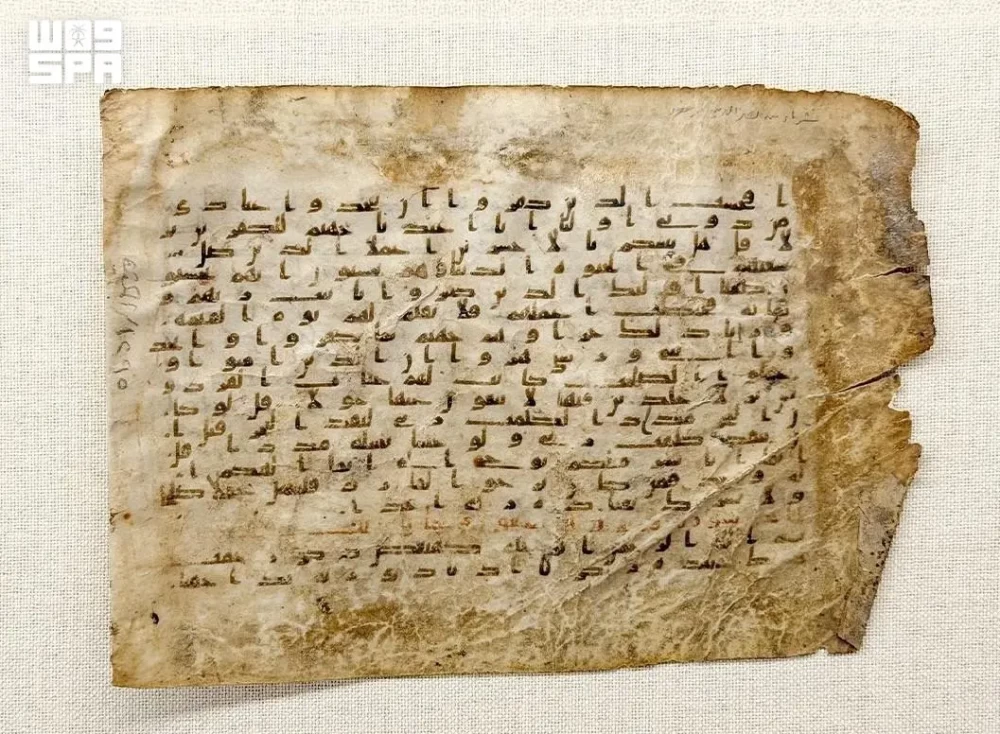
يعرض متحف القرآن الكريم بحي حراء الثقافي في مكة مخطوطة قرآنية نادرة، تتمثّل في ورقة من المصحف الشريف يعود تاريخها إلى القرن الثالث الهجري الموافق للقرن التاسع الميلادي، في قطعة تاريخية توثق جانباً من المراحل المبكرة لكتابة المصحف الشريف والعناية بكتاب الله عبر العصور.
وتضم المخطوطة المعروضة جزءاً من سورة مريم، كُتب على الرِّق بمداد أحمر، وخلا النص من الشكل والنقط، وهي من السمات التي عُرفت بها المراحل الأولى من كتابة المصاحف، مما يمنح القطعة قيمة تاريخية ومعرفية، وتكتسب المخطوطة أهمية خاصة بما تحمله من خصائص كتابية ومادية تعكس أساليب نسخ المصاحف في تلك الحقبة؛ إذ كان الرِّق من المواد الرئيسة المستخدمة في تدوين النصوص والمصاحف، فيما تكشف طريقة الكتابة الخالية من النقط والشكل عن مرحلة مبكرة من تاريخ الكتابة القرآنية، قبل تطور وسائل الضبط والإعجام في المصاحف خلال العصور اللاحقة.
وتُحفظ هذه القطعة القرآنية النادرة في مكتبة الملك فهد الوطنية، فيما يتيح عرضها في متحف القرآن الكريم لزواره فرصة الاطلاع على نموذج تاريخي يُجسّد مسيرة العناية بالمصحف الشريف، ويبرز ما تمثله المخطوطات القرآنية من قيمة علمية وحضارية في توثيق تاريخ كتابة كتاب الله وحفظه.
ويُعد متحف القرآن الكريم أحد المرافق الرئيسة في حي حراء الثقافي بمكة المكرمة، ويقدم تجربة معرفية وتفاعلية تسلط الضوء على تاريخ القرآن الكريم ومسيرة تدوين المصحف الشريف ومظاهر العناية به عبر العصور، من خلال مجموعة من المخطوطات النادرة والمصاحف التاريخية والعروض البصرية والتقنيات الحديثة.
ويأتي المتحف ضمن منظومة حي حراء الثقافي الواقعة أسفل جبل حراء، بما يمنح تجربة الزائر بعداً معرفياً يرتبط بمكان نزول الوحي، ويسهم في إثراء التجربة الثقافية والدينية لزوار مكة المكرمة وضيوف الرحمن، والتعريف بالإرث القرآني والحضاري بأساليب عرض حديثة.
The Quran Museum in the Cultural District of Hira in Mecca displays a rare Quranic manuscript, represented by a page from the Holy Quran dating back to the 3rd century AH, corresponding to the 9th century CE. This historical piece documents an aspect of the early stages of writing the Holy Quran and the care given to the Book of God throughout the ages.
The displayed manuscript includes a part of Surah Maryam, written on parchment with red ink, and the text lacks diacritics and vowel markings, which are characteristics known from the early stages of Quranic writing. This grants the piece historical and intellectual value, and the manuscript gains special importance due to its written and material characteristics that reflect the methods of copying the Qurans in that era; parchment was one of the main materials used for documenting texts and Qurans, while the writing style devoid of diacritics and markings reveals an early stage in the history of Quranic writing, before the development of methods for diacritical marking in later Qurans.
This rare Quranic piece is preserved in the King Fahd National Library, while its display at the Quran Museum offers visitors the opportunity to view a historical model that embodies the care for the Holy Quran, highlighting what Quranic manuscripts represent in terms of scientific and civilizational value in documenting the history of writing and preserving the Book of God.
The Quran Museum is considered one of the main facilities in the Cultural District of Hira in Mecca, providing an informative and interactive experience that sheds light on the history of the Holy Quran, the journey of documenting the Holy Quran, and the aspects of care for it throughout the ages, through a collection of rare manuscripts, historical Qurans, visual displays, and modern technologies.
The museum is part of the Cultural District of Hira located at the foot of Mount Hira, which gives visitors an intellectual experience linked to the place of revelation, contributing to enriching the cultural and religious experience for visitors to Mecca and the guests of the Merciful, and introducing the Quranic and civilizational heritage through modern display methods.