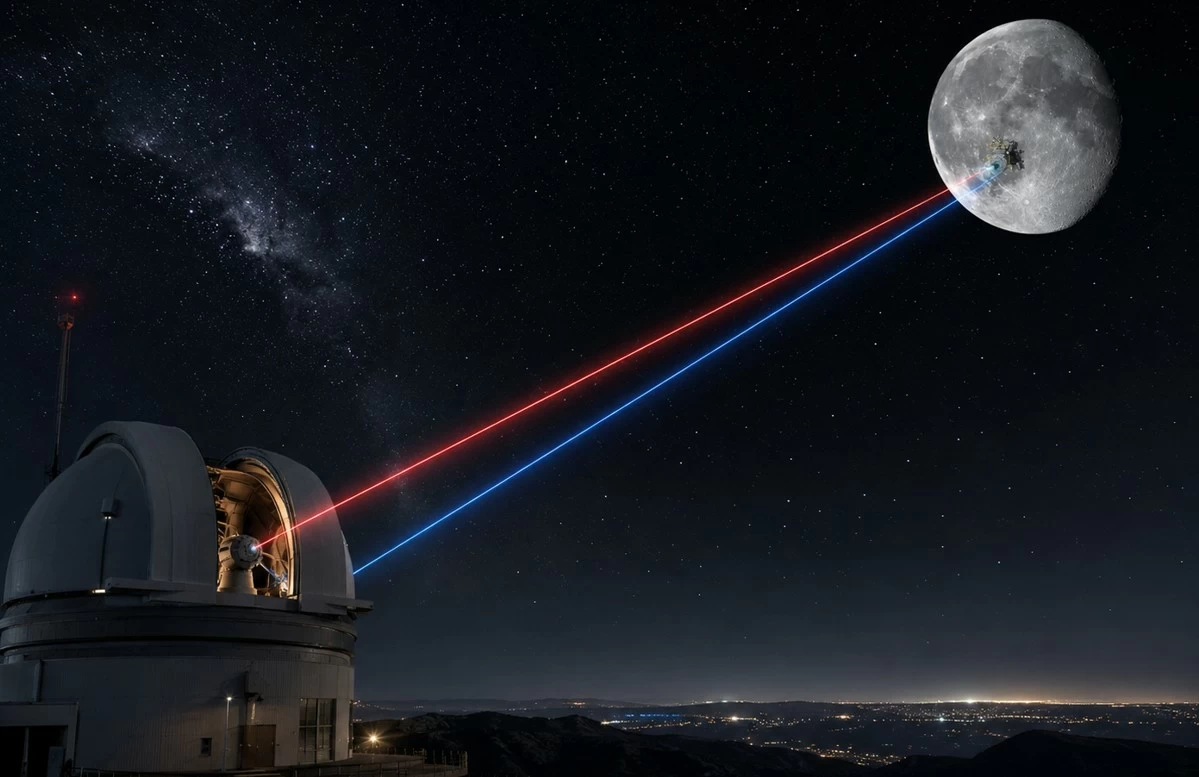
أعلن مركز التكنولوجيا والهندسة للاستخدام الفضائي التابع للأكاديمية الصينية للعلوم نجاح باحثين صينيين في إجراء اختبار لاتصالات ليزرية ثنائية الاتجاه بين الأرض والقمر، بعد أكثر من عام من الاختبارات في المدار.
وذكرت وكالة الأنباء الصينية «شينخوا»، أمس (السبت)، أن الفريق تمكن من إنشاء رابط اتصال ليزري ثنائي الاتجاه عبر مسافة تتجاوز 400 ألف كيلومتر، في خطوة توسع نطاق الاتصالات الفضائية بالليزر في الصين من المدار القريب من الأرض إلى الفضاء السحيق.
وأوضح المركز أن الاتصالات الليزرية تتميز عن الاتصالات التقليدية بالموجات الدقيقة بسرعات أعلى ونطاق ترددي أوسع، إلى جانب صغر حجم المعدات وخفة وزنها وارتفاع مستوى الأمان، مشيراً إلى أن تحقيق الاتصال بين الأرض والقمر يتطلب تجاوز تحديات تتعلق بدقة محاذاة شعاع الليزر، وضعف الإشارة، وسرعة نقل البيانات.
وقال رئيس فريق الاختبار يانغ لي إن الفريق طور تقنيات متقدمة للتتبع والمحاذاة وتصحيح تأثيرات المدار والغلاف الجوي، إضافة إلى تقنيات للكشف عالي السرعة عن الفوتونات المفردة واستخراج إشارات الاتصال من الضوضاء الخلفية.
وحقق الاختبار معدلات اتصال ثنائية الاتجاه بلغت 1.25 ميغابت في الثانية للرابط الصاعد، و100 ميغابت في الثانية للرابط الهابط.
ومن شأن هذه التقنية مستقبلاً توفير قناة عالية السرعة لنقل كميات كبيرة من الصور والبيانات العلمية التي ستنتجها المهمات القمرية، خصوصاً في ظل خطط استكشاف القمر وإنشاء محطة أبحاث قمرية.
The Space Technology and Engineering Center of the Chinese Academy of Sciences announced the success of Chinese researchers in conducting a bidirectional laser communication test between the Earth and the Moon, after more than a year of testing in orbit.
The Chinese news agency "Xinhua" reported yesterday (Saturday) that the team was able to establish a bidirectional laser communication link over a distance exceeding 400,000 kilometers, in a step that expands the scope of laser space communications in China from low Earth orbit to deep space.
The center explained that laser communications are characterized, compared to traditional microwave communications, by higher speeds and a wider bandwidth, along with smaller and lighter equipment and a higher level of security, noting that achieving communication between the Earth and the Moon requires overcoming challenges related to the precise alignment of the laser beam, signal attenuation, and data transmission speed.
Team leader Yang Li stated that the team developed advanced techniques for tracking, alignment, and correcting the effects of orbit and the atmosphere, in addition to high-speed detection techniques for single photons and extracting communication signals from background noise.
The test achieved bidirectional communication rates of 1.25 megabits per second for the uplink and 100 megabits per second for the downlink.
This technology is expected to provide a high-speed channel in the future for transmitting large amounts of images and scientific data generated by lunar missions, especially in light of plans for lunar exploration and the establishment of a lunar research station.