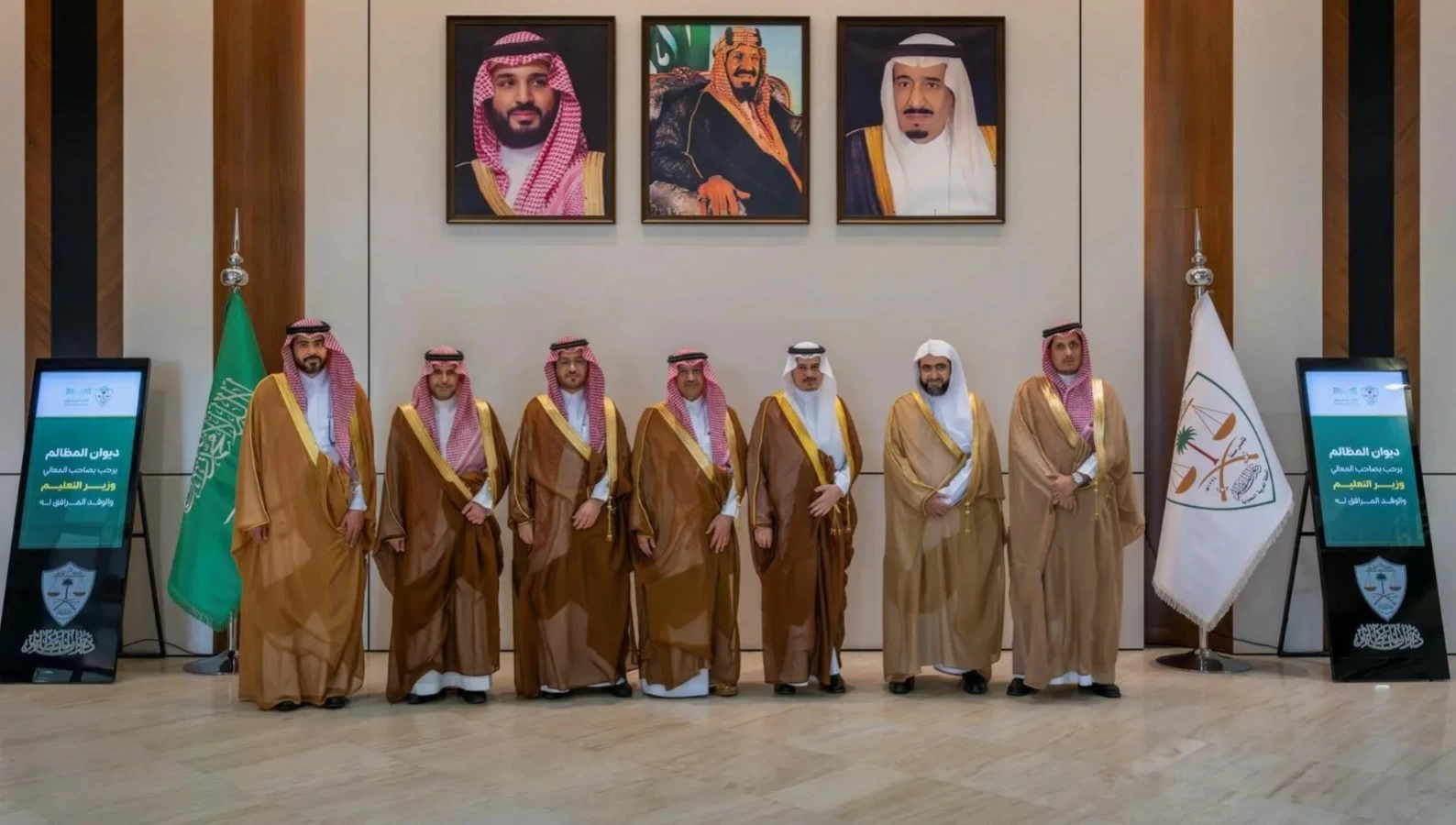
التقى رئيس ديوان المظالم رئيس مجلس القضاء الإداري الدكتور علي بن أحمد الأحيدب، اليوم (الاربعاء)، وزير التعليم يوسف بن عبدالله البنيان والوفد المرافق له؛ لبحث سبل التعاون المشترك بين ديوان المظالم ووزارة التعليم في المجالات ذات الاهتمام المشترك.
وأكد الأحيدب أهمية هذه الزيارة وما تمثله من فرصة لتعزيز التعاون في الجوانب العلمية والعملية، وتبادل المعرفة والخبرات بما يُسهم في إثراء المعرفة وتعظيم الأثر، واستعرض ما يشهده القضاء الإداري وعلومه القانونية من نقلة نوعية في التحول الرقمي، واستثمار التقنيات الحديثة والذكاء الاصطناعي في نقل المعرفة.
من جانبه أشاد البنيان بما حققه ديوان المظالم من تطور تنظيمي ورقمي، وما تتضمنه منظومة ديوان المظالم 2030 للريادة وتعظيم الأثر من مستهدفات طموحة لتعزيز كفاءة القضاء الإداري وتيسير إجراءاته وخدمة المتقاضين، إلى جانب جهود الديوان في تدوين المبادئ القضائية وإتاحتها للاستفادة منها في المجالات العلمية والبحثية.
The President of the Board of Grievances, Chairman of the Administrative Judiciary Council, Dr. Ali bin Ahmed Al-Ahaidib, met today (Wednesday) with the Minister of Education, Yusuf bin Abdullah Al-Bunyan, and his accompanying delegation to discuss ways of mutual cooperation between the Board of Grievances and the Ministry of Education in areas of common interest.
Al-Ahaidib emphasized the importance of this visit and what it represents as an opportunity to enhance cooperation in scientific and practical aspects, and to exchange knowledge and experiences in a way that contributes to enriching knowledge and maximizing impact. He reviewed the qualitative leap that administrative judiciary and its legal sciences are witnessing in digital transformation, and the investment in modern technologies and artificial intelligence in knowledge transfer.
For his part, Al-Bunyan praised the organizational and digital development achieved by the Board of Grievances, and what the Board of Grievances 2030 system includes for leadership and maximizing impact, which consists of ambitious targets to enhance the efficiency of the administrative judiciary and facilitate its procedures and serve litigants, in addition to the Board's efforts in documenting judicial principles and making them available for use in scientific and research fields.