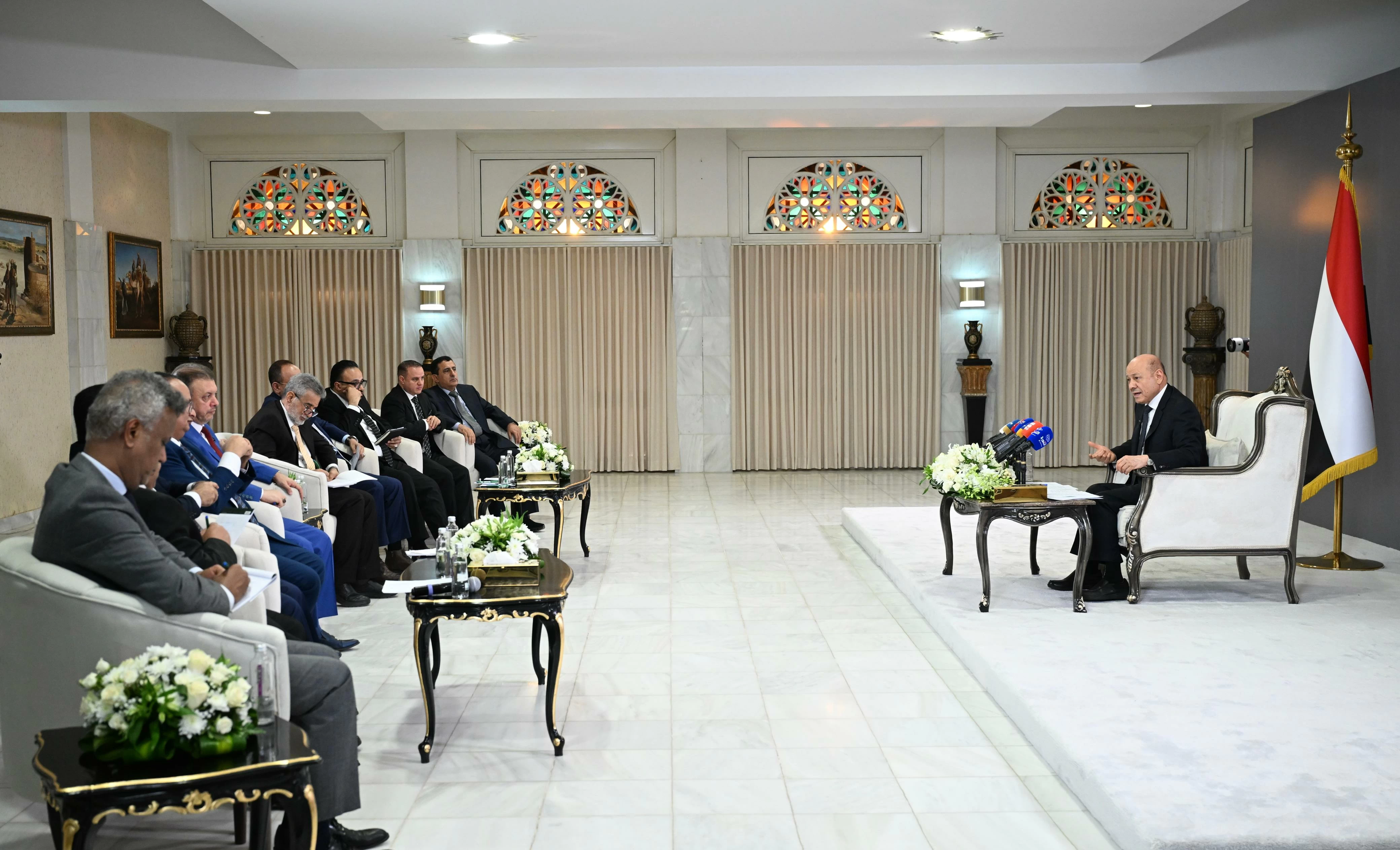
أكد رئيس مجلس القيادة الرئاسي القائد الأعلى للقوات المسلحة اليمنية الرئيس الدكتور رشاد العليمي، أن الدولة اليمنية باتت اليوم أكثر قدرة وتماسكاً واستعداداً لحماية مواطنيها ومؤسساتها ومصالحها السيادية، بعد سنوات من العمل على توحيد القرار السياسي والعسكري والأمني والاقتصادي، وإعادة بناء مؤسسات الدولة، وتغيير المقاربة الإقليمية والدولية تجاه المليشيات الحوثية الإرهابية.
وقال العليمي في لقاء موسع مع قيادات وممثلي المؤسسات الإعلامية الرسمية والمحلية، إن إستراتيجية الدولة واضحة في استعادة مؤسساتها وإسقاط الانقلاب، مؤكداً أن توقيت وخطوات تحقيق هذا الهدف تترك للقيادة، وأن على اليمنيين أن يثقوا بدولتهم ومؤسساتهم.
وحدة داخلية للقوى السياسية والعسكرية
ولفت إلى أن موقف الدولة اليوم مختلف تماماً، عن المراحل السابقة، في ظل وحدة داخلية وجبهة سياسية وعسكرية متماسكة، والتفاف شعبي متنامٍ، وتحول إقليمي ودولي جوهري في فهم طبيعة التهديد الحوثي. وأضاف: لن يكون هناك بعد اليوم أي عمل تقوم به المليشيا الحوثية دون رد، أو ردع متكامل، موضحاً أن «الموقف اليوم تغير». وشدد بالقول: «لدينا قوات مسلحة، تخضع لغرفة عمليات واحدة، والقائد الأعلى للقوات المسلحة، واللجنة العسكرية العليا، وهذه القوة جاهزة للقيام بدورها في الدفاع عن اليمنيين، ومنشآتهم، ومؤسساتهم الوطنية، والهدف الإستراتيجي بالنسبة لنا هو العمل على استعادة مؤسسات الدولة وإسقاط الانقلاب». ولفت إلى أن التجربة خلال السنوات العشر الماضية مع مليشيا الحوثيين، أثبتت دائماً أن الهدنة بالنسبة لها تمثل مرحلة إعادة بناء لقدراتها العسكرية والعودة إلى الحرب من جديد، مبيناً أن الحكومة باتت مدركة جيداً بأن هذه المليشيا هي مشروع حرب ومشروع تدمير، وليست مشروع سلام.
تجربة مجلس القيادة الرئاسي
واستعرض العليمي تجربة مجلس القيادة الرئاسي خلال السنوات الأربع الماضية في سياق التحول من دولة أنهكتها الحرب والانقسامات وتراجع الموارد، إلى مؤسسات تستعيد تدريجياً قدرتها على العمل، مؤكداً أن الهدف الإستراتيجي من تشكيل مجلس القيادة الرئاسي كان توحيد المكونات السياسية والعسكرية لمواجهة المليشيا الحوثية، وإسقاط الانقلاب واستعادة مؤسسات الدولة. وأشار إلى أن هناك جهوداً كبيرة بذلت خلال هذه الفترة لتوحيد القرار السياسي والأمني والعسكري والاقتصادي، مؤكداً أن القوات المسلحة تعمل اليوم ضمن منظومة قيادة وعمليات موحدة، وباتت جاهزة للقيام بدورها في الدفاع عن اليمنيين ومنشآتهم ومؤسساتهم الوطنية. وشدد بالقول: «الحكومة ليست مع هدنة جديدة تعيد إنتاج التجارب السابقة، وإنما مع سلام دائم ومستدام يقوم على وجود دولة تحتكر السلاح والسيادة، ودستور يحكم الجميع، ومساواة كاملة بين المواطنين، ومؤسسات يكون مسؤولوها موظفين لدى الشعب لا سادة عليه».
تغير موقف المجتمع الدولي تجاه الحوثي
ورأى العلمي أن أحد أهم التحولات خلال السنوات الأربع الماضية تمثل في تغير نظرة المجتمع الدولي إلى الأزمة اليمنية، بعد أن ظلت لسنوات محكومة بسردية تعتبر ما يجري خلافاً سياسياً يمكن احتواء المليشيا الحوثية في إطاره بالحوافز والتسويات التقليدية، موضحاً أن الدولة تعاملت بمسؤولية مع الهدنة، وقدمت تنازلات كثيرة تحت ضغوط دولية شديدة، إلا أن سلوك المليشيا، بما في ذلك استهداف المنشآت النفطية والملاحة الدولية وتهديد أمن المنطقة، بدد الأوهام بشأن إمكانية تحولها إلى شريك للسلام. ولفت العليمي إلى أن الحكومة خاضت خلال السنوات الماضية معركة سياسية ودبلوماسية لتصحيح السردية المتعلقة باليمن، وتوضيح ارتباط المليشيا بالمشروع الإيراني وتهديده العابر للحدود.
واعتبر تصنيف الولايات المتحدة للمليشيا الحوثية جماعة إرهابية، وإدراج عشرات الكيانات والأفراد المرتبطين بشبكتها المالية والنفطية على قوائم العقوبات، فضلاً عن المواقف الدولية الأخيرة، مؤشرات على تحول جوهري لصالح الدولة والقضية اليمنية، مشدداً على ضرورة استمرار التحرك من أجل توسيع دائرة التصنيف الدولي للمليشيا، بما في ذلك لدى الاتحاد الأوروبي.
وثمن العليمي الدور الذي تضطلع به السعودية في دعم الموقف اليمني في مختلف المحافل الإقليمية والدولية، منوها بثقلها السياسي والدبلوماسي في دعم صدور المواقف الأخيرة لمجلس الأمن، والحفاظ على وحدة الموقف الدولي إزاء القضية اليمنية.
تصدير النفط والخسائر الاقتصادية
وفي ما يتعلق بالشأن الاقتصادي، أكد رئيس مجلس القيادة الرئاسي أن إعادة تصدير النفط قرار سيادي بامتياز، وأن ثروات اليمن يجب أن تعود إلى اليمنيين جميعاً، وأن توظف في دفع الرواتب وتوفير الخدمات وتحسين الأوضاع المعيشية، لافتاً إلى أن استهداف المليشيا الحوثية للمنشآت النفطية في أكتوبر 2022 أفقد الحكومة نحو 70% من مواردها، وأن كلفة الأضرار الناجمة عن تلك الاعتداءات تجاوزت 40 مليون دولار، فيما مضت الدولة في إصلاح المنشآت والتحضير لاستئناف التصدير.
وقال العليمي إن الحكومة تعمل بالتوازي على تنمية الإيرادات غير النفطية واستعادة صادرات النفط والغاز، مشيراً إلى أن بعض الموارد حققت زيادة تصل إلى 100% مقارنة بالفترة نفسها من العام الماضي.
وأعرب عن أمله في أن تتمكن الحكومة بنهاية العام من الوفاء بفاتورة رواتب الموظفين اعتماداً على مواردها الداخلية، مع تجديد التزام الدولة بدفع رواتب موظفيها في مناطق سيطرة المليشيا الحوثية وفق كشوفات 2014، بمجرد استعادة التصدير وتأمين الموارد اللازمة. وأوضح أن مشروع بلحاف للغاز، باعتباره أكبر مشروع استثماري أجنبي في تاريخ اليمن، يمثل أحد الموارد الإستراتيجية القادرة على دعم التعافي الاقتصادي، مبيناً أن استعادة تشغيله وتصدير الغاز تمثل فرصة مهمة لاستقرار الأوضاع وتحسين معيشة اليمنيين.
ولفت إلى أن القوات المسلحة تمكنت من قطع شرايين تهريب الأسلحة والمخدرات، وضبط أوكار ومتفجرات وعبوات ناسفة مرتبطة بالمليشيا الحوثية وتنظيم القاعدة، مشيراً إلى أن استهداف القوات في منطقة العبر جاء في سياق محاولة المليشيا إعادة فتح هذه الشرايين.
وأشاد العليمي بنجاحات الأجهزة المختصة في ضبط عشرات الخلايا الحوثية والإرهابية في المحافظات المحررة، وإحباط مخططات اغتيال. وأثنى على وحدة الجبهات وتكاملها، موضحاً أن مأرب لم تعد تقف منفردة في مواجهة المليشيا، وأن الاعتداءات الأخيرة أظهرت تفاعلاً متزامناً من جبهات تعز وشبوة والضالع ولحج وحجة، وصعدة وغيرها من الجبهات.
القضية الجنوبية عادلة
وفي ما يخص القضية الجنوبية، أكد العليمي أنها قضية سياسية عادلة نتجت عن مظالم واختلالات تراكمت خلال عقود، وأن استعادة مؤسسات الدولة لا تعني العودة إلى ما قبل الحرب أو إعادة إنتاج المركزية والممارسات السابقة، مبيناً أن الإجراءات التي اتخذتها الدولة لمعالجة آثار حرب صيف 1994، بما في ذلك إعادة أكثر من 36 ألفاً ممن أقصوا إلى وظائفهم ومنحهم مستحقاتهم ورتبهم.
وشدد رئيس مجلس القيادة الرئاسي على ضرورة بناء إطار سياسي لمعالجة القضية الجنوبية، من خلال الحوار الجنوبي ـ الجنوبي الذي تستضيفه السعودية تلبية لطلبه، موضحاً أن مجلس القيادة والحكومة سيكونان ملتزمين بما تتوافق عليه المكونات الجنوبية من مخرجات لتسوية هذه القضية العادلة في إطار الحال الشامل.
ولفت إلى أنه لا تعارض بين استعادة الدولة وحل القضية الجنوبية، وأن استمرار الانقلاب الحوثي والحرب يعطلان الوصول إلى معالجة مستدامة لهذه القضية. وحول نظرة مجلس القيادة الرئاسي لحضرموت قال العليمي: «حضرموت ليست بئر نفط، وإنما تاريخ ومجتمع وثقافة وثقل اقتصادي وإنساني وموقع إستراتيجي»، مؤكداً التزام الدولة بحق المحافظة في حصتها من الموارد النفطية. وشدد العليمي على ضرورة إخضاع الموارد المحلية لمبادئ الحوكمة والشفافية والرقابة، وضمان توجيهها إلى المشاريع التنموية والخدمات، موضحاً أن الدولة ستظل تنظر إلى حضرموت باعتبارها قاطرة للتنمية واللامركزية المالية والإدارية ونموذجاً للسلطة المحلية والاستثمار والتعايش المجتمعي.
وقال العليمي إن الدولة ليست راضية عن مستوى الخدمات والأوضاع الاقتصادية حتى الآن، لكنه أشاد بعمل الحكومة من العاصمة المؤقتة عدن في ظروف وصفها بالصعبة والمعقدة وغير المسبوقة، وشدد على ضرورة دعم حكومة الحكومة وتمكينها من أداء مهامها.
خطاب للشعب اليمني
وخاطب العليمي اليمنيين بالقول: لا تفقدوا ثقتكم بالدولة، موضحاً أن اليمن واجه حرباً وانقلاباً وإرهاباً وانهياراً اقتصادياً ونزوحاً وانقساماً وتشرداً، ومع ذلك بقيت الدولة وبقي اليمنيون قادرين على حماية مشروعهم الوطني. وأضاف أن الدولة لا تنكر الأخطاء أو التقصير، لكنها حافظت على التحالف الوطني ومنعت خلافات شركاء الدولة والجمهورية من العودة إلى الاقتتال، وأصبحت الجبهة الوطنية اليوم أكثر تماسكاً من أي وقت مضى.
ووجه رسالة إلى المواطنين في مناطق سيطرة المليشيا الحوثية، مؤكداً أنهم ليسوا خصوماً للدولة، وأن المعركة ليست ضد منطقة أو قبيلة أو حزب، وإنما من أجل مواطن يحصل على راتبه وتعليمه وخدماته، ولا تفرض عليه الجبايات لتمويل الحروب. وقال: نريد أن ندخل كلنا منتصرين للدولة، منتصرين للجمهورية وسيادة القانون، مؤكداً أن دماء الشهداء ليست أرقاماً وإنما أمانة في أعناق قيادة الدولة. ودعا القوات إلى الحفاظ على أخلاق الدولة، وحماية المدنيين واحترام القانون ومنع الثأر والمناطقية والخصومات قائلاً: قوتنا ليست فقط بالسلاح، القوة هي بالقيم التي نحملها، وبالدولة التي نريد أن نستعيد مؤسساتها.
الشراكة السعودية اليمنية
وأعرب رئيس مجلس القيادة الرئاسي اليمني عن تقديره لمواقف خادم الحرمين الشريفين الملك سلمان بن عبدالعزيز وولي عهده رئيس مجلس الوزراء الأمير محمد بن سلمان وما قدمته المملكة لليمن من دعم سياسي واقتصادي وإنساني على مختلف المستويات. وأكد أن السعودية بالنسبة لليمن «ليست مانحاً أو حليفاً عادياً، وإنما شريك جوار ومصير ومستقبل مشترك»، كما عبر عن شكره لدول مجلس التعاون الخليجي، ومصر والأردن وتركيا وغيرها من الدول التي استضافت ملايين اليمنيين من الأسر والطلاب والمرضى والعاملين ورجال الأعمال، معرباً عن أمله في أن يعود اليمنيون إلى وطن آمن حاملين ما اكتسبوه من علم ومعرفة وخبرة للمساهمة في بناء مستقبله.
رسالة العليمي للحوثي
ودعا العليمي المجتمع الدولي إلى مساعدة اليمنيين على إنهاء الحرب، لا إدارتها إلى ما لا نهاية، مؤكداً أن سياسة احتواء المليشيا والحوافز والرهان على تحولها إلى شريك أثبتت فشلها. وشدد على أن السلام المستدام لا يمكن أن يقوم على تقاسم السيادة بين دولة ومليشيا، وأن الدولة وحدها يجب أن تحتكر السيادة والقوة.
ووجه العليمي رسالة للمليشيا الحوثية قائلاً: «الفرصة ما تزال متاحة لإلقاء السلاح، والانخراط في الحياة السياسية والتنافس عبر صناديق الاقتراع على قدم المساواة مع سائر اليمنيين»، مؤكداً أن اليمن يتسع للجميع تحت سقف الدولة والقانون.
The President of the Presidential Leadership Council, the Supreme Commander of the Yemeni Armed Forces, Dr. Rashad Al-Alimi, affirmed that the Yemeni state has today become more capable, cohesive, and prepared to protect its citizens, institutions, and sovereign interests, after years of working to unify political, military, security, and economic decisions, rebuild state institutions, and change the regional and international approach towards the terrorist Houthi militias.
Al-Alimi stated in a broad meeting with leaders and representatives of official and local media institutions that the state's strategy is clear in restoring its institutions and overthrowing the coup, emphasizing that the timing and steps to achieve this goal are left to the leadership, and that Yemenis should trust their state and institutions.
Internal Unity of Political and Military Forces
He pointed out that the state's position today is completely different from previous stages, with internal unity and a cohesive political and military front, a growing popular rally, and a fundamental regional and international shift in understanding the nature of the Houthi threat. He added: There will no longer be any action taken by the Houthi militia without a response or comprehensive deterrence, clarifying that "the position today has changed." He stressed: "We have armed forces that operate under one operations room, the Supreme Commander of the Armed Forces, and the High Military Committee, and this force is ready to play its role in defending Yemenis, their facilities, and their national institutions, with the strategic goal for us being to work on restoring state institutions and overthrowing the coup." He noted that the experience over the past ten years with the Houthi militias has always proven that the truce for them represents a phase of rebuilding their military capabilities and returning to war again, indicating that the government has become well aware that this militia is a project of war and destruction, not a project of peace.
Experience of the Presidential Leadership Council
Al-Alimi reviewed the experience of the Presidential Leadership Council over the past four years in the context of the transition from a state exhausted by war, divisions, and dwindling resources, to institutions that are gradually regaining their ability to function, confirming that the strategic goal of forming the Presidential Leadership Council was to unify the political and military components to confront the Houthi militia, overthrow the coup, and restore state institutions. He pointed out that significant efforts have been made during this period to unify political, security, military, and economic decisions, emphasizing that the armed forces are now operating within a unified command and operations system, and are ready to fulfill their role in defending Yemenis and their national institutions. He stressed: "The government is not in favor of a new truce that reproduces past experiences, but rather in favor of a lasting and sustainable peace based on the existence of a state that monopolizes weapons and sovereignty, a constitution that governs everyone, and complete equality among citizens, with institutions whose officials are employees of the people, not masters over them."
Change in the International Community's Position Towards the Houthis
Al-Alimi viewed that one of the most important transformations over the past four years has been the change in the international community's perspective on the Yemeni crisis, after it remained for years governed by a narrative that considered what is happening a political disagreement that could contain the Houthi militia within it through incentives and traditional settlements, clarifying that the state has dealt responsibly with the truce and has made many concessions under intense international pressure, yet the militia's behavior, including targeting oil facilities, international navigation, and threatening regional security, has dispelled illusions about the possibility of it becoming a partner for peace. Al-Alimi pointed out that the government has waged a political and diplomatic battle over the past years to correct the narrative related to Yemen and clarify the militia's connection to the Iranian project and its cross-border threat.
He considered the U.S. designation of the Houthi militia as a terrorist group, and the inclusion of dozens of entities and individuals linked to its financial and oil network on sanctions lists, along with recent international positions, as indicators of a fundamental shift in favor of the state and the Yemeni cause, emphasizing the need to continue efforts to expand the international classification of the militia, including with the European Union.
Al-Alimi praised the role played by Saudi Arabia in supporting the Yemeni position in various regional and international forums, noting its political and diplomatic weight in supporting the issuance of recent positions from the Security Council and maintaining the unity of the international stance regarding the Yemeni issue.
Oil Exports and Economic Losses
Regarding the economic situation, the President of the Presidential Leadership Council confirmed that the decision to resume oil exports is a sovereign decision par excellence, and that Yemen's wealth should return to all Yemenis, to be used in paying salaries, providing services, and improving living conditions, noting that the Houthi militia's targeting of oil facilities in October 2022 deprived the government of about 70% of its resources, and that the cost of damages resulting from those attacks exceeded $40 million, while the state proceeded to repair facilities and prepare to resume exports.
Al-Alimi stated that the government is simultaneously working on developing non-oil revenues and restoring oil and gas exports, indicating that some resources have achieved an increase of up to 100% compared to the same period last year.
He expressed hope that by the end of the year, the government would be able to meet the salary bill for employees relying on its internal resources, while renewing the state's commitment to pay the salaries of its employees in areas under Houthi control according to the 2014 payrolls, as soon as exports are restored and the necessary resources secured. He clarified that the Belhaf gas project, being the largest foreign investment project in Yemen's history, represents one of the strategic resources capable of supporting economic recovery, indicating that restoring its operation and exporting gas represents an important opportunity for stabilizing conditions and improving the living standards of Yemenis.
He noted that the armed forces have managed to cut off the arteries of arms and drug smuggling, and seized hideouts and explosives linked to the Houthi militia and Al-Qaeda, pointing out that the targeting of the forces in the Al-Abar area came in the context of the militia's attempt to reopen these arteries.
Al-Alimi praised the successes of the relevant agencies in apprehending dozens of Houthi and terrorist cells in the liberated governorates and thwarting assassination plots. He commended the unity and integration of the fronts, clarifying that Marib is no longer standing alone in facing the militia, and that recent attacks have shown simultaneous interactions from the fronts of Taiz, Shabwa, Al-Dhale, Lahij, Hajjah, Saada, and other fronts.
The Southern Cause is Just
Regarding the southern cause, Al-Alimi confirmed that it is a just political issue resulting from grievances and imbalances that have accumulated over decades, and that restoring state institutions does not mean returning to the pre-war situation or reproducing centralization and previous practices, indicating that the measures taken by the state to address the effects of the summer war of 1994 include reinstating more than 36,000 individuals who were excluded to their jobs and granting them their entitlements and ranks.
The President of the Presidential Leadership Council emphasized the necessity of building a political framework to address the southern cause through the southern-southern dialogue hosted by Saudi Arabia at his request, clarifying that the Presidential Council and the government will be committed to whatever outcomes the southern components agree upon to resolve this just issue within the comprehensive situation.
He pointed out that there is no contradiction between restoring the state and resolving the southern cause, and that the continuation of the Houthi coup and the war hinders reaching a sustainable resolution to this issue. Regarding the Presidential Leadership Council's view of Hadramaut, Al-Alimi said: "Hadramaut is not an oil well, but rather history, community, culture, economic and humanitarian weight, and a strategic location," emphasizing the state's commitment to the governorate's right to its share of oil resources. Al-Alimi stressed the need to subject local resources to principles of governance, transparency, and oversight, ensuring they are directed towards development projects and services, clarifying that the state will continue to view Hadramaut as a locomotive for development, financial and administrative decentralization, and a model for local authority, investment, and community coexistence.
Al-Alimi stated that the state is not satisfied with the level of services and economic conditions so far, but praised the government's work from the temporary capital, Aden, under what he described as difficult, complex, and unprecedented conditions, stressing the need to support the government and empower it to perform its duties.
A Message to the Yemeni People
Al-Alimi addressed the Yemenis saying: Do not lose your trust in the state, clarifying that Yemen has faced war, a coup, terrorism, economic collapse, displacement, division, and homelessness, yet the state has remained, and Yemenis have remained capable of protecting their national project. He added that the state does not deny mistakes or shortcomings, but it has maintained the national alliance and prevented the disagreements of state and republic partners from returning to fighting, and the national front has become today more cohesive than ever.
He sent a message to citizens in areas under Houthi control, affirming that they are not enemies of the state, and that the battle is not against a region, tribe, or party, but rather for a citizen who receives his salary, education, and services, and is not imposed taxes to fund wars. He said: We want to enter all victorious for the state, victorious for the republic and the rule of law, affirming that the blood of martyrs is not just numbers, but rather a trust on the shoulders of the state's leadership. He called on the forces to uphold the ethics of the state, protect civilians, respect the law, and prevent revenge, regionalism, and disputes, saying: Our strength is not just in weapons; strength lies in the values we carry and in the state we want to restore its institutions.
Saudi-Yemeni Partnership
The President of the Yemeni Presidential Leadership Council expressed his appreciation for the positions of the Custodian of the Two Holy Mosques, King Salman bin Abdulaziz, and Crown Prince, Prime Minister Mohammed bin Salman, and what the Kingdom has provided to Yemen in terms of political, economic, and humanitarian support at various levels. He confirmed that Saudi Arabia for Yemen is "not an ordinary donor or ally, but rather a partner in neighborhood, destiny, and a shared future," and expressed his gratitude to the Gulf Cooperation Council countries, Egypt, Jordan, Turkey, and other countries that have hosted millions of Yemenis, including families, students, patients, workers, and businessmen, expressing hope that Yemenis will return to a safe homeland carrying what they have gained in knowledge and experience to contribute to building its future.
Al-Alimi's Message to the Houthis
Al-Alimi called on the international community to help Yemenis end the war, not manage it indefinitely, emphasizing that the policy of containing the militia, incentives, and betting on its transformation into a partner has proven to be a failure. He stressed that sustainable peace cannot be based on sharing sovereignty between a state and a militia, and that only the state should monopolize sovereignty and power.
Al-Alimi sent a message to the Houthi militia saying: "The opportunity is still available to lay down arms and engage in political life and compete through ballot boxes on equal footing with all Yemenis," affirming that Yemen has space for everyone under the roof of the state and law.