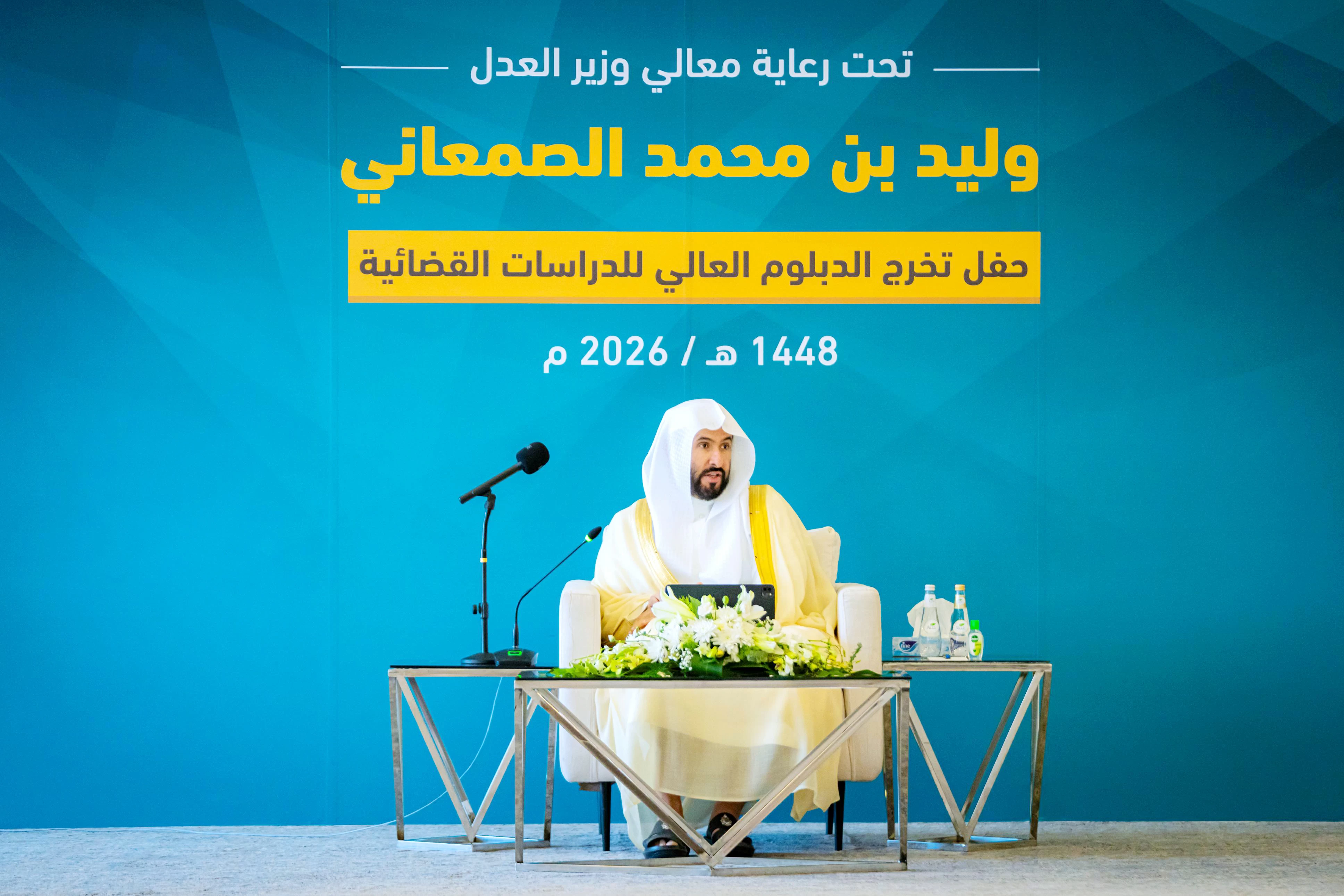
رعى وزير العدل الدكتور وليد محمد الصمعاني، أمس، حفل تخريج الدفعة الخامسة من الدبلوم العالي للدراسات القضائية، الذي ينفذه مركز التدريب العدلي؛ بهدف إعداد الكفاءات القضائية وتأهيلها للمسار القضائي.
وثمّن وزير العدل، الدعم الكريم من خادم الحرمين الشريفين الملك سلمان بن عبدالعزيز، والدعم والمتابعة المستمرة من ولي العهد رئيس مجلس الوزراء الأمير محمد بن سلمان، لتطوير المنظومة العدلية ورفع كفاءتها.
وهنأ وزير العدل الخريجين على إتمام هذه المرحلة العلمية والمهنية المهمة، مؤكداً أن القضاء رسالة عظيمة ومسؤولية كبيرة؛ لما يرتبط به من حفظ الحقوق وتحقيق العدالة، وأن ما اكتسبه الخريجون خلال رحلة التأهيل والتدريب يمثل أساساً لمسيرة مهنية تتطلب مواصلة التعلم والتطوير واستشعار الأمانة الملقاة على عاتق القاضي.
وأكد أن الاستثمار في الكفاءات القضائية يمثل أحد أهم مرتكزات تطوير القضاء، وأن بناء القاضي علمياً ومهنياً يعد من أهم الممكّنات لرفع جودة المخرجات القضائية وتعظيم أثرها.
كما أكد أن المرحلة الحالية تركّز على جودة المخرجات القضائية وتعظيم أثرها، مبيّناً أن العبرة ليست بسرعة الإنجاز فحسب، بل بجودة الحكم القضائي وسلامة تسبيبه واتساقه وموثوقيته.
وأشار إلى أن التطوير التشريعي والرقمي والمؤسسي، والاستفادة من الذكاء الاصطناعي والتقنيات الحديثة؛ تستهدف تمكين القاضي من التفرغ لمهمته الأساسية في تحقيق العدالة وإصدار أحكام عالية الجودة، مؤكداً أن التقنية أدوات مساندة، فيما يظل القاضي بعلمه وتأهيله واستقلاله العنصر الحاسم في العملية القضائية.
وفي ختام كلمته، دعا وزير العدل الخريجين إلى التمسّك بقيم النزاهة والحياد والمسؤولية المهنية، ومواصلة التعلم والتطوير، سائلاً الله لهم التوفيق والسداد وأن يعينهم على أداء الأمانة وتحقيق العدل وخدمة الوطن.
The Minister of Justice, Dr. Walid Muhammad Al-Samaani, yesterday sponsored the graduation ceremony for the fifth batch of the Higher Diploma in Judicial Studies, which is implemented by the Judicial Training Center; aimed at preparing and qualifying judicial competencies for the judicial pathway.
The Minister of Justice praised the generous support from the Custodian of the Two Holy Mosques, King Salman bin Abdulaziz, and the continuous support and follow-up from the Crown Prince and Prime Minister, Prince Mohammed bin Salman, for the development of the judicial system and enhancing its efficiency.
The Minister congratulated the graduates on completing this important academic and professional stage, affirming that the judiciary is a noble message and a significant responsibility; due to its association with preserving rights and achieving justice. He noted that what the graduates have gained during their training and qualification journey represents a foundation for a professional career that requires continuous learning, development, and a sense of the trust placed on the judge's shoulders.
He emphasized that investing in judicial competencies is one of the most important pillars of judicial development, and that building judges scientifically and professionally is among the key enablers to enhance the quality of judicial outputs and maximize their impact.
He also confirmed that the current phase focuses on the quality of judicial outputs and maximizing their impact, indicating that the measure of success is not only the speed of achievement but also the quality of the judicial ruling, its sound reasoning, coherence, and reliability.
He pointed out that legislative, digital, and institutional development, along with the utilization of artificial intelligence and modern technologies, aim to enable judges to dedicate themselves to their primary mission of achieving justice and issuing high-quality rulings, stressing that technology serves as supportive tools, while the judge’s knowledge, qualification, and independence remain the decisive elements in the judicial process.
In conclusion, the Minister of Justice urged the graduates to adhere to the values of integrity, neutrality, and professional responsibility, and to continue learning and developing. He prayed for their success and guidance, asking God to assist them in fulfilling their trust, achieving justice, and serving the nation.