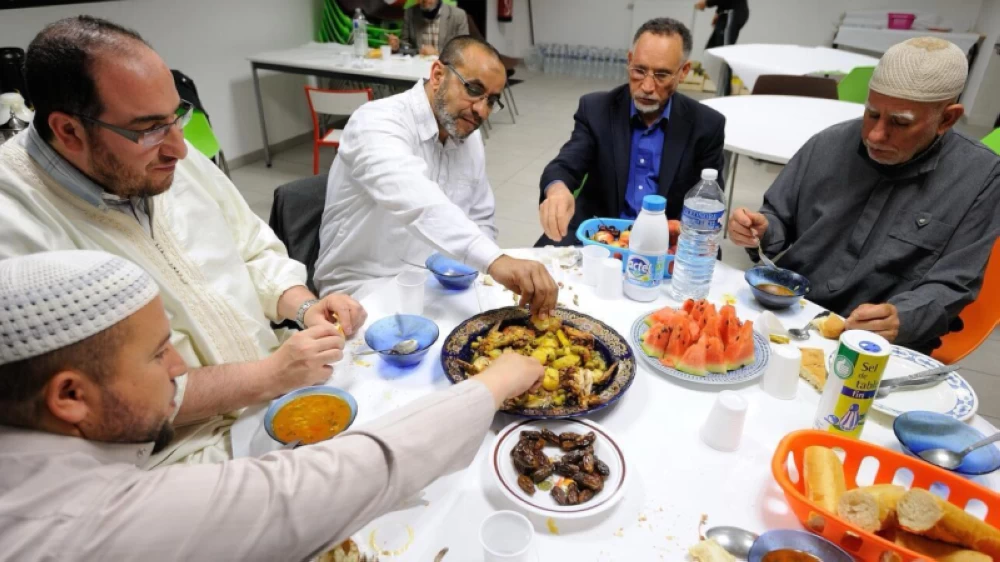
إذا كان شهر رمضان عند المجتمعات المسلمة مرادفًا للصيام والقيام، فإنه أيضًا أيام مليئة بالألفة التي تعتني فيها الأسر المسلمة في فرنسا باللقاء والاجتماع حول مائدتي السحور والإفطار.
فخلال هذا الشهر، يتغير إيقاع الحياة اليومية؛ إذ تفسحُ أيام الصيام المجال لأمسياتٍ احتفاليةٍ حول مائدة الإفطار، رغم أن مواقيت العمل لا تكيَّف في شهر رمضان مثل ما يحدث في معظم الدول العربية.
هذا التحوّل في العادات اليومية، يُولّد ديناميكيةً تجاريةً ملحوظة في أوروبا، إذ يكثر الاستهلاك في شهر رمضان من قبل الجالية المسلمة، وتعتمد الشركات التجارية على إستراتيجية اقتصادية مغايرة، التي في الغالب لا تأخذ عادات العرب والمسلمين في باقي أيام السنة بنفس الوتيرة.
ويحرص المهاجرون المسلمون على اختلاف أصولهم، أكثر من أي وقت آخر من السنة، إلى «اللمة العائلية» وتطبيق القيم الجوهرية التي جاء بها هذا الشهر الفضيل. ويسعى مسلمو فرنسا على اختلاف مشاربهم إلى إعطاء الصورة الحقة عن الإسلام كدين للتضامن والتسامح.
If the month of Ramadan is synonymous with fasting and prayers in Muslim communities, it is also a time filled with camaraderie where Muslim families in France gather around the tables of suhoor and iftar.
During this month, the rhythm of daily life changes; the days of fasting give way to festive evenings around the iftar table, even though work schedules are not adjusted during Ramadan as they are in most Arab countries.
This shift in daily habits generates a noticeable commercial dynamic in Europe, as consumption increases during Ramadan among the Muslim community, and businesses rely on a different economic strategy, which often does not take into account the habits of Arabs and Muslims during the rest of the year.
Muslim migrants, regardless of their origins, are more committed than ever to "family gatherings" and to applying the core values that this holy month brings. Muslims in France, from various backgrounds, strive to present an accurate image of Islam as a religion of solidarity and tolerance.