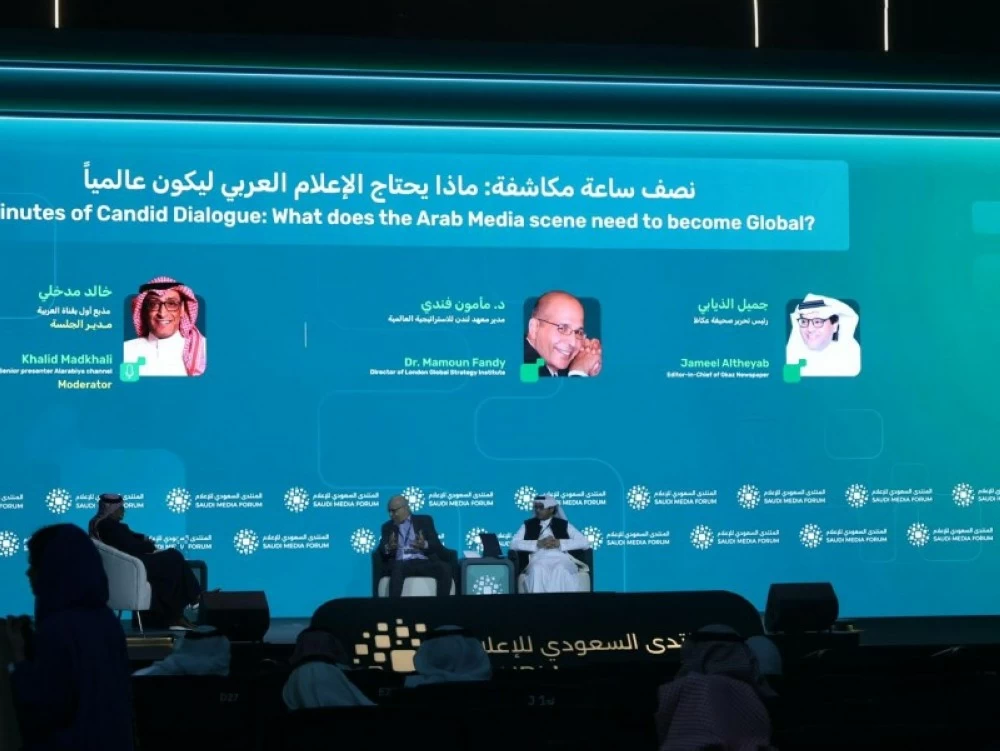
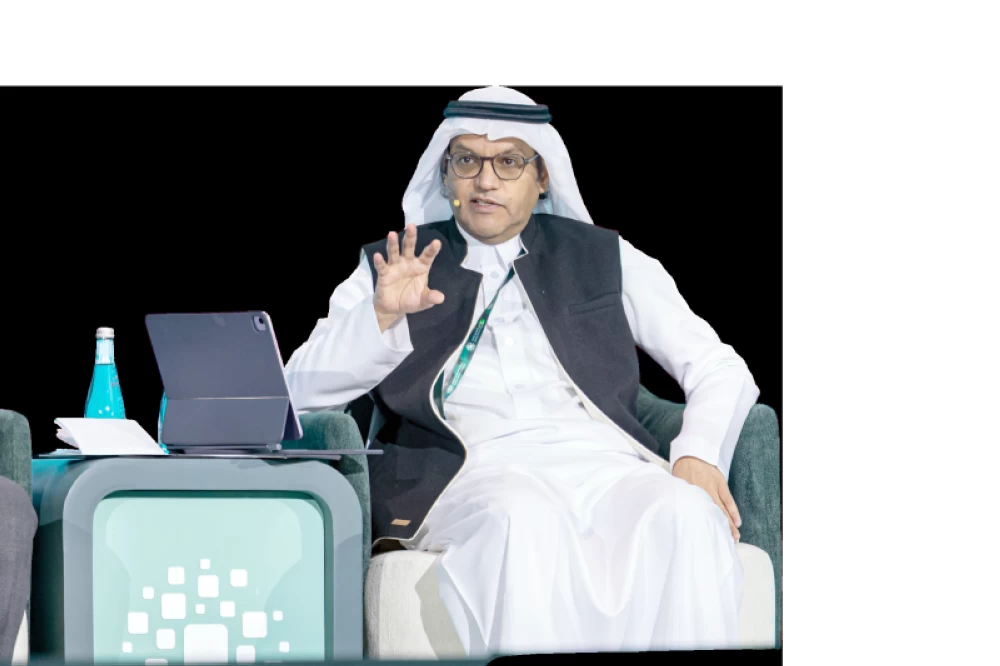
أكّد رئيس التحرير الزميل جميل الذيابي أن الإعلام المحلي والعالمي يفقد تأثيره في حال غياب المعلومة، أو عندما يكون موجَّهًا للداخل فقط دون رؤية إقليمية أو عالمية، واصفًا الإعلام العربي بأنه يعاني أحيانًا من حالة انفعالية بدلاً من تبنّي سردية واضحة لتأطير القصة الصحفية أو التقرير أو التحقيق الاستقصائي.
وفنّد خلال جلسة «نصف ساعة مكاشفة: ماذا يحتاج الإعلام العربي ليكون عالميًا؟» ضمن جلسات المنتدى السعودي للإعلام، أبرز متطلبات وصول الإعلام العربي إلى التأثير الدولي، وفاعلية الخطاب الإعلامي الحالي وقدرته على إقناع الجمهور الآخر، وذلك ضمن فعاليات النسخة الخامسة من المنتدى السعودي للإعلام.
وأشار الذيابي في حديثه إلى وجود جانب من انعدام الثقة أحيانًا بين الصحفي والمصدر، مؤكّدًا أن «إذا غابت المعلومة غاب الخبر».
وشدّد على أن عالمية الإعلام لا تتحقّق بالترجمة فقط، موضحًا أن العالم اليوم «في غرفة واحدة»، وأن الوصول إلى العالمية يتطلب سردية غير انفعالية قائمة على الحقائق.
وأكّد الذيابي على أهمية محافظة الإعلام على المصداقية والموثوقية حتى لو فقد الأسبقية، لافتًا إلى أن ذلك يصنع تأثيرًا أعمق وأبقى في «عالم يتشكّل»، داعيًا إلى بناء هوية إعلامية واضحة وسياسة تحريرية ثابتة تقوم على مهنية عالية وبصمة مؤثرة.
نقل القصة العربية إلى عالمية
من جانبه، قال مدير معهد لندن للإستراتيجية العالمية الدكتور مأمون فندي خلال مشاركته جلسة الذيابي: إن صانع القرار في الغرب ينظر إلى الإعلام العربي من زاوية «القصة»، موضّحًا أن القضايا الاقتصادية القادمة من دول مؤثرة مثل المملكة العربية السعودية تحظى باهتمام خاص، بينما تمر القضايا السياسية عبر معايير أكثر صرامة تتطلب مصادر موثوقة، وتقييمًا من مراكز أبحاث تتحقّق من صدقية المعلومة القادمة من العالم العربي.
ووصف فندي حالة انعدام الثقة بين المصدر والصحفي في المنطقة بأنها «عمل طويل ومعقد»، مؤكدًا أن نقل القصة العربية إلى سردية عالمية يحتاج جهدًا أكبر من مجرد التأثير اللحظي، الذي وصفه بأنه مؤقت. وأضاف أن صناعة إعلام مؤثر تتطلب مؤسسات إعلامية عربية ذات مصداقية، تكون قصصها متشابكة مع القضايا العالمية، مشيرًا إلى أن الانبهار بالذكاء الاصطناعي سيخفت مع الوقت، فيما ستظل القيمة الحقيقية في المعلومة المحكّمة والموثّقة والمدقّقة.
وتتلخص مخرجات الجلسة التي أدارها الإعلامي خالد مدخلي مذيع أول في قناة العربية، حول أسباب انحصار الخطاب الإعلامي العربي داخل الإطار المحلي وصعوبة اختراق الرأي العام الدولي، مع التأكيد على أهمية الانتقال من دور «المتلقي» إلى «صانع الخبر» القادر على التأثير وفرض السردية في الساحة العالمية، وانتزاع ما وصفه المشاركون بـ«سيادة السردية»، بحيث تصبح المؤسسات الإعلامية العربية مصدرًا أوليًا للخبر لا مجرد رد فعل عليه. كما ناقشت الجلسة الحاجة إلى كوادر إعلامية قادرة على مخاطبة العقلية الغربية بلغتها ومنطقها، وتأثير الاعتماد على المنصات العالمية وخوارزمياتها في تقليص أو توسيع مساحة وصول الصوت العربي، إضافة إلى تحديد الأدوات المطلوبة لتعزيز حضور الإعلام العربي المؤثر عالميًا.
The editor-in-chief, colleague Jameel Al-Dhiabi, confirmed that local and global media lose their impact in the absence of information, or when it is directed solely inward without a regional or global perspective. He described Arab media as sometimes suffering from an emotional state instead of adopting a clear narrative to frame the journalistic story, report, or investigative piece.
During the session titled "Half an Hour of Disclosure: What Does Arab Media Need to Be Global?" as part of the Saudi Media Forum, he outlined the main requirements for Arab media to achieve international influence, the effectiveness of the current media discourse, and its ability to persuade the other audience, as part of the fifth edition of the Saudi Media Forum.
Al-Dhiabi pointed out that there is sometimes a lack of trust between the journalist and the source, emphasizing that "if information is absent, the news is absent."
He stressed that the globalization of media cannot be achieved through translation alone, explaining that the world today is "in one room," and that reaching global status requires a non-emotional narrative based on facts.
Al-Dhiabi emphasized the importance of maintaining credibility and reliability in media, even if it loses precedence, noting that this creates a deeper and more lasting impact in a "shaping world," and called for building a clear media identity and a stable editorial policy based on high professionalism and an influential footprint.
Translating the Arab story to a global scale
For his part, Dr. Mamoun Fandy, director of the London Institute for Global Strategy, said during his participation in Al-Dhiabi's session that decision-makers in the West view Arab media from the perspective of "the story," explaining that economic issues coming from influential countries like Saudi Arabia receive special attention, while political issues go through stricter criteria that require reliable sources and evaluations from research centers that verify the credibility of information coming from the Arab world.
Fandy described the lack of trust between the source and the journalist in the region as "a long and complex process," emphasizing that translating the Arab story into a global narrative requires greater effort than mere momentary impact, which he described as temporary. He added that creating impactful media requires credible Arab media institutions whose stories are intertwined with global issues, noting that the fascination with artificial intelligence will fade over time, while the true value will remain in verified, documented, and audited information.
The outcomes of the session, moderated by journalist Khalid Makhli, a senior presenter at Al Arabiya, summarized the reasons for the confinement of Arab media discourse within the local framework and the difficulty of penetrating international public opinion, while emphasizing the importance of transitioning from the role of "recipient" to "news maker" capable of influencing and imposing the narrative on the global stage, and seizing what participants described as "the dominance of the narrative," so that Arab media institutions become a primary source of news rather than just a reaction to it. The session also discussed the need for media personnel capable of addressing the Western mindset in its language and logic, the impact of reliance on global platforms and their algorithms in narrowing or expanding the reach of the Arab voice, in addition to identifying the tools required to enhance the presence of impactful Arab media globally.