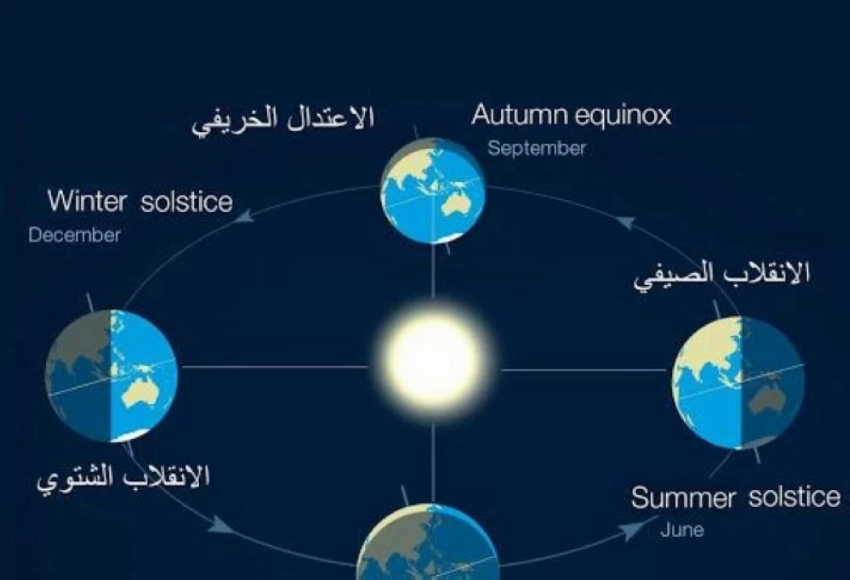
دخل فصل الشتاء فلكيًا مساء اليوم (الأحد) مع حلول الانقلاب الشتوي، في محطة زمنية تُعدّ الانتقال الرسمي إلى أبرد فصول العام، وفق ما أوضحه أستاذ المناخ بجامعة القصيم عبدالله المسند.
وأوضح المسند، عبر حسابه على منصة إكس، أن الشمس تعامدت على مدار الجدي جنوب الكرة الأرضية عند الساعة 06:03 مساءً، إيذانًا ببداية الشتاء الذي يمتد نحو 89 يومًا. وأشار إلى أن المسافة بين الأرض والشمس في هذا اليوم تبلغ نحو 147.17 مليون كيلومتر. وبيّن المسند أن يوم أمس شهد أطول ليل وأقصر نهار في المملكة، وجميع المناطق الواقعة شمال خط الاستواء. ففي الرياض، يقصر النهار بنحو 3 ساعات و4 دقائق مقارنة بنهار 21 يونيو، المصادف للانقلاب الصيفي. ولم يستبعد تسجيل انخفاضات حرارية لافتة خلال هذه الفترة، مستشهدًا بتسجيل درجة الحرارة العظمى، في مثل هذا اليوم من عام 1993 نحو 8 درجات مئوية فقط في العاصمة. وفي السياق ذاته، توقع المركز الوطني للأرصاد استمرار تأثير الرياح النشطة المثيرة للأتربة والغبار، على أجزاء من مناطق مكة المكرمة والمدينة المنورة وتبوك، خصوصًا السواحل، مع بقاء الفرصة مهيأة لتكوّن الضباب على أجزاء من الحدود الشمالية والجوف وحائل، والقصيم والرياض والمنطقة الشرقية. ويأتي دخول الشتاء هذا العام مصحوبًا بتوقعات بتقلبات جوية معتادة للفصل، بين برودة ليلية ملحوظة، ورياح نشطة في بعض المناطق، في مشهد يعيد للشتاء حضوره الفعلي على أجواء المملكة.
Winter has officially begun astronomically this evening (Sunday) with the arrival of the winter solstice, marking the official transition to the coldest season of the year, as explained by climate professor at Qassim University, Abdullah Al-Masnad.
Al-Masnad clarified, via his account on the X platform, that the sun was directly overhead at the Tropic of Capricorn in the southern hemisphere at 06:03 PM, signaling the start of winter, which lasts for about 89 days. He noted that the distance between the Earth and the sun on this day is approximately 147.17 million kilometers. Al-Masnad indicated that yesterday witnessed the longest night and the shortest day in the Kingdom and all regions north of the equator. In Riyadh, the day is shorter by about 3 hours and 4 minutes compared to the day of June 21, which coincides with the summer solstice. He did not rule out significant temperature drops during this period, citing that the maximum temperature on this day in 1993 was only around 8 degrees Celsius in the capital. In the same context, the National Center of Meteorology predicted that the effects of active winds stirring up dust and sand would continue in parts of the Makkah, Madinah, and Tabuk regions, especially along the coasts, while the opportunity remains for fog formation in parts of the Northern Borders, Al-Jawf, Hail, Qassim, Riyadh, and the Eastern Province. This year's entry into winter comes with expectations of typical weather fluctuations for the season, including noticeable nighttime cold and active winds in some areas, in a scene that brings winter's actual presence back to the atmosphere of the Kingdom.