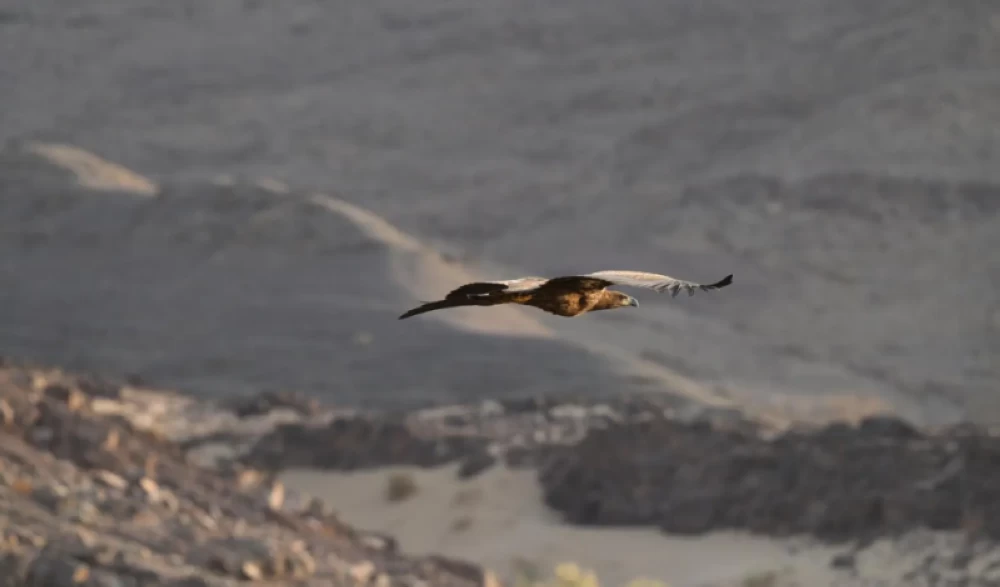
رصدت محمية الأمير محمد بن سلمان ظهورًا نادرًا للنسر أبيض الذيل، (أحد الطيور المهاجرة)، وهو الرصد المؤكد الأول لهذا النوع في المملكة العربية السعودية منذ أكثر من 20 عاماً.
ورصد مدير التنوع الحيوي والبحث في المحمية علي الفقيه، النسر وصوّره في وادي ثلبة، أحد أبرز الأراضي الرطبة ذات الأهمية النباتية والمصنَّفة كمناطق صارمة الحماية داخل المحمية.
ويعكس ظهور النسر ضمن المحمية أهميتها المتزايدة بوصفها ملاذًا للطيور المهاجرة، وجهودها المتنامية في تنفيذ إستراتيجيتها الأشمل في إعادة تأهيل الموائل، بما يدعم الأهداف البيئية لرؤية المملكة 2030 الرامية إلى حماية 30% من اليابسة والبحر بحلول عام 2030، وإعادة تأهيل الأنظمة البيئية وتعزيز التنوع الحيوي.
وتبلغ مساحة المحمية البحرية والبرية 24,500 كيلومتر مربع، وتحتضن 15 نظامًا بيئيًا فريدًا، ومستوى استثنائيًا من التنوع الحيوي، حيث تم توثيق أكثر من 50% من جميع الأنواع المسجلة في المملكة ضمن حدودها.
وأجرت المحمية منذ عام 2021 ست دراسات تنوع حيوي متعددة المواسم، بمشاركة خبراء من المملكة وخمس دولٍ أخرى.
وسجلت هذه الدراسات حتى اليوم ظهور 247 نوعًا مختلفًا من الطيور، بما فيها سبعة امتدادات جديدة على نطاق عالمي.
وتمثل هذه التسجيلات 49% من أنواع الطيور المرصودة في المملكة، وهي نسبة تواصل النمو من خلال الأبحاث الجارية.
ويعكس ظهور النسر الأبيض الذيل خارج حدود منطقته في نصف الكرة الشمالي، أهمية المراقبة المستمرة خلال مواسم الهجرة، كما تُعد بيانات المراقبة بالغة الأهمية لتعزيز إستراتيجيات الحفاظ على المحمية، ودعم المبادرات الوطنية والإقليمية للتنوع الحيوي.
8 محميات ملكية
يذكر أن المحمية واحدة من ثمانِ محميات ملكية في المملكة العربية السعودية، وتمتد على مساحة 24,500 كم²، من الحرات البركانية إلى أعماق البحر الأحمر غرباً، لتربط بين «نيوم» ومشروع البحر الأحمر والعلا، وتُعد موطناً لمشروع وادي الديسة التابع لصندوق الاستثمارات العامة و«أمالا» التابعة لشركة البحر الأحمر العالمية.
وتضم المحمية 15 نظامًا بيئيًا مختلفًا، وتغطي 1% من المساحة البرية للمملكة، و1.8% من مساحتها البحرية، إلا أنها تُشكّل موطناً لأكثر من 50% من الأنواع البيئية في المملكة؛ ما يجعلها واحدة من أغنى المناطق الطبيعية في الشرق الأوسط بالتنوع الحيوي.
وتخضع المحمية لإشراف مجلس المحميات الملكية برئاسة ولي العهد، وهي جزءٌ من برامج المملكة للاستدامة البيئية، مثل: مبادرتي السعودية الخضراء، والشرق الأوسط الأخضر.
The Prince Mohammed bin Salman Reserve has recorded a rare sighting of the White-tailed Eagle, (one of the migratory birds), marking the first confirmed sighting of this species in the Kingdom of Saudi Arabia in over 20 years.
The reserve's Director of Biodiversity and Research, Ali Al-Faqih, spotted and photographed the eagle in Wadi Thalbah, one of the prominent wetlands of botanical importance classified as strictly protected areas within the reserve.
The appearance of the eagle within the reserve reflects its increasing importance as a haven for migratory birds and its growing efforts to implement its broader strategy for habitat rehabilitation, supporting the environmental goals of the Kingdom's Vision 2030, which aims to protect 30% of land and sea by 2030 and rehabilitate ecosystems while enhancing biodiversity.
The marine and terrestrial reserve covers an area of 24,500 square kilometers and hosts 15 unique ecosystems, with an exceptional level of biodiversity, having documented over 50% of all species recorded in the Kingdom within its boundaries.
Since 2021, the reserve has conducted six multi-season biodiversity studies, involving experts from the Kingdom and five other countries.
These studies have recorded the appearance of 247 different bird species to date, including seven new global extensions.
These records represent 49% of the bird species observed in the Kingdom, a percentage that continues to grow through ongoing research.
The sighting of the White-tailed Eagle outside its typical range in the Northern Hemisphere underscores the importance of continuous monitoring during migration seasons, and the monitoring data is crucial for enhancing the reserve's conservation strategies and supporting national and regional biodiversity initiatives.
8 Royal Reserves
It is noteworthy that the reserve is one of eight royal reserves in the Kingdom of Saudi Arabia, extending over an area of 24,500 km², from volcanic fields to the depths of the Red Sea to the west, linking "Neom," the Red Sea Project, and AlUla, and is home to the Wadi Al-Disa project under the Public Investment Fund and "Amala" under the Red Sea Global Company.
The reserve includes 15 different ecosystems, covering 1% of the Kingdom's terrestrial area and 1.8% of its marine area, yet it is home to over 50% of the ecological species in the Kingdom, making it one of the richest natural areas in the Middle East in terms of biodiversity.
The reserve is overseen by the Royal Commission for the Royal Reserves, chaired by the Crown Prince, and is part of the Kingdom's environmental sustainability programs, such as the Saudi Green Initiative and the Middle East Green Initiative.