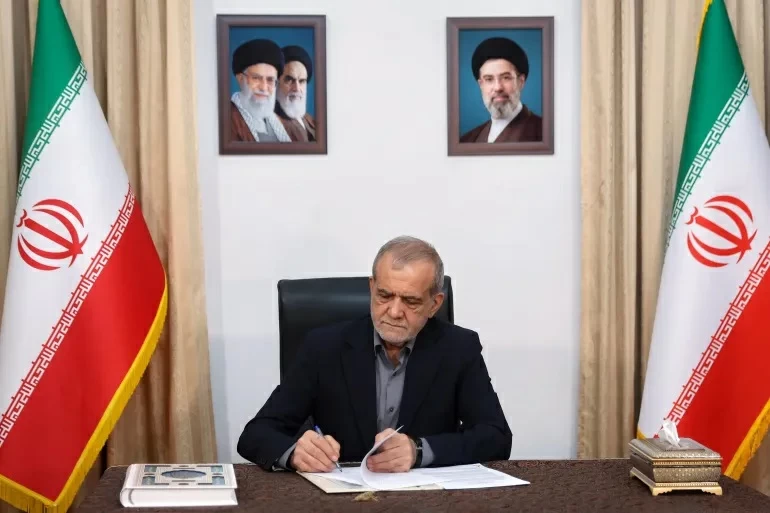
فيما لا يزال مصير المرشد الإيراني مجتبى خامنئي يثير الجدل في ظل عدم ظهوره منذ تعيينه، أكد الرئيس الإيراني مسعود بزشكيان اليوم (الأربعاء) أن التواصل معه صعب للغاية حالياً.
وقال بزشكيان في مقابلة تلفزيونية: «يشكل وجود مرشدنا الأعلى نقطة قوة كبيرة جداً للبلاد رغم أن التواصل معه أصبح الآن صعباً»، مبيناً أن المرشد مجتبى خامنئي كان له رأي بشأن مذكرة التفاهم، لكنه قال إذا نالت المذكرة ثلاثة أرباع أصوات مجلس الأمن القومي الإيراني فسيوافق عليها.
وأشار إلى أن مذكرة التفاهم حظيت بتأييد 12 عضواً من أصل 13 في مجلس الأمن القومي، مبيناً أن المرشد قبل برأي المتخصصين.
ولم يظهر مجتبى علناً منذ توليه منصب المرشد الأعلى لإيران، خلفاً لوالده علي خامنئي الذي قُتل في إحدى أولى الضربات التي شنّتها الولايات المتحدة وإسرائيل على إيران أواخر فبراير الماضي.
وتكثف جهود الاستخبارات الأمريكية والإسرائيلية البحث عن معلومات عن المرشد الإيراني الجديد مجتبى خامنئي، الذي يلف الغموض مكانه، وبحسب تقرير لصحيفة «التايمز» البريطانية فإن التقديرات تشير إلى أن مجتبى لم يستخدم هاتفاً أو حاسوباً منذ نحو 5 أشهر.
وذكرت الصحيفة أن الاعتقادات بأن مجتبى يختبئ في ملجأ عميق تحت الأرض، مصاباً بحروق وتشوهات في وجهه جراء الغارة التي قتلت والده، ممتنعاً عن الظهور في النهار خشية التقاطه عبر الأقمار الأمريكية.
وفي عملية اغتيال والده، اعتمدت أمريكا وإسرائيل على تقنيات تجسس متطورة نسقتها وكالة الأمن القومي الأمريكي ووحدة الاستخبارات الإسرائيلية «8200»، شملت اختراق كاميرات المرور في طهران لتتبع حركة موكب المرشد السابق ومساعديه، مما أدى إلى تحديد وتصفية القيادات العليا في ضربة دقيقة، لكن الوضع اليوم يبدو مغايراً تماماً، بحسب ما نقلته الصحيفة عن خبراء استخباراتيين.
وذكر مسؤولون سابقون في أجهزة الاستخبارات أن الاعتماد على التكنولوجيا وحدها لم يعد مجدياً، لا سيما بعد تجارب استخباراتية معقدة سابقة.
While the fate of Iranian leader Mojtaba Khamenei continues to spark controversy due to his absence since his appointment, Iranian President Masoud Bezhakian confirmed today (Wednesday) that communication with him is currently extremely difficult.
Bezhakian stated in a television interview: "The presence of our Supreme Leader is a very significant strength for the country, although communication with him has now become difficult," explaining that Leader Mojtaba Khamenei had an opinion regarding the memorandum of understanding, but he said that if the memorandum received three-quarters of the votes from the Iranian National Security Council, he would approve it.
He pointed out that the memorandum of understanding received the support of 12 out of 13 members of the National Security Council, indicating that the leader accepted the specialists' opinions.
Mojtaba has not appeared publicly since assuming the position of Supreme Leader of Iran, succeeding his father Ali Khamenei, who was killed in one of the first strikes carried out by the United States and Israel on Iran in late February.
The efforts of American and Israeli intelligence are intensifying in the search for information about the new Iranian leader Mojtaba Khamenei, whose whereabouts remain shrouded in mystery. According to a report by the British newspaper "The Times," estimates suggest that Mojtaba has not used a phone or computer for about five months.
The newspaper reported that there are beliefs that Mojtaba is hiding in a deep underground shelter, suffering from burns and facial disfigurements due to the raid that killed his father, refraining from appearing during the day for fear of being captured by American satellites.
In the assassination of his father, the U.S. and Israel relied on advanced espionage techniques coordinated by the U.S. National Security Agency and the Israeli intelligence unit "8200," which included hacking traffic cameras in Tehran to track the movement of the former leader's convoy and aides, leading to the identification and elimination of senior leaders in a precise strike. However, the situation today appears to be completely different, according to what the newspaper reported from intelligence experts.
Former officials in intelligence agencies mentioned that relying solely on technology is no longer effective, especially after previous complex intelligence experiences.