في صباحٍ يوم ممطر، وجد (خالد) نفسه وحيداً أمام باب مصعد لعمارة تزيد على سبعة طوابق، وكان مضطراً للدخول إليها فوجهته الطابق الخامس، ولكن الممر خالٍ ولا تواجد لإنسان يمسك بيده ويستعين به ويرافقه للدخول إلى المصعد والوصول إلى مبتغاه.
انتظر وانتظر وبقي، لكن طقس ذلك اليوم كان حائلاً بين العديد من الناس، وجعلهم لا يغادرون منازلهم او مواقعهم. ولأنه كان مضطراً للصعود، وحتى لا يتأخر عن وقته، ضغط زر المصعد، وما إن وصل، وشاح نوره، حتى تيبّست عظام (خالد) وتسمرت قدماه ولم يعد قادراً على الحركة، وكأنه رأى شبحاً وبدأ يتصبب عرقاً، وتملّكه الخوف، وقرر ألا يخوض هذه المغامرة -على حد وصفه لها- والصعود الى الطابق الخامس عبر السلالم خيار أكثر أماناً. بالنسبة له حتى إن كانت صحته لا تقوى على ذلك فعقله الباطني يقول له اصعد السلالم، فيما خوفه يصور له أن بداخل المصعد شبحاً قد يؤذيه أو يتلبّسه.
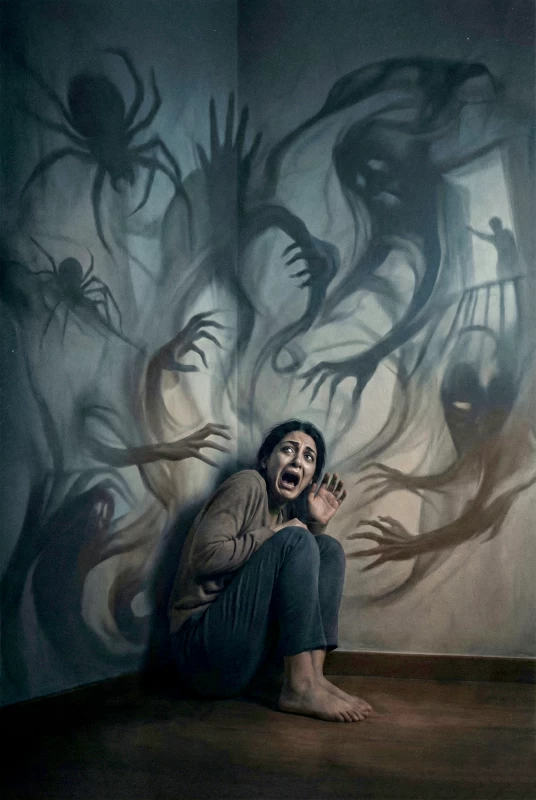
حالة (خالد) ليست الأولى ولن تكون الأخيرة مع الخوف (الفوبيا) وهو نموذج لأشخاص يعيشون يومياً صراعاً صامتاً مع مخاوف لا تُرى ولا تُقاس، لكنها تتحكم في القرارات، وتعيد رسم تفاصيل حياتهم.
من المصاعد والطائرات والسفن، إلى الغرف المغلقة والأماكن المرتفعة، مروراً برؤية الدماء، والذعر من الزواحف، تتسلل الفوبيا بهدوء وتفرض سطوتها دون استئذان. يظل الحديث عن عالم الفوبيا أسئلة حائرة: كيف تولد؟ ولماذا تستمر؟ ومتى تتحول من خوف عابر إلى سجن دائم للعقل؟
فوبيا الطيران والدم
ثمّة قصص وحكايات تروى على أرض الواقع تحكي قصص الخوف الصامت أو الرعب داخل صاحبه، فالشاب (عمر) تجاوز قبل أيام سن الـ40، لكنه لم يستطع تجاوز الخوف من قيادة المركبات، فلا يزال يتجنب القيادة بعد حادث بسيط قبل سنوات، ويفضّل الاستعانة بالآخرين على الجلوس خلف (دركسون) المركبة، وحتى اللحظة لا يزال يرفض تكرار تجربة قيادة السيارة تحت أي ظرف، ويتنقل بسيارات الأجرة يومياً.
أما (نورة، ذات الـ37 عاماً) فهي تعاني فوبيا الطيران، وترفض السفر جوّاً رغم متطلبات عملها، فالإقلاع ليس بداية رحلة بل بداية نوبة هلع، فتختار طرقاً أطول وتكاليف أعلى لتفادي الطائرة. أول وآخر مرة سافرت بالطائرة كانت قبل 25 عاماً، ولا تعلم سبب خوفها وهلعها من ركوب الطائرة.
أما المهندس (فهد) الذي شارف على الـ60 عاماً، فهو يعاني فوبيا من نوع آخر، يصاب بإغماء فور مشاهدته للدماء، اكتشف حالته قبل 40 عاماً عندما كان في المرحلة الجامعية، وذهب إلى المستشفى مع زميله، وهناك رأى منظراً لدماء تسيل من مصاب في الطوارئ سقط مغشياً عليه، وتكرر سقوطه كلما رأى الدماء حتى إن كانت دماء حيوانات في المسلخ، ومن يومها بات يخاف ويخشى مواجهة مواقف الدماء.
محسن و«الوزغة»
(محسن) شاب في الخامسة والعشرين من عمره، يافع، قوي البنية، ووسيم، لكنه يتحول إلى طفل يطلق الصرخات كلما شاهد (وزغة) تسير بالقرب منه على الحوائط، حاول التخلص من خوفه، لكن الخوف سكن في قلبه ولا يريد أن يفارقه، رغم محاولات محبيه أن يتجاوز تلك المخاوف التي تجعله يصرخ ويصرخ ويركض دون هوادة أو تفكير ويختبئ في أي مكان خشية تلك (الوزغة) التي حولها البعض إلى مواقف للطرف والضحك خصوصاً في المواقف العامة، لتتداخل مشاعر الخوف مع المواقف المضحكة بطريقة لطيفة.
قصة (محسن) قاربت 57 عاماً، وما زال الخوف يلازمه والحرج يرافقه، والمواقف المحرجة تسير معه كظله، ففي إحدى المرات وفيما كان برفقة زميل له يتناولان طعامهما واذا بشخص يعرفهما يقذف فوق الطاولة بوزغة من البلاستيك وإذا بصديقنا (محسن) يطلق صرخة غير مسؤولة، ويتناثر كل شيء حوله، ويقفز ويهرول راكضاً مغادراً المطعم كاد أن يتحول إلى ضحية لسيارة مارة.
الرجال أم النساء؟
استشاري الصدرية الدكتور الغامدي أوضح أن الدراسات النفسية تشير إلى أن النساء أكثر عرضة للإصابة بالفوبيا، خصوصاً فوبيا الحيوانات، والفوبيا الاجتماعية، وفوبيا الأماكن المغلقة، ومن أبرز الأسباب المحتملة عوامل هرمونية وأساليب تنشئة تشجّع الذكور على كبت الخوف. ولفت إلى أن النساء أكثر تعبيراً وطلباً للمساعدة، بينما يخفي الرجال معاناتهم. وبيّن أن الرجال لا يعانون بشكل أقل، ولكن غالباً يعانون في صمت.
وأضاف: يؤكد الأطباء أن الفوبيا قابلة للعلاج بنسبة عالية، لا تحتاج دائماً لأدوية، وتتحسّن بالعلاج السلوكي المعرفي، وتعتمد على المواجهة التدريجية، وتعديل الأفكار الخاطئة.
ومن العلاج الممكن العلاج السلوكي المعرفي، وتقنيات الاسترخاء والتنفس، والعلاج بالتعرّض التدريجي، وتُستخدم الأدوية (في الحالات الشديدة فقط).
وحذّر من الاستهزاء بالمصاب، أو وصفه بالجبن أو ضعف الإيمان، كون ذلك يزيد من تعقيد الحالة ويؤخر العلاج. وأشار إلى أن الفوبيا تحتاج إلى فهم لا حُكم، ودعم لا ضغط. ويحتاج المريض إلى الدعم الأسري والمجتمعي.
وخلص الدكتور الغامدي إلى أن الفوبيا ليست عيباً، وليست نهاية الطريق، بل هي رسالة من العقل بأن هناك خوفاً يحتاج للفهم والمعالجة، ومع الوعي والعلاج، يمكن للمصاب أن يستعيد حياته.
العلاج بنفس الداء
استشارى أول طب الأسرة الدكتور أحمد عبدالمنعم السلاموني، يرى أن الفوبيا عبارة عن خوف شديد ومفرط تجاه موقف أو حدث معين أو مواجهة لمشكلة ما، مثل فوبيا الأماكن المرتفعة، وصعود الطائرات أو اليخوت أو المركبات، أو الخوف من رؤية الحيوانات كالثعابين والزواحف والفئران والعقارب، أو مواجهة مشكلة ما؛ ما يؤثر سلباً على حياة الشخص ويصيبه بالهلع والخوف والقلق، ويجعله يتجنّب مصدر الخوف رغم إدراكه عدم منطقيته. ومن أهم أعراض الرهاب والفوبيا الذعر والقلق، وأعراض جسدية مثل ضيق التنفس، وخفقان القلب، والتعرق الشديد مع ارتعاش، وأحياناً صعوبة بالتنفس، وقد تتطور الأمور إلى حالة إغماء.
وعن أنواع الفوبيا قال الدكتور السلاموني: إنها كثيرة، أكثرها فوبيا المواقف مثل التعرض للمواقف المحرجة، والخوف من الأماكن المغلقة مثل الطائرات أو المرتفعات والأدوار العليا، وفوبيا الطبيعة مثل الرعب من العواصف والسيول والأمطار والظلام والحيوانات، وفوبيا الدم والإصابات ومشاهدة الحقن والإبر والحوادث، وفوبيا الاختناق.
وتابع الدكتور السلاموني: إن من أسباب الفوبيا التجارب السلبية والصدمات أو الحوادث المؤلمة في الماضي، أو عوامل وراثية منها الاستعداد الجيني والعائلي، والبيئة المفرطة بالحرص والحماية. وأوضح أن علاج الفوبيا يكون من خلال إزالة التحسس، إذ يتعرض الشخص تدريجياً لمصدر خوفه وقلقه بطريقه آمنة، إضافة إلى العلاج النفسي أو العلاج السلوكي.
العلاج لا يلغي الخوف
الاستشارية الأسرية والنفسية مزنة مبارك الجريد، ترى أن الفوبيا خوف شديد وغير منطقي من موقف أو شيء أو فكرة، يتجاوز حد القلق الطبيعي، ويؤثر على حياة الشخص، ومن أشهر أشكالها: فوبيا الأماكن المغلقة، والمرتفعات، والطيران، والعلاقات، والمرض، والفشل، والرفض الاجتماعي.
وعن التأثير الواقعي على الأفراد قالت: إن الفوبيا لا تعيش في الخيال فقط، وتُعطّل قرارات، وتُقيّد فرصاً، وتفرض أسلوب حياة قائماً على التجنب.. كثيرون يرفضون السفر، والترقية، والزواج، أو حتى العلاج، فقط لأن الخوف صار قائداً لحياتهم.
وروت مزنة قصصاً واقعية من الممارسة؛ منها قصة رجل ناجح مهنياً يعاني فوبيا الطيران التي حرمته من فرص عالمية، وامرأة تعاني فوبيا الفقد تعيش في قلق دائم على أبنائها لدرجة الإنهاك النفسي.. والقاسم المشترك تجارب سابقة غير معالجة، أو صدمات تم تجاهلها.
وأضافت أن الفوبيا ليست ضعفاً في الشخصية، بل استجابة نفسية متعلَّمة، وبينت أن النساء أكثر تعبيراً وطلباً للمساعدة، بينما الرجال أكثر كتماناً بسبب الصورة الاجتماعية، ما يجعل الفوبيا لديهم أحياناً أعمق وأطول.
وختمت بالقول: إن الفوبيا تُفهم وتُعالج، خصوصاً عبر العلاج المعرفي السلوكي، والتعرض التدريجي، والدعم الأسري.
وقالت إن العلاج لا يُلغي الخوف فجأة، بل يعيد للشخص سيطرته على حياته، ويحوّل الخوف إلى رسالة ووعي.
زبون دائم في «الطوارئ»
في أقسام طوارئ المستشفيات، تتجلى بعض الحالات لأشخاص لديهم هاجس الفوبيا. ويقول الاستشاري المشارك في طب الطوارئ الدكتور يوسف عجاج: إن هاجس المرض من الاضطرابات النفسية ظاهرة شائعة، إذ يعيش المصاب في قلق دائم من الإصابة بأمراض خطيرة، رغم عدم وجود مشكلة صحية حقيقية، وغالباً ما يظهر القلق من خلال زيارات متكررة لأقسام الطوارئ بحثاً عن الاطمئنان.
وفي أقسام الطوارئ، يتمثل دور الطبيب في التأكد من سلامة المريض، واستبعاد أي سبب عضوي خطير للأعراض التي يشتكي منها، وبعد إجراء الفحص السريري والفحوصات اللازمة، تكون النتائج في معظم الحالات طبيعية، هنا يأتي دور التواصل المهني الهادئ، وشرح النتائج للمريض بطريقة مطمئنة، دون التقليل من معاناته، فالألم والقلق الذي يشعر به حقيقي، ومع تكرار الزيارات وغياب أي تفسير طبي، يبدأ الفريق الطبي بالاشتباه في وجود سبب نفسي للأعراض، ويمكن التنبؤ بالحاجة إلى تقييم نفسي عند ملاحظة بعض العلامات، مثل؛ المراجعات المتكررة للطوارئ للشكوى نفسها، والانشغال المفرط بالتحاليل والفحوصات، وعدم الاطمئنان رغم النتائج السليمة، أو ظهور أعراض قلق شديد كالأرق، ونوبات الهلع، والخوف المستمر من الموت أو المرض.
وأضاف الدكتور عجاج: يصبح طلب تقييم أطباء الصحة النفسية خطوة مهمة، ليس لأن المريض «يتوهم»، بل لأن القلق أصبح يؤثر على حياته وصحته بشكل واضح، فالتدخل المبكر من خلال التوجيه والدعم والعلاج النفسي، يساعد المريض على فهم حالته والتعامل معها بشكل أفضل، مؤكداً أن تعزيز الوعي بهاجس المرض والتكامل بين الطوارئ وخدمات الصحة النفسية ينعكس إيجاباً على المريض، وعلى جودة الرعاية الصحية عموماً.
قطة سوداء في المصعد
المستشارة الأسرية والاجتماعية والنفسية دعاء سامي زهران، قالت: إن الفوبيا خوف شديد وغير منطقي ومستمر من شيء أو موقف أو نشاط معين، ويكون مبالغاً فيه جداً مقارنة بالخطر الفعلي، لدرجة أنه يحد بشدة من حياة الشخص اليومية ويُجبره على تجنبه، مسبباً أعراضاً جسدية ونفسية مثل نوبات الهلع والضيق الشديد.
وبحسب المستشارة دعاء، لا تنحصر الفوبيا على أمر معين، بل تختلف مؤثراتها وشدتها من شخص إلى آخر، وتعود في معظم الأحيان لقوة أو صعوبة الموقف الذي مر به الشخص وسبب له هذه الحالة التي قد تستمر سنوات طويلة، ما لم يقرر الشخص العلاج والتخلص منها، فهناك من لديه فوبيا من الأصوات العالية نتيجة الخلافات الأسرية في الطفولة، فبمجرد سماع نقاش حاد وصوت مرتفع يصاب بهلع وخوف واضطراب وتُعاد صور الماضي، والبعض لديه فوبيا من البرق والرعد والأمطار؛ نتيجة حدث ارتبط بها كموت بصاعقة، أو غرق في مياه الأمطار، أو حادثة لشخص عزيز. والكثير لديهم فوبيا من بعض الحيوانات من الأصغر حجماً إلى الأكبر خطراً، وفي معظم الأحيان يكون الشخص تعرض لموقف كان السبب وراء معاناته.
وتروي المستشارة دعاء أحد المواقف عندما وجدت فتاة نفسها مع قطة سوداء داخل محل تجاري صغير، فأصيبت بفزع وهلع غير طبيعي سبب لها خوفاً وفوبيا من القطط والأماكن المغلقة.
وأول مراحل العلاج في رأي المستشارة دعاء الاعتراف بوجود المشكلة، ثم الرغبة بالتخلص منها بمواجهة الموقف أيّاً كان بقوة وتحدٍّ، ففي كل مرة تقلّ حالة الخوف والهلع إلى أن يتصالح الشخص مع الحالة وبذلك يتخلص من الفوبيا.
وتضيف: لا يوجد جنس يتأثر أكثر من الآخر فتجد رجلاً ذا قامة وهيبة ورجولة ولديه فوبيا من حشرة أو حيوان صغير نتيجة موقف طفولي مثلاً، فالمواقف التي نمرّ بها في جميع مراحلنا العمرية وخصوصاً الطفولة هي من تبني بداخلنا هذا الهلع والخوف والفوبيا من بعض الأشياء.
ابتعد عن الفكر السلبي
الدكتور ملياني يرى أن علاج الأشخاص الذين يعانون الفوبيا يتضمن مجموعة متنوعة من أساليب العلاج السلوكي المعرفي، بعد التأكد من نوع الرهاب وتشخيصه بطريقة صحيحة؛ ومنها جعل الشخص المصاب يتعرض بالتدريج وفي فترات متفاوتة للموقف أو الشيء المثير للخوف، والتحدث مع الشخص المصاب بواقعية وعقلانية، ومحاولة تغيير مفهومه عن المثير، وكيف يبتعد عن الأفكار السلبية وتغييرها إلى أفكار واقعية وإيجابية. وأحياناً يتم توجيه المصاب للقيام ببعض الممارسات؛ كالتنفس ببطء، والتنفس العميق، والتأمل، أو كتابة عبارات إيجابية عن الموقف، أو ممارسة بعض الأنشطة الرياضية والهوايات. وفي بعض الحالات قد يضطر المصاب لزيارة الطبيب النفسي إذا وصلت به الأعراض لنوبات الهلع، ولا بد من استخدام بعض الأدوية كالمهدئات أو مضادات الاكتئاب.
ودعا الدكتور ملياني لتوعية المجتمع تجاه الأشخاص المصابين بالفوبيا وحمايتهم من التنمّر، عبر نشر الوعي بأن الفوبيا هي اضطراب نفسي حقيقي، وليست مجرد مخاوف، وأن الإنسان المصاب بها ليس جباناً، وهذا الاضطراب يمكن أن يصاب به أي إنسان، وتثقيف المجتمع حول أسباب الفوبيا وأعراضها وتأثيرها.
وحث المحيطين بالشخص المصاب على دعمه، وعدم إظهار التعجب من ردود أفعاله، وعدم الاستهزاء بها والسخرية منها، والتأكيد على تفهمهم لحالته واحتوائها، لأن التنمّر قد يزيد من الآثار السلبية وخصوصاً شعور المصاب بالعزلة والانطواء والاكتئاب. ولا بد من تثقيف المجتمع بأهمية العلاج النفسي، الذي يقلل بشكل كبير من الضغوط النفسية على المصاب ويؤدي إلى تحسين جودة حياته عموماً.
ليست ضعفاً ولا «دلعاً»
استشاري الصدرية والعناية المركزة الدكتور أحمد حمود الغامدي قال: إن الفوبيا خوف شديد غير عقلاني من شيء أو موقف أو نشاط معين، ويدرك المُصاب في قرارة نفسه أنه مبالغ فيه، لكنه يعجز عن السيطرة عليه، والفوبيا تختلف عن الخوف الطبيعي؛ فهي تعطّل الحياة اليومية وتدفع المصاب إلى التجنّب والقلق ونوبات هلع. وأشكال الفوبيا الأكثر شيوعاً، هي فوبيا الأماكن المغلقة (المصاعد، الطائرات)، وفوبيا المرتفعات، والحيوانات كالكلاب والقطط والحشرات، والفوبيا الاجتماعية مثل الخوف من التحدث أمام الآخرين أو الظهور العلني، وفوبيا المرض أو الموت، وفوبيا الحالات الطبية كرؤية الدم والإبر.
الدكتور الغامدي كشف عن قصة واقعية من قلب المعاناة، وروى قصة موظف حكومي اسمه أحمد (34 عاماً) الذي يقول: «أرفض أي ترقية تتطلب السفر بالطائرة. فكرة الإقلاع وحدها تُصيبني بالاختناق. أُفضّل أن أبدو فاشلاً على أن أواجه هذا الرعب».
أما المعلمة سلمى (38 عاماً) فكانت تعاني من فوبيا اجتماعية، تقول للطبيب: «أعرف الدرس جيداً، لكن حين أنظر إلى الوجوه أشعر أن قلبي سيتوقف. أبحث عن مخرج لأتجنب المواجهة».
وروى الدكتور الغامدي، قصة منى (42 عاماً) وهي أم لثلاثة أطفال وتعاني من فوبيا المرض التي جعلتها أسيرة الفحوصات الطبية: «كل صداع يعني ورماً، وكل خفقان نذير موت. أتعبت نفسها وأسرتها».
ويجيب الدكتور الغامدي عن هل الفوبيا ضعف شخصية، بقوله، الفوبيا ليست ضعفاً، ولا قلة إيمان، ولا دلعاً نفسياً، إنها اضطراب نفسي معترف به علمياً، له أسباب بيولوجية ونفسية وتجارب سابقة، وقد يرتبط بصدمة أو تربية أو نمط تفكير مكتسب.
عن أنواع الفوبيا التي تصيب الأشخاص يقول عضو هيئة التدريس بقسم علم النفس بجامعة الملك عبدالعزيز في جدة الدكتور زياد حسين ملياني: يوجد العديد من الأنواع، بعضها شائع وبعضها نادر الحدوث، مثل الخوف من الأماكن المظلمة أو الضيّقة والمغلقة أو المزدحمة والأماكن المرتفعة، والخوف من الحيوانات أو من الحشرات، ومن طبيب الأسنان، ومن منظر الدم أو وخز الإبر، ومن الموت أو الحوادث والإصابات بأنواعها، وكذا الخوف من ركوب الطائرة أو السفينة، ومن الكوارث الطبيعية إذا ارتبط شيء منها بذكرى سيئة، ومن بعض المواقف الاجتماعية كالتحدث أمام الآخرين أو المقابلات الشخصية.
وأشار إلى أن بعض أنواع الرهاب تحدث بنسب متساوية تقريباً بين الذكور والإناث، وبعضها الآخر تكون نسبة حدوثه أعلى عند النساء، مشدداً في الوقت نفسه على أهمية عدم التنمّر على الأشخاص الذين يعانون من الفوبيا.
هل هو خوف طبيعي؟
وعن الفرق بين الفوبيا والخوف الطبيعي، يوضح عضو هيئة التدريس بقسم علم النفس بجامعة الملك عبدالعزيز في جدة الدكتور زياد ملياني، أن الفوبيا خوف وفزع شديد مبالغ فيه، ويكون من موقف معين، أو حالة معينة، أو حتى حيوان معين، وقد تكون المخاوف مادية أو معنوية، وهي غير واقعية، ومبالغاً فيها إذا ما تمت مقارنتها بالتأثير الفعلي، أو الخطر الحقيقي الناتج عن سببها، وفي أغلب الأحيان يكون الشخص المصاب بالرهاب على علم ووعي بأن خوفه غير مبرر وغير منطقي، لكنه لا يستطيع أن يتخلص منه. ويجب أن نفرق بين الفوبيا والخوف الطبيعي الذي يشعر به الغالبية العظمى من البشر، فمن الطبيعي أن يخاف الإنسان من حيوان مفترس طليق كالأسد أو الذئب أو الثعبان، ولكن من غير الطبيعي الخوف من هذا الحيوان إذا كان محجوزاً في قفص في حديقة الحيوانات. وأضاف: قد يؤثر هذا الخوف على حياة الإنسان سلبياً، ويجعله يتفادى ويتجنب الأشياء أو المواقف التي تسبب له الخوف أو الفزع، بل أحياناً يشعر بالخوف بمجرد التفكير في المثير، أو حتى لمجرد رؤية شخص آخر يمر بهذا الموقف.
وتصاحب هذه الحالة التي يشعر بها الإنسان مجموعة من الأعراض، بعضها نفسي كالشعور بالضيق والخوف والتوتر وعدم الارتياح، وبعضها جسدي كتسارع ضربات القلب أو التعرق والارتعاش، وبعضها اجتماعي مثل العزلة الاجتماعية والاكتئاب وعدم ممارسة الأنشطة اليومية بشكل طبيعي، وهذه الأعراض إذا اجتمعت قد تجعل الإنسان يصل أحياناً لما يسمى بنوبات الهلع.
On a rainy morning, (Khalid) found himself alone in front of the elevator door of a building with more than seven floors, and he had to enter it as his destination was the fifth floor. However, the corridor was empty, and there was no one to hold his hand, assist him, or accompany him into the elevator to reach his goal.
He waited and waited, but the weather that day was a barrier for many people, preventing them from leaving their homes or locations. Since he had to go up, and to avoid being late, he pressed the elevator button. As soon as it arrived, and its light shone, (Khalid)'s bones stiffened, and his feet froze, leaving him unable to move, as if he had seen a ghost. He began to sweat, fear took hold of him, and he decided not to embark on this adventure - as he described it - and taking the stairs to the fifth floor felt like a safer option. For him, even though his health could not handle it, his subconscious mind told him to take the stairs, while his fear painted a picture of a ghost inside the elevator that could harm him or possess him.
Khalid's situation is not the first, nor will it be the last, with fear (phobia). He is a model of individuals who live daily in a silent struggle with fears that are unseen and unmeasurable, yet they control decisions and redraw the details of their lives.
From elevators and airplanes to ships, closed rooms, and high places, passing through the sight of blood and the horror of reptiles, phobia stealthily creeps in and imposes its dominance without permission. The discussion about the world of phobia raises perplexing questions: How does it arise? Why does it persist? And when does it transform from a fleeting fear into a permanent prison for the mind?
Fear of Flying and Blood
There are stories and tales told in reality that narrate the tales of silent fear or terror within the individual. The young man (Omar) recently turned 40, but he has not been able to overcome his fear of driving vehicles. He still avoids driving after a minor accident years ago and prefers to rely on others rather than sit behind the steering wheel. Even now, he still refuses to repeat the experience of driving a car under any circumstances, opting for taxis daily.
As for (Noura), who is 37 years old, she suffers from a fear of flying and refuses to travel by air despite the demands of her job. For her, takeoff is not the beginning of a journey but the start of a panic attack, so she chooses longer routes and higher costs to avoid the plane. The first and last time she flew was 25 years ago, and she does not know the reason for her fear and panic of boarding an airplane.
As for the engineer (Fahd), who is nearing 60, he suffers from a different type of phobia; he faints upon seeing blood. He discovered his condition 40 years ago while in college when he went to the hospital with a colleague. There, he saw a scene of blood flowing from an injured person in the emergency room who had collapsed, and he fainted every time he saw blood, even if it was animal blood at the slaughterhouse. Since then, he has been afraid and dreads facing situations involving blood.
Mohsen and the Gecko
(Mohsen) is a 25-year-old young man, strong and handsome, but he turns into a child who screams whenever he sees a (gecko) walking near him on the walls. He has tried to rid himself of his fear, but it has settled in his heart and does not want to leave him, despite the attempts of his loved ones to help him overcome those fears that make him scream and run without thinking, hiding anywhere in fear of that (gecko), which some have turned into a source of jokes and laughter, especially in public situations, blending feelings of fear with funny moments in a charming way.
Mohsen's story has lasted nearly 57 years, and fear still accompanies him, while embarrassment follows him like a shadow. On one occasion, while he was with a colleague having their meal, someone they knew threw a plastic gecko onto the table, and our friend (Mohsen) let out an irresponsible scream, scattering everything around him, jumping up and running out of the restaurant, almost becoming a victim of a passing car.
Men or Women?
The pulmonary consultant Dr. Al-Ghamdi explained that psychological studies indicate that women are more prone to phobias, especially animal phobias, social phobias, and claustrophobia. Among the main possible causes are hormonal factors and upbringing methods that encourage males to suppress fear. He pointed out that women are more expressive and seek help, while men often hide their suffering. He noted that men do not suffer less, but they often suffer in silence.
He added: Doctors confirm that phobias are highly treatable and do not always require medication. They improve with cognitive behavioral therapy, relying on gradual exposure and correcting erroneous thoughts.
Possible treatments include cognitive behavioral therapy, relaxation and breathing techniques, gradual exposure therapy, and medications (only in severe cases).
He warned against mocking the afflicted or labeling them as cowardly or lacking faith, as this complicates the situation and delays treatment. He emphasized that phobias require understanding, not judgment, and support, not pressure. The patient needs family and community support.
Dr. Al-Ghamdi concluded that phobia is not a flaw, nor is it the end of the road; rather, it is a message from the mind that there is a fear that needs understanding and treatment. With awareness and treatment, the afflicted can regain their life.
Treating with the Same Affliction
Senior family medicine consultant Dr. Ahmed Abdul-Munim Al-Salamoni sees that phobia is an intense and excessive fear of a specific situation or event or facing a problem, such as fear of heights, flying in airplanes or yachts, or fear of seeing animals like snakes, reptiles, and mice, or facing a problem, which negatively affects a person's life, causing panic, fear, and anxiety, leading them to avoid the source of fear despite recognizing its irrationality. Among the most important symptoms of phobia are panic and anxiety, along with physical symptoms such as shortness of breath, rapid heartbeat, excessive sweating, and trembling, and sometimes difficulty breathing, which can develop into fainting.
Regarding the types of phobia, Dr. Al-Salamoni said they are numerous, with the most common being situational phobias, such as facing embarrassing situations, fear of closed spaces like airplanes or heights, nature phobias like fear of storms, floods, rain, darkness, and animals, blood phobia, injuries, and the sight of injections and accidents, and fear of choking.
Dr. Al-Salamoni continued: The causes of phobia include negative experiences, traumas, or painful incidents in the past, or genetic factors such as familial predisposition and an overly protective environment. He explained that treating phobia involves desensitization, where the person is gradually exposed to the source of their fear and anxiety in a safe manner, in addition to psychological therapy or behavioral therapy.
Treatment Does Not Erase Fear
Family and psychological consultant Muzna Mubarak Al-Juraid sees that phobia is an intense and irrational fear of a situation, object, or idea, exceeding the limits of normal anxiety and affecting a person's life. Among its most common forms are fear of closed spaces, heights, flying, relationships, illness, failure, and social rejection.
Regarding the real impact on individuals, she said: Phobia does not exist only in imagination; it disrupts decisions, restricts opportunities, and imposes a lifestyle based on avoidance. Many refuse to travel, accept promotions, marry, or even seek treatment simply because fear has become the leader of their lives.
Muzna recounted real stories from her practice, including the story of a successful man who suffers from a fear of flying that has deprived him of global opportunities, and a woman who suffers from a fear of loss, living in constant anxiety for her children to the point of psychological exhaustion. The common denominator is previous unresolved experiences or ignored traumas.
She added that phobia is not a weakness of character but a learned psychological response, noting that women are more expressive and seek help, while men tend to be more secretive due to social image, which sometimes makes their phobia deeper and longer-lasting.
She concluded by saying that phobia can be understood and treated, especially through cognitive behavioral therapy, gradual exposure, and family support.
She stated that treatment does not suddenly erase fear but restores a person's control over their life, turning fear into a message and awareness.
A Regular Customer in the Emergency Room
In hospital emergency departments, some cases of individuals with phobia manifest. Participating emergency medicine consultant Dr. Youssef Ajaj states that the fear of illness is a common psychological disorder, where the afflicted live in constant anxiety about contracting serious diseases, despite the absence of any real health issue, often showing anxiety through repeated visits to emergency departments seeking reassurance.
In emergency departments, the doctor's role is to ensure the patient's safety and rule out any serious organic cause for the symptoms they complain of. After conducting a clinical examination and necessary tests, the results are normal in most cases. Here, the role of calm professional communication comes into play, explaining the results to the patient reassuringly without diminishing their suffering, as the pain and anxiety they feel are real. With repeated visits and the absence of any medical explanation, the medical team begins to suspect a psychological cause for the symptoms, and it becomes predictable that a psychological evaluation is needed when observing certain signs, such as repeated emergency visits for the same complaint, excessive preoccupation with tests and examinations, lack of reassurance despite normal results, or the emergence of severe anxiety symptoms like insomnia, panic attacks, and persistent fear of death or illness.
Dr. Ajaj added: Requesting an evaluation from mental health professionals becomes an important step, not because the patient is "imagining," but because anxiety has clearly begun to affect their life and health. Early intervention through guidance, support, and psychological treatment helps the patient understand their condition and cope with it better, emphasizing that raising awareness about the fear of illness and integrating emergency services with mental health services positively reflects on the patient and the overall quality of healthcare.
A Black Cat in the Elevator
Family, social, and psychological consultant Dua Sami Zahraan stated that phobia is an intense, irrational, and persistent fear of something, a situation, or a specific activity, which is greatly exaggerated compared to the actual danger, to the extent that it severely limits a person's daily life and forces them to avoid it, causing physical and psychological symptoms such as panic attacks and severe distress.
According to consultant Dua, phobia is not limited to a specific matter; its effects and intensity vary from person to person, often returning to the strength or difficulty of the situation that the person experienced, which caused this condition that may last for many years unless the person decides to seek treatment and get rid of it. Some have a phobia of loud noises due to family disputes in childhood; just hearing a heated discussion or loud voice causes them panic and fear, bringing back memories of the past. Others have a phobia of lightning, thunder, and rain due to an event associated with it, such as dying from a lightning strike, drowning in rainwater, or an incident involving a loved one. Many have phobias of certain animals, from the smallest to the most dangerous, and in most cases, the person has experienced a situation that was the cause of their suffering.
The consultant Dua recounts a situation when a girl found herself with a black cat inside a small store, causing her an unnatural fright and panic, leading to a fear of cats and closed spaces.
In the consultant's opinion, the first stage of treatment is acknowledging the existence of the problem, followed by the desire to get rid of it by facing the situation, whatever it may be, with strength and challenge. With each encounter, the fear and panic decrease until the person reconciles with the condition, thus freeing themselves from the phobia.
She adds: There is no gender that is more affected than the other; you may find a man of stature and presence who has a phobia of an insect or small animal due to a childhood incident, for example. The situations we go through at all stages of our lives, especially childhood, are what build this panic and fear and phobia of certain things.
Stay Away from Negative Thinking
Dr. Miliani believes that treating individuals suffering from phobia involves a variety of cognitive behavioral therapy methods, after ensuring the type of phobia is correctly diagnosed. This includes gradually exposing the afflicted person to the fear-inducing situation or object at varying intervals, talking to the afflicted person realistically and rationally, and trying to change their perception of the stimulus, how to distance themselves from negative thoughts, and replace them with realistic and positive ones. Sometimes, the afflicted person may be directed to practice certain activities, such as slow breathing, deep breathing, meditation, or writing positive affirmations about the situation, or engaging in some sports activities and hobbies. In some cases, the afflicted person may need to visit a psychiatrist if their symptoms lead to panic attacks, and some medications such as sedatives or antidepressants may need to be used.
Dr. Miliani called for community awareness regarding individuals suffering from phobia and protecting them from bullying by raising awareness that phobia is a real psychological disorder, not just fears, and that the person afflicted is not cowardly. This disorder can affect anyone, and educating the community about the causes, symptoms, and effects of phobia is essential.
He urged those around the afflicted person to support them, not to show surprise at their reactions, not to mock or ridicule them, and to assure them of their understanding of their condition and to contain it, as bullying can increase negative effects, especially the afflicted person's feelings of isolation, withdrawal, and depression. It is essential to educate the community about the importance of psychological treatment, which significantly reduces psychological pressures on the afflicted and improves their overall quality of life.
Not a Weakness or "Spoiling"
Pulmonary and intensive care consultant Dr. Ahmed Hamoud Al-Ghamdi stated that phobia is an intense, irrational fear of something, a situation, or a specific activity, and the afflicted person realizes deep down that it is exaggerated, yet they cannot control it. Phobia differs from natural fear; it disrupts daily life and drives the afflicted to avoidance, anxiety, and panic attacks. The most common forms of phobia are claustrophobia (elevators, airplanes), fear of heights, animals such as dogs, cats, and insects, social phobia like fear of speaking in front of others or public appearances, fear of illness or death, and phobia of medical situations like seeing blood and needles.
Dr. Al-Ghamdi revealed a real story from the heart of suffering, recounting the story of a government employee named Ahmed (34 years old) who says: "I refuse any promotion that requires traveling by plane. The idea of takeoff alone suffocates me. I would rather appear to be a failure than face this terror."
As for the teacher Salma (38 years old), she suffered from social phobia, telling the doctor: "I know the lesson well, but when I look at the faces, I feel like my heart will stop. I look for an exit to avoid confrontation."
Dr. Al-Ghamdi narrated the story of Mona (42 years old), a mother of three children who suffers from a fear of illness that has made her a prisoner of medical tests: "Every headache means a tumor, and every palpitation is a sign of death. She exhausted herself and her family."
When asked if phobia is a weakness of character, Dr. Al-Ghamdi replied that phobia is neither a weakness nor a lack of faith, nor is it psychological spoiling; it is a scientifically recognized psychological disorder with biological and psychological causes and previous experiences, and it may be linked to trauma, upbringing, or acquired thinking patterns.
Regarding the types of phobia that affect individuals, Dr. Ziad Hussein Miliani, a faculty member in the psychology department at King Abdulaziz University in Jeddah, says there are many types, some common and some rare, such as fear of dark or narrow, closed, crowded, or high places, fear of animals or insects, fear of the dentist, fear of the sight of blood or needle pricks, fear of death or accidents and injuries of all kinds, as well as fear of flying in airplanes or ships, and fear of natural disasters if linked to a bad memory, and fear of certain social situations like speaking in front of others or job interviews.
He pointed out that some types of phobia occur at nearly equal rates between males and females, while others have a higher incidence in females, emphasizing the importance of not bullying individuals suffering from phobia.
Is It a Natural Fear?
Regarding the difference between phobia and natural fear, Dr. Ziad Miliani clarifies that phobia is an exaggerated and intense fear, often related to a specific situation, condition, or even a specific animal. The fears can be physical or emotional, and they are unrealistic and exaggerated when compared to the actual impact or real danger posed by their cause. In most cases, the person suffering from phobia is aware that their fear is unjustified and illogical, yet they cannot rid themselves of it. We must distinguish between phobia and the natural fear felt by the vast majority of people; it is normal for a person to fear a wild predator like a lion, wolf, or snake, but it is not normal to fear this animal if it is caged in a zoo. He added: This fear can negatively affect a person's life, leading them to avoid and evade things or situations that cause them fear or panic; sometimes, they feel fear just by thinking about the stimulus or even by seeing someone else going through that situation.
This state experienced by the individual is accompanied by a range of symptoms, some psychological such as feelings of distress, fear, tension, and discomfort, some physical such as rapid heartbeat, sweating, and trembling, and some social symptoms like social isolation, depression, and not engaging in daily activities normally. When these symptoms combine, they may lead the individual to what is known as panic attacks.