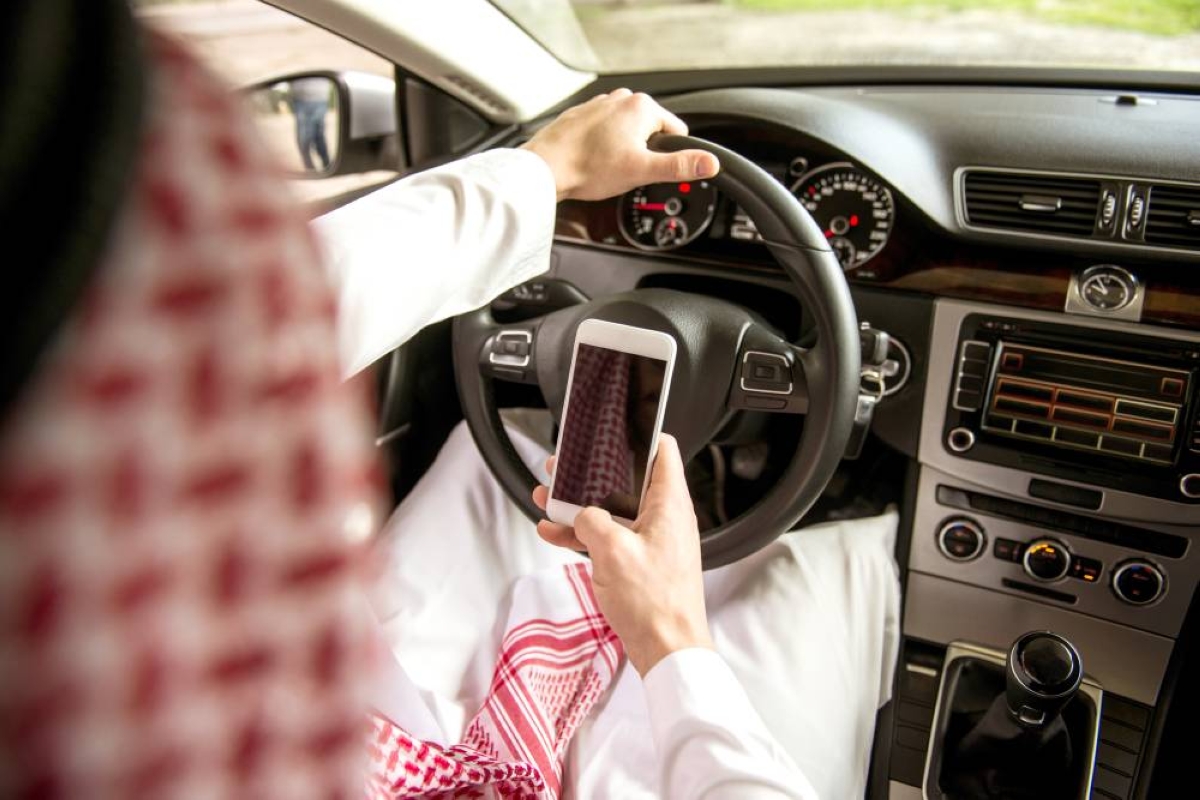
كشفت بيانات متتابعة للإدارة العامة للمرور أن استخدام السائقين للهاتف الجوال أثناء القيادة تصدّر معظم المسببات في الحوادث المرورية خلال العام 2023، ما يضع أهمية قصوى لمحاربة هذه الظاهرة السيئة التي تسببت في إزهاق الأرواح وأضاعت الممتلكات. وطبقاً لدراسات فإن من يستخدمون الهاتف أثناء القيادة سواءً بالاتصال أو إرسال الرسائل يعانون من اعتلالات نفسية!
وكشفت الإدارة العامة للمرور عن مسببات للحوادث المرورية في 2023 بمناطق عسير، نجران، حائل، الجوف، مكة المكرمة، القصيم، المنطقة الشرقية، المدينة المنورة، تبوك، وتصدّر استخدام السائق بيده جهازاً محمولاً أثناء قيادة المركبة (الجوال) مسببات الحوادث المرورية، وعدم ترك مسافة آمنة بين المركبات، ومخالفات الأفضلية، والانحراف المفاجئ والقيادة بالاتجاه المعاكس لحركة السير، ومخالفات الأفضلية، ودعت الإدارة العامة للمرور قائدي المركبات إلى الالتزام بأنظمة وقواعد السير والسلامة المرورية على الطرق في جميع مناطق المملكة.
مكالمة أو قراءة أو كتابة
استشاري إدارة المشاريع رئيس مجلس إدارة شعبة تخطيط النقل والسلامة المرورية بالجمعية السعودية لعلوم العمران الدكتور علي عثمان مليباري يرى أن فقدان التركيز - الذي يُعد من أهم العناصر الشخصية الواجب توفرها في من يتولّى قيادة أي نوع من وسائل النقل في الطرق العامة - لأي سبب من الأسباب، لابد أن يؤدي إلى خلل ما في منظومة الحركة ويزداد الأمر سوءاً وفداحة لو كان سبب عدم التركيز عائداً لاستخدام الهاتف الجوال أثناء القيادة، سواء في مهاتفة كلامية، أو قراءة من شاشته، أو الكتابة عليها، فكل هذه التصرفات تؤثر تأثيراً سلبياً على السائق، بما يفقده الأهلية الجسمانية بتشتت بصره، وتوتر أعصابه، خصوصاً إذا كان محتوى الرسائل أو المكالمات مستفزاً ومهيجاً ومثيراً لمشاعر متباينة في نوازعه وخاطره، وهذا ما يؤدي إلى فقدان الإدراك، وعدم القدرة والأهلية لاتخاذ القرارات الصائبة في الطريق العام أثناء القيادة، فالراجح أنه في أحسن الحالات سيعطل حركة السير، أو يعرقلها، أو ينحرف عن المسارات الصحيحة له، والراجح أيضاً أن الأمر يسوء إلى ارتكاب حوادث مميتة، يتعدى أثرها على من يرتكبها إلى أبرياء في الطريق لا ذنب لهم إلا أن هناك تصرفاً غير مسؤول من سائق قرر أن يستخدم جواله أثناء القيادة.
لا تلتقط شيئاً أثناء القيادة
الدكتور علي مليباري قال إن «الظاهرة» قد أُخضعت للدراسات نظراً لتفشيها وانتشارها، وخلصت جميعها إلى حقيقة ثابتة أن استخدام الجوال أثناء القيادة يضاعف احتمالية الحوادث، وأكدت بعض هذه الدراسات أن هذه الاحتمالية تتضاعف لتسع مرات إذا انشغل السائق عن القيادة بالتقاط شيء ما في السيارة، بل ذهبت دراسات أخرى إلى القول إنه بمجرد أن يمسك السائق هاتفه فإنه بذلك يوفر المناخ لوقوع حادث، ولهذا أرى أنه لابد أن توضع عقوبات أكثر تشدداً على من يستخدمون هواتفهم النقالة أثناء القيادة، وزيادة كاميرات الرصد، مع التوسع في دوائر التوجيه والتوعية بمدى خطورة هذا المسلك الخطير، وأثره المميت والكارثي.
الثقة مجرد مخدر مؤقت
اللواء محمد فريح الحارثي قال لـ«عكاظ»، إن أسباب الانشغال عن القيادة تتعدد وتأتي في مقدمتها وأهمها ما نلمسه من واقع تجارب شخصية وأولها؛ ثقة البعض في أنفسهم أثناء قيادة المركبات بأن لديهم المهارات الفائقة على القيادة الآمنة ويتصورون أنهم قادرون على الانتباه والتركيز على تجنب مخاطر الطريق وهذا يعطي انطباعاً أن لديهم الوعي الكامل بمخاطر الانشغال أثناء القيادة، ولكن ثقتهم في قدراتهم ومهاراتهم كانت تُخالف وعيهم ما يجعلهم يعرضون حياتهم وحياة الآخرين للخطر. وأضاف أن ثقتهم في أنفسهم وفي مهاراتهم كانت بمثابة المخدر الذي خدر عقولهم فأصمهم وأعمى أبصارهم عن حقيقة واقعية وهي أن الانشغال بأي أمر أثناء القيادة يزيد من احتمالية وقوع الحوادث أربع مرات أكثر من الوضع الطبيعي حسب الدراسات المبنية على تجارب حياتية عالمية، أثبتت أن استخدام وسائل الاتصال وتطبيقات التواصل تأتي في مقدمة أسباب وأخطر حوادث السير التي تنتج عنها خسائر مادية وبشرية وحالات أليمة من الإصابات، فالانشغال أثناء القيادة يفقد أسباب التركيز ويشتت الانتباه، الأمر الذي معه تنحجب رؤية الطريق حسب سرعة القيادة فمثلاً عندما تكون قيادة المركبة بسرعة 80 كيلومتراً في الساعة فإن انشغال السائق يفقده البصر لرؤية الطريق مسافة ما يزيد على 22 متراً في الثانية الواحدة ولو كانت المركبة تسير بسرعة 100 كيلومتر فإن قائدها يفقد بصره لرؤية الطريق مسافة 28 متراً بالثانية، وهذا يعني أن انشغال قائد المركبة نصف ثانية كأنه يقودها وهو أعمى لمسافة 14 متراً وهذا الاأمر لا يؤمن بخطورته كل مُغامر وكل مستهتر، إذ إنه يرى أن مهاراته خارقة وقادرة على القيادة وهو أعمى ما يتسبب بجهله وعمى بصيرته وفساد فكره بالوقوع في الحوادث الكارثية.
وظفوهم في مستشفيات الحوادث!
يرى اللواء الحارثي أن الحلول تأتي في عدّة محاور أولها التوعية المستمرة عن مخاطر الثقة العمياء في المهارات الشخصية أثناء الانشغال عن رؤية ظروف وأحوال الطريق، ومن الحلول تعزيز التوعية بإصدار إحصائية دورية شهرية مثلاً عن حجم حوادث الانشغال أثناء القيادة التي كانت بسبب الثقة الشخصية في مهارات القيادة.
وشدد على أهمية تعزيز العقوبات المالية للمخالفين بعقوبات مادية ومعنوية مثل إلحاقهم بدورات تثقيفية عن مخاطر أفكارهم في الثقة بقدراتهم ومهاراتهم أثناء الانشغال عن القيادة، وكذلك إلحاقهم بالخدمة في أقسام حوادث المركبات بالمستشفيات والمراكز الصحية، ليشاهدوا حجم الكوارث والإصابات الأليمة التي وقعت لمن كانوا يحملون نفس أفكارهم.
ويؤكد اللواء الحارثي ضرورة خلق النقاشات والحوارات المختلفة مع نُخب الإعلام ضمن حيّز إعلامي مُعيّن، وتمثل برامج «البودكاست» الحواريّة مثالاً على ذلك، والاستشهاد ببعض الحالات الأليمة ممن يتطوع بالظهور الإعلامي من المصابين لا سيما أصحاب الإعاقات الدائمة، وبحث وسائل خلق رأي عام بالتنسيق والتعاون بين الجهات الأمنية والإعلامية لطرح قضية الانشغال أثناء القيادة، وإثارةَ رأي عام حولها، ومحاولة بحث أسباب الحلول مع المجتمع لهذه القضية التي من خلالها تتأثر قناعات المجتمع نحو خطورة ثقة الأفكار في مهارات القيادة أثناء الانشغال بوسائل التواصل عند قيادة المركبات.
لأولياء الأمور: ساندوا المدارس
التربوي خالد الجعيد من قطاع التعليم في محافظة الطائف يرى أن السلامة المرورية مطلب مهم لأفراد المجتمع كافة، وتتحقق باتباع التعليمات والتوجيهات المرورية، وعدم التغافل أو الاستهتار خصوصاً في ما يتعلق بمخاطر استخدام الهاتف المحمول أثناء القيادة، وتسببه في حوادث مُميتة. ويشير الى أن المدارس والجهات ذات العلاقة بالتوعية والسلامة في إدارة التعليم تقوم بعمل برامج توعوية لطلبة المدارس، لافتاً إلى أهمية توعية رب الأسرة لأبنائه، واضطلاعه بمهماته ومسؤولياته وفي الجواب التوعوية الأخرى كافة. وأضاف الجعيد أن الجانب التوعوي عن السلامة المرورية يعد تكاملياً بين المدارس من جهة، والأسر والأهالي والطلبة أيضاً من جهة أخرى، وعلى أولياء الأمور أن يُساندوا المدارس في هذا الأمر ويقوموا بتعزيز الدور التوعوي لها، حتى تتحقق الأهداف المرجوة من برامج التوعية بالسلامة المرورية، وعلى أولياء الأمور أن يكونوا قدوات لأبنائهم وبناتهم بالالتزام بتعليمات المرور التي تحافظ على سلامة الفرد والمجتمع.
جريمة متكاملة الأركان
الأخصائي النفسي والجنائي الدكتور عبدالله أحمد الوايلي، يرى أنه لابد من التأكيد على أن استخدام الجوال أثناء القيادة يعتبر جريمة إنسانية متكاملة الأركان (الإرادة والقدرة والفرصة) إذ إن السائق يرتكب جريمته مع سبق الإصرار والترصد، سواء في حق نفسه أو حق أُسرته أو حق مجتمعه، لأن خطر الانشغال بالهاتف المحمول أثناء القيادة مرحلي ومستقبلي وممتد، فهو يفقد التركيز والانتباه ويثير القلق والتوتر والخوف سواء كان ذلك السلوك إرادياً أو غير إرادي لأنه سلوك سلبي يعاقب عليه القانون الاجتماعي والمجتمعي لما له من آثار نفسية وسلوكية واجتماعية خطيرة ومؤثرة.
وأضاف الوايلي أن ضعف التركيز الذهني في القيادة والانشغال بالجوال يؤدي إلى الارتباك وعدم الاتزان الانفعالي لدى السائق ومن بجواره بل ومن يشاهده بشكل مباشر وغير مباشر، وهنا تكمن المعضلة.
ومن هذا المنطلق على المستوى النظري أثبتت الدراسات النفسية والاجتماعية ومنها دراسة حديثة أن الذين يرسلون رسائل نصية أثناء القيادة يعانون أساساً من سلوكيات الاعتلال النفسي، مضيفاً أن دراسة أُخرى أشارت إلى أن استخدام الجوال بشكل مبالغ فيه يقود إلى تغييرات مختلفة في العقل البشري خصوصاً في عمليتي التركيز والانتباه ويرفع من معدل القلق والإجهاد لأن انشغال الفرد بعدة مهمات في الوقت نفسه يُضعف الذاكرة والأداء وبالتالي يقلل من القدرة على التركيز بشكل جيد.
لماذا يعاقب الإنسان نفسه؟
الوايلي لفت إلى أن إحدى الدراسات الأمريكية أشارت إلى موت أكثر من ٣١٠٠ شخص وإصابة ما يقارب من ٤٢٤ ألف شخص نتيجة حوادث السير في ٢٠١٩، والسبب الرئيسي يكمن في تشتت ذهن السائق علماً أن أهم عوامل التشتت الذهني هو الهاتف المحمول وبناء على ذلك فإنه لا مناص من القول إن الإستخدام المفرط والزائد عن الحد للهاتف المحمول سواء أثناء القيادة أو غير ذلك يؤثر على طريقة تفكير الإنسان، بل على قدرة دماغه على الإدراك، ويؤدي أيضاً إلى ما يسمى «الكسل العقلي». وأكد أن الدراسة العلمية التي نشرتها «مجلة جمعية بحوث المستهلك» جاءت لتؤكد أن القدرة المعرفية (الذهنية) للبشر تنخفض بشكل كبير عندما يكون الجوال في متناول اليد، وهنا لابد من الإشارة إلى أن (الشرود الذهني) أثناء القيادة يعتبر الأمر الحتمي الذي يتحول فيه انتباه السائق سواء بشكل إرادي أو غير إرادي. ولفت الوايلي إلى أنه على المستوى العلمي فإن الشرود الذهني له عدة أنواع مختلفة نذكر منها «الشرود البصري» ويقصد به النظر في اتجاه آخر غير الطريق الذي يكون عليه السائق، و«الشرود السمعي» إذ يكون تركيز السائق على سماع صوت معين، و«الشرود الجسدي» ويتضح غالباً لدى المراهقين في عدم الإمساك بمقود السيارة أثناء القيادة، و«الشرود الإدراكي» من خلال تحويل الانتباه عن الطريق.
ويحدد الوايلي أسباب «الشرود الذهني» إذ تعود إلى العوامل التكنولوجية المتمثلة في الجوال والإنترنت وأنظمة الترفيه داخل السيارة، والعوامل البشرية المتمثلة في الأكل والشرب والتدخين وغيرها.
وخلاصة القول طبقاً للوايلي فإن الانشغال الذهني باستخدام الهاتف المحمول أثناء القيادة بالذات سلوك سلبي وجُرمي ولا يقره الدين ولا العلم ولا العرف الاجتماعي، وأثبتت الدراسات العلمية تأثيرة على الصحة العقلية، في حين شددت القوانين على عقوبة مستخدم الهاتف أثناء القيادة، والسؤال هنا: لماذا يعاقب الإنسان نفسه باستخدام الجوال أثناء القيادة؟
تحايل على أجهزة الرصد
الإعلامي عبدالرحمن المنصوري، قال إن وسائل التواصل اليوم ومنها الجوال ظاهرة تهدد العقل والفكر، كما تهدد حياة الفرد الذي يظل الجوال يقاسمه مقود السيارة من خلال «الإدمان» الذي يبدأ من البيت، وضرره كبير وخطير، خصوصاً الانشغال أثناء القيادة ويأتي ذلك من خلال التعود على الجوال والإحساس الداخلي للفرد بأنه حريص على الطريق ولكن في غمضة عين تكون النهاية لفقدان الإدراك والوعي وتشتت الانتباه بسبب كتابة رسالة أو الرد عليها أو الاتصال والتصفح، ما يجعله خارج إطار الواقع.
وأضاف المنصوري أنه برغم أجهزة الرصد وارتفاع نسبة الوعي إلا أن هناك من لا يزال يمارس تجاهله بالتحايل على أجهزة الرصد، ولا يدرك خطورة النهاية إلا من خلال رؤية عواقب استخدام الجوال أثناء القيادة.
Data from the General Directorate of Traffic revealed that the use of mobile phones by drivers while driving topped the causes of traffic accidents in 2023, highlighting the utmost importance of combating this negative phenomenon that has resulted in loss of life and property. According to studies, those who use their phones while driving, whether for calls or sending messages, suffer from psychological disorders!
The General Directorate of Traffic disclosed the causes of traffic accidents in 2023 in the regions of Asir, Najran, Ha'il, Al-Jawf, Makkah, Al-Qassim, the Eastern Province, Madinah, Tabuk, with the use of a mobile device by the driver while operating the vehicle (the mobile phone) being the leading cause of traffic accidents, along with failing to maintain a safe distance between vehicles, priority violations, sudden lane changes, driving against the flow of traffic, and priority violations. The General Directorate of Traffic urged vehicle drivers to adhere to traffic rules and regulations for road safety across all regions of the Kingdom.
Calling, Reading, or Writing
Dr. Ali Othman Malibari, a project management consultant and chairman of the Transportation Planning and Traffic Safety Division at the Saudi Association for Urban Sciences, believes that loss of focus—which is one of the most important personal traits required in anyone who drives any type of vehicle on public roads—must lead to some disruption in the movement system. The situation worsens significantly if the cause of the distraction is the use of a mobile phone while driving, whether for a verbal call, reading from its screen, or writing on it. All these actions negatively impact the driver, causing a loss of physical capability due to distraction, nerve tension, especially if the content of the messages or calls is provocative and stimulates various emotions in their instincts and thoughts. This leads to a loss of awareness and the inability to make sound decisions on the public road while driving. It is likely that in the best-case scenario, it will disrupt or hinder traffic, or veer off the correct paths, and it is also likely that it will escalate to causing fatal accidents, the effects of which extend beyond the perpetrator to innocent people on the road who have no fault other than the irresponsible behavior of a driver who decided to use their phone while driving.
Do Not Pick Up Anything While Driving
Dr. Ali Malibari stated that the "phenomenon" has been subjected to studies due to its prevalence and spread, and all of them concluded with a fixed truth that using a mobile phone while driving multiplies the likelihood of accidents. Some of these studies confirmed that this likelihood increases up to nine times if the driver is distracted by picking up something in the car. Other studies went so far as to say that as soon as the driver picks up their phone, they create the conditions for an accident to occur. Therefore, I believe that stricter penalties must be imposed on those who use their mobile phones while driving, increasing monitoring cameras, and expanding awareness campaigns about the dangers of this dangerous behavior and its deadly and catastrophic effects.
Confidence is Just a Temporary Sedative
Major General Mohammed Farih Al-Harithi told "Okaz" that the reasons for distraction while driving are numerous, with the most significant being what we observe from personal experiences, primarily the confidence some individuals have in their driving skills, believing they possess superior abilities for safe driving and think they can pay attention and focus on avoiding road hazards. This gives the impression that they have full awareness of the dangers of distraction while driving, but their confidence in their abilities and skills contradicts their awareness, putting their lives and the lives of others at risk. He added that their confidence in themselves and their skills acts as a sedative that numbs their minds, blinding them to the harsh reality that being distracted by anything while driving increases the likelihood of accidents four times more than normal, according to studies based on global life experiences, which have proven that using communication tools and social media applications is among the leading causes and most dangerous traffic accidents that result in material and human losses and painful injuries. Distraction while driving causes a loss of focus and scatters attention, which obscures the view of the road depending on the speed of driving. For example, when driving at a speed of 80 kilometers per hour, the driver's distraction causes them to lose sight of the road for more than 22 meters per second, and if the vehicle is moving at a speed of 100 kilometers, the driver loses sight of the road for 28 meters per second. This means that a driver's distraction for half a second is like driving blind for a distance of 14 meters. This danger is not recognized by every reckless adventurer, as they believe their skills are extraordinary and capable of driving while blind, leading to catastrophic accidents due to their ignorance and blindness to the reality of the situation.
Employ Them in Accident Hospitals!
Major General Al-Harithi believes that solutions come from several angles, the first of which is continuous awareness of the dangers of blind confidence in personal skills while distracted from observing road conditions. One solution is to enhance awareness by issuing monthly statistical reports on the volume of accidents caused by personal confidence in driving skills.
He emphasized the importance of strengthening financial penalties for violators with material and moral penalties, such as enrolling them in educational courses about the dangers of their ideas regarding confidence in their abilities and skills while distracted from driving, as well as assigning them to serve in vehicle accident departments in hospitals and health centers, so they can witness the extent of the disasters and painful injuries that befell those who held the same beliefs.
Major General Al-Harithi stresses the necessity of creating discussions and dialogues with media elites within a specific media space, with podcast programs serving as an example of this, citing some painful cases of those who volunteer to appear in the media, especially those with permanent disabilities, and exploring ways to create public opinion through coordination and cooperation between security and media agencies to address the issue of distraction while driving and generate public discourse around it, while attempting to explore solutions with the community regarding this issue, which influences societal convictions regarding the dangers of trusting ideas about driving skills while distracted by communication tools when operating vehicles.
To Parents: Support Schools
Educator Khalid Al-Juaid from the education sector in Taif believes that traffic safety is an important demand for all members of society, achieved by following traffic instructions and guidelines and not neglecting or underestimating, especially concerning the dangers of using mobile phones while driving and its role in fatal accidents. He points out that schools and relevant entities in awareness and safety within the education administration are conducting awareness programs for school students, emphasizing the importance of educating parents about their responsibilities and duties in all awareness responses. Al-Juaid added that the awareness aspect of traffic safety is complementary between schools on one hand and families, parents, and students on the other. Parents must support schools in this matter and enhance their awareness role to achieve the desired goals of traffic safety awareness programs, and parents should be role models for their sons and daughters by adhering to traffic instructions that ensure the safety of individuals and society.
A Complete Crime
Psychologist and criminologist Dr. Abdullah Ahmed Al-Waili believes that it must be emphasized that using a mobile phone while driving is considered a complete human crime (intention, ability, and opportunity) as the driver commits their crime with premeditation and intent, whether against themselves, their family, or their community. The danger of being distracted by a mobile phone while driving is both immediate and future, as it leads to a loss of focus and attention, causing anxiety, tension, and fear, whether that behavior is voluntary or involuntary, as it is a negative behavior punishable by social and community law due to its serious and impactful psychological, behavioral, and social effects.
Al-Waili added that weak mental focus while driving and being distracted by the phone leads to confusion and emotional imbalance for the driver and those next to them, as well as those who observe them directly and indirectly, and here lies the dilemma.
From this standpoint, theoretical studies have proven that those who send text messages while driving fundamentally suffer from psychological disorder behaviors, adding that another study indicated that excessive use of mobile phones leads to various changes in the human brain, especially in the processes of focus and attention, and increases the rate of anxiety and stress, as an individual's distraction by multiple tasks at the same time weakens memory and performance, thus reducing the ability to concentrate effectively.
Why Does One Punish Themselves?
Al-Waili pointed out that one American study indicated that over 3,100 people died and approximately 424,000 were injured due to traffic accidents in 2019, with the main reason being the driver's distracted mind, knowing that the most significant factor of mental distraction is the mobile phone. Based on this, it is inevitable to say that excessive and beyond-limit use of the mobile phone, whether while driving or otherwise, affects the way a person thinks, even the brain's ability to perceive, and also leads to what is called "mental laziness." He confirmed that the scientific study published by the "Journal of Consumer Research" confirmed that human cognitive ability (mental) significantly decreases when the phone is within reach. Here, it must be noted that (mind wandering) while driving is the inevitable situation in which the driver's attention is diverted, whether voluntarily or involuntarily. Al-Waili noted that scientifically, mind wandering has several different types, including "visual distraction," which refers to looking in a direction other than the road the driver is on, "auditory distraction," where the driver's focus is on hearing a specific sound, "physical distraction," which is often evident among teenagers who do not hold the steering wheel while driving, and "cognitive distraction," which involves shifting attention away from the road.
Al-Waili identifies the causes of "mind wandering" as stemming from technological factors represented by the mobile phone and the internet, and entertainment systems inside the car, as well as human factors represented by eating, drinking, smoking, and others.
In conclusion, according to Al-Waili, mental distraction caused by using a mobile phone while driving is indeed a negative and criminal behavior that is not accepted by religion, science, or social norms. Scientific studies have proven its impact on mental health, while laws have emphasized penalties for mobile phone users while driving. The question here is: why does one punish themselves by using their phone while driving?
Circumventing Monitoring Devices
Media figure Abdulrahman Al-Mansouri stated that social media today, including mobile phones, is a phenomenon that threatens the mind and thought, as well as the life of the individual who shares the steering wheel with their phone through the "addiction" that starts at home. Its harm is significant and dangerous, especially the distraction while driving, stemming from the habit of using the phone and the internal feeling of the individual that they are cautious on the road, but in the blink of an eye, they lose awareness and consciousness and scatter their attention due to writing a message, responding to it, making a call, or browsing, which makes them out of touch with reality.
Al-Mansouri added that despite monitoring devices and the increased level of awareness, there are still those who ignore them by circumventing monitoring devices, and they do not realize the danger of the consequences until they see the aftermath of using a mobile phone while driving.