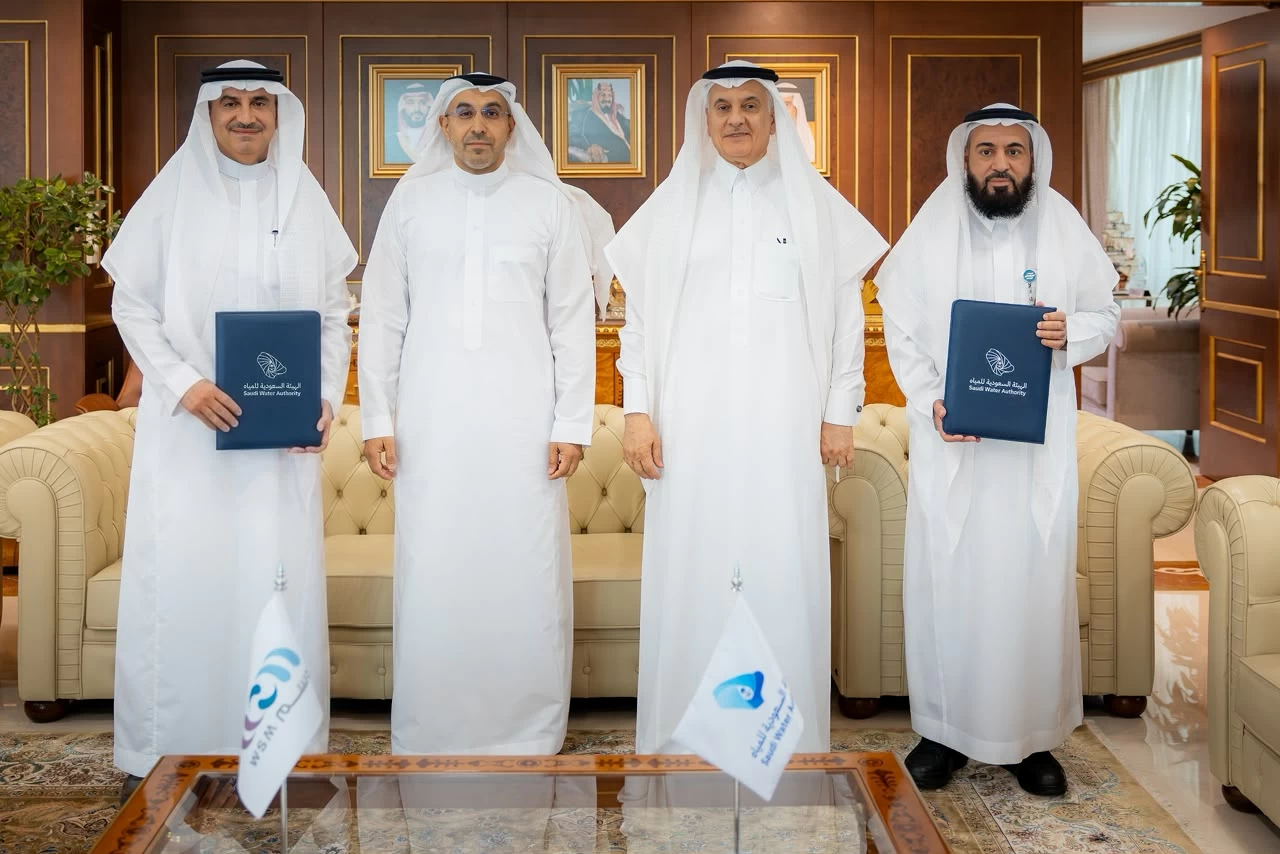
وقّعت أعمال تحلية المياه، الذراع التشغيلية للهيئة السعودية للمياه، وشركة حلول المياه اتفاقية «إسناد مهام الإشراف والإدارة لمحطات تحلية المياه من المصادر الجوفية والسطحية» بحضور وزير البيئة والمياه والزراعة المهندس عبدالرحمن بن عبدالمحسن الفضلي، ورئيس الهيئة السعودية للمياه المهندس عبدالله بن إبراهيم العبدالكريم، استكمالاً لجهود أعمال تحلية المياه برفع الطاقة الإنتاجية الإجمالية لمحطات تحلية المياه من المصادر الجوفية والسطحية، التي يزيد عددها على 400 محطة، بمقدار يتجاوز 1.5 مليون متر مكعب يومياً، لتبلغ أكثر من 4 ملايين متر مكعب يومياً، بعد أعمال تطوير شملت الأصول وعمليات التشغيل والصيانة ومراقبة الجودة، حيث تشكل بانتشارها في مناطق المملكة رافداً موزعاً جغرافياً لمنظومة الإمداد المائي، يتكامل مع قدرات تحلية مياه البحر، بما يوسّع خيارات الإمداد، ويرفع مرونة المنظومة في مواكبة تغير الطلب، ويدعم استمراريته في مختلف الظروف.
وشملت أعمال التطوير ربط عدد من المحطات بالشبكة الكهربائية وتحسين كفاءة استهلاك الطاقة؛ ما أسهم في إزاحة أكثر من 400 ألف برميل مكافئ من الوقود السائل سنوياً، وخفض الانبعاثات الكربونية بنحو 170 ألف طن سنوياً.
وتأتي الاتفاقية ضمن مراحل نقل اختصاصات الإدارة والإشراف، واستكمال الهيكلة المؤسسية لقطاع المياه وفصل الأدوار بين الإنتاج والتوزيع والتنظيم، وفق الإستراتيجية الوطنية للمياه 2030؛ بما يتيح لكل كيان التركيز على اختصاصه، ويرفع كفاءة إدارة الأصول والإنفاق.
وتعمل المحطات بكفاءات وطنية، بنسبة 100% حيث تواصل الكوادر الوطنية التابعة للهيئة تنفيذ مهام التشغيل والصيانة.
The Water Desalination Works, the operational arm of the Saudi Water Authority, and Water Solutions Company signed an agreement for "Delegating the Supervision and Management of Desalination Plants from Groundwater and Surface Sources" in the presence of the Minister of Environment, Water, and Agriculture, Engineer Abdulrahman bin Abdulmohsen Al-Fadhli, and the Chairman of the Saudi Water Authority, Engineer Abdullah bin Ibrahim Al-Abdulkarim. This agreement is part of the efforts to enhance the overall production capacity of desalination plants from groundwater and surface sources, which number more than 400 plants, by over 1.5 million cubic meters per day, reaching more than 4 million cubic meters per day after development works that included assets, operations, maintenance, and quality control. The widespread distribution of these plants across various regions of the Kingdom serves as a geographical contributor to the water supply system, complementing the capabilities of seawater desalination, thus expanding supply options, increasing the system's flexibility in adapting to changing demand, and supporting its continuity under various conditions.
The development works included connecting several plants to the electrical grid and improving energy consumption efficiency, which contributed to displacing more than 400,000 equivalent barrels of liquid fuel annually and reducing carbon emissions by approximately 170,000 tons per year.
The agreement comes as part of the phases of transferring management and supervision responsibilities, completing the institutional restructuring of the water sector, and separating roles between production, distribution, and regulation, in accordance with the National Water Strategy 2030. This allows each entity to focus on its specialization and enhances the efficiency of asset management and spending.
The plants operate with 100% national competencies, as the national workforce affiliated with the authority continues to carry out operational and maintenance tasks.