


أكّد وزير الصناعة والثروة المعدنية بندر الخريف أن السعودية تقود تحولاً صناعياً نوعياً وشاملاً؛ يهدف إلى إعادة تشكيل بنية الاقتصاد الوطني، وتأسيس موقع متقدم في قطاعات التقنية المتقدمة، من خلال تبني مبكر للتقنيات المستقبلية وتعزيز قدراتها الإنتاجية في سلاسل القيمة العالمية.
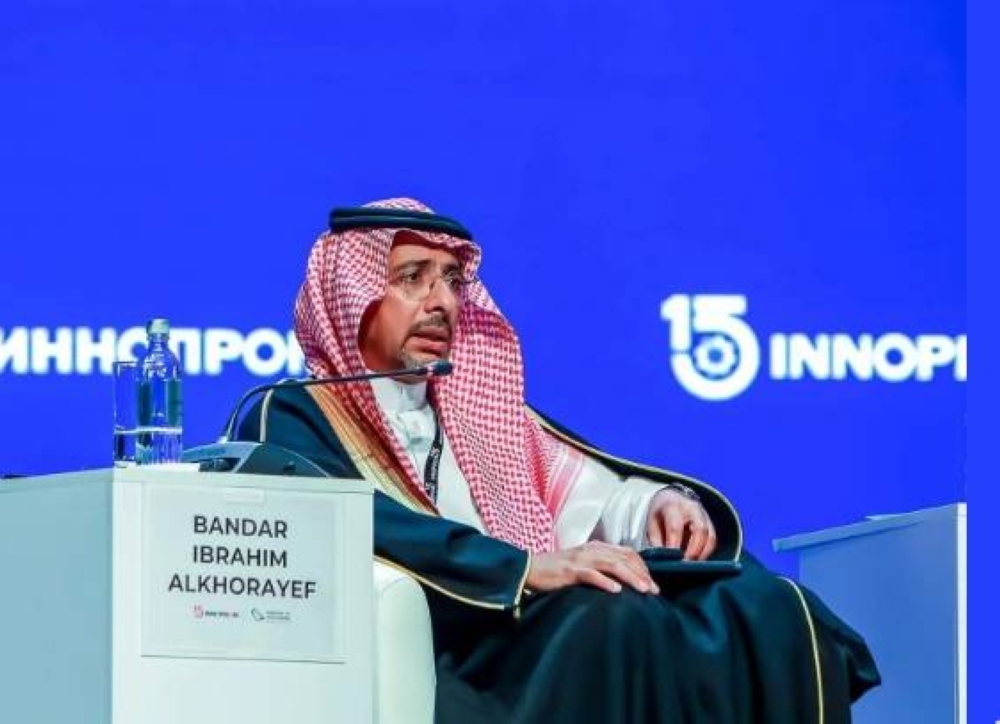
جاء ذلك خلال مشاركته في جلسة حوارية بعنوان «الريادة التكنولوجية: طفرة صناعية»، ضمن الجلسة الإستراتيجية الرئيسة لمعرض «INNOPROM 2025»، الذي تستضيفه مدينة يكاترينبورغ الروسية. وعبّر عن تقديره لحكومة روسيا الاتحادية والقائمين على المعرض، مشيداً بشراكة المعرض مع المملكة هذا العام، التي تمثل امتداداً لرؤية 2030 في تعزيز مكانتها الاقتصادية عالمياً، وتعريف المجتمع الدولي بالفرص النوعية التي تزخر بها.
وأوضح الوزير الخريف، أن الإستراتيجية الوطنية للصناعة، التي تم إطلاقها عام 2022م، تمثل الإطار التنفيذي لرؤية المملكة 2030 الصناعية، وهي مبنية على ثلاثة محاور متكاملة تستهدف مجموعات صناعية رئيسة، ويشمل المحور الأول الصناعات المرتبطة بالأمن الوطني، مثل الغذاء والدواء والمياه والصناعات العسكرية، وهي قطاعات أساسية تسعى المملكة إلى توطينها عبر شراكات فاعلة. أما المحور الثاني، فيركّز على الصناعات التي تستند إلى المزايا النسبية للمملكة، سواء من حيث وفرة الموارد الطبيعية كالنفط والغاز والمعادن، أو من خلال موقعها الجغرافي المحوري، الذي يجعل منها مركزاً لوجستياً عالمياً، كالصناعات البتروكيميائية المتقدمة، والتعدين، والصناعات التحويلية ذات القيمة المضافة.
وأشار إلى أن المحور الثالث يتعلق بالصناعات المرتبطة بالمستقبل والتقنيات الناشئة. وتستهدف المملكة تعزيز مكانتها في مراحل مبكرة من التبني التكنولوجي، عبر سياسات تحفيزية واضحة، تتضمن دعم البحث والتطوير، وتطبيقات الثورة الصناعية الرابعة، والذكاء الاصطناعي والطباعة ثلاثية الأبعاد، إضافة إلى السياسات الداعمة كسياسة المحتوى المحلي، التي تعطي أولوية للمنتج المحلي وتُعزز من الاعتماد على القدرات الوطنية.
وفي جانب متصل، استعرض الخريف التطورات في قطاع التعدين، الذي يُعدُّ من القطاعات الجديدة التي تبنتها رؤية المملكة 2030، إذ تم العمل عليه وفق العديد من المسارات، ومنها زيادة الاستكشافات الجيولوجية، التي رفعت قيمة المخزون التقديري للمعادن في المملكة من 1.3 إلى 2.5 تريليون دولار، تشمل معادن إستراتيجية مثل الفوسفات والنحاس، مع الحفاظ على البُعد الاجتماعي والبيئي في المناطق التعدينية، متطرقاً لمسار تعزيز الشراكات الدولية عبر «مؤتمر التعدين الدولي»، الذي تستضيفه الرياض سنويّاً، وتحوّل إلى منصة عالمية تُناقش التحديات المتعلقة بتوفير المواد الخام الحيوية للتحول في قطاع الطاقة، وتعزيز التنسيق بين الحكومات والقطاع الخاص والمؤسسات التعليمية والبحثية؛ لرفع كفاءة واستدامة القطاع التعديني، معبراً في هذا الصدد عن شكره لمساهمة الحكومة الروسية في أعمال مؤتمر التعدين الدولي.
ونوّه وزير الصناعة والثروة المعدنية بالعلاقات المميزة بين المملكة وروسيا الاتحادية. مستعرضاً الفرص الواعدة لتعميق التعاون بن البلدين، لا سيما في ضوء تقاطع رؤية المملكة 2030 مع أهداف التنمية الوطنية الروسية لعام 2030 في مجالات النمو الاقتصادي والتحول الرقمي والريادة التقنية.
وبين أن بداية أعمال اللجنة السعودية الروسية المشتركة عام 2002، وافتتاح الملحقية التجارية السعودية في موسكو عام 2022، شكّلا محطات مفصلية في تعزيز هذه الشراكة، لافتاً النظر إلى أن حجم التبادل التجاري بين البلدين شهد نمواً ملحوظاً خلال السنوات الماضية، إذ ارتفع من 491 مليون دولار في عام 2016 إلى أكثر من 3.28 مليار دولار في عام 2024.
الخريف: السعودية تقود تحولاً صناعيّاً يستهدف ريادة مبكرة في تقنيات المستقبل
9 يوليو 2025 - 17:04
|
آخر تحديث 9 يوليو 2025 - 17:04


تابع قناة عكاظ على الواتساب
«عكاظ» (يكاترينبورغ)
The Minister of Industry and Mineral Resources, Bandar Al-Khorayef, confirmed that Saudi Arabia is leading a qualitative and comprehensive industrial transformation aimed at reshaping the structure of the national economy and establishing a prominent position in advanced technology sectors by early adoption of future technologies and enhancing its production capabilities in global value chains.
This came during his participation in a panel session titled "Technological Leadership: Industrial Leap," as part of the main strategic session of the "INNOPROM 2025" exhibition, hosted by the city of Yekaterinburg, Russia. He expressed his appreciation to the Government of the Russian Federation and the organizers of the exhibition, praising the partnership of the exhibition with the Kingdom this year, which represents an extension of Vision 2030 in enhancing its global economic position and introducing the international community to the qualitative opportunities it offers.
Minister Al-Khorayef explained that the National Industrial Strategy, launched in 2022, represents the executive framework for the Kingdom's industrial Vision 2030. It is built on three integrated pillars targeting key industrial groups. The first pillar includes industries related to national security, such as food, medicine, water, and military industries, which are essential sectors that the Kingdom seeks to localize through effective partnerships. The second pillar focuses on industries based on the Kingdom's comparative advantages, whether in terms of the abundance of natural resources like oil, gas, and minerals, or through its pivotal geographical location, which makes it a global logistics hub, such as advanced petrochemical industries, mining, and value-added manufacturing industries.
He pointed out that the third pillar relates to industries connected to the future and emerging technologies. The Kingdom aims to enhance its position in the early stages of technological adoption through clear incentive policies that include support for research and development, applications of the Fourth Industrial Revolution, artificial intelligence, and 3D printing, in addition to supportive policies like the local content policy, which prioritizes local products and enhances reliance on national capabilities.
In a related aspect, Al-Khorayef reviewed developments in the mining sector, which is considered one of the new sectors adopted by Vision 2030. Work has been carried out on it through various pathways, including increasing geological explorations, which raised the estimated value of mineral reserves in the Kingdom from $1.3 trillion to $2.5 trillion, including strategic minerals such as phosphate and copper, while maintaining social and environmental dimensions in mining areas. He touched upon the pathway of enhancing international partnerships through the "International Mining Conference," which is hosted annually in Riyadh and has transformed into a global platform discussing challenges related to providing vital raw materials for the energy sector transformation and enhancing coordination among governments, the private sector, and educational and research institutions to improve the efficiency and sustainability of the mining sector, expressing his gratitude for the Russian government's contribution to the work of the International Mining Conference.
The Minister of Industry and Mineral Resources highlighted the distinguished relations between the Kingdom and the Russian Federation, reviewing the promising opportunities to deepen cooperation between the two countries, especially in light of the intersection of Vision 2030 with Russia's national development goals for 2030 in the areas of economic growth, digital transformation, and technological leadership.
He indicated that the beginning of the Saudi-Russian Joint Committee's work in 2002 and the opening of the Saudi Commercial Attaché in Moscow in 2022 marked pivotal milestones in enhancing this partnership, noting that the volume of trade exchange between the two countries has witnessed significant growth over the past years, rising from $491 million in 2016 to over $3.28 billion in 2024.
This came during his participation in a panel session titled "Technological Leadership: Industrial Leap," as part of the main strategic session of the "INNOPROM 2025" exhibition, hosted by the city of Yekaterinburg, Russia. He expressed his appreciation to the Government of the Russian Federation and the organizers of the exhibition, praising the partnership of the exhibition with the Kingdom this year, which represents an extension of Vision 2030 in enhancing its global economic position and introducing the international community to the qualitative opportunities it offers.
Minister Al-Khorayef explained that the National Industrial Strategy, launched in 2022, represents the executive framework for the Kingdom's industrial Vision 2030. It is built on three integrated pillars targeting key industrial groups. The first pillar includes industries related to national security, such as food, medicine, water, and military industries, which are essential sectors that the Kingdom seeks to localize through effective partnerships. The second pillar focuses on industries based on the Kingdom's comparative advantages, whether in terms of the abundance of natural resources like oil, gas, and minerals, or through its pivotal geographical location, which makes it a global logistics hub, such as advanced petrochemical industries, mining, and value-added manufacturing industries.
He pointed out that the third pillar relates to industries connected to the future and emerging technologies. The Kingdom aims to enhance its position in the early stages of technological adoption through clear incentive policies that include support for research and development, applications of the Fourth Industrial Revolution, artificial intelligence, and 3D printing, in addition to supportive policies like the local content policy, which prioritizes local products and enhances reliance on national capabilities.
In a related aspect, Al-Khorayef reviewed developments in the mining sector, which is considered one of the new sectors adopted by Vision 2030. Work has been carried out on it through various pathways, including increasing geological explorations, which raised the estimated value of mineral reserves in the Kingdom from $1.3 trillion to $2.5 trillion, including strategic minerals such as phosphate and copper, while maintaining social and environmental dimensions in mining areas. He touched upon the pathway of enhancing international partnerships through the "International Mining Conference," which is hosted annually in Riyadh and has transformed into a global platform discussing challenges related to providing vital raw materials for the energy sector transformation and enhancing coordination among governments, the private sector, and educational and research institutions to improve the efficiency and sustainability of the mining sector, expressing his gratitude for the Russian government's contribution to the work of the International Mining Conference.
The Minister of Industry and Mineral Resources highlighted the distinguished relations between the Kingdom and the Russian Federation, reviewing the promising opportunities to deepen cooperation between the two countries, especially in light of the intersection of Vision 2030 with Russia's national development goals for 2030 in the areas of economic growth, digital transformation, and technological leadership.
He indicated that the beginning of the Saudi-Russian Joint Committee's work in 2002 and the opening of the Saudi Commercial Attaché in Moscow in 2022 marked pivotal milestones in enhancing this partnership, noting that the volume of trade exchange between the two countries has witnessed significant growth over the past years, rising from $491 million in 2016 to over $3.28 billion in 2024.


