عند البحث عن تلفزيون جديد، يجد المستهلكون أنفسهم أمام مجموعة واسعة من المواصفات التقنية، بدءاً من مستويات السطوع ومعدلات تحديث الشاشة، وصولاً إلى المعالجات المدعومة بالذكاء الاصطناعي ونطاقات الألوان. وفي خضم هذه التفاصيل، غالباً ما يتم إغفال أحد أبسط المعايير وأكثرها أهمية لتقييم جودة الصورة، وهو قدرة التلفزيون على عرض اللون الأسود بدقة وعمق.
وتؤثر قدرة التلفزيون على إظهار درجات اللون الأسود بصورة واقعية بشكل مباشر في مستويات التباين وعمق الصورة ومدى واقعيتها. وفي الواقع، لا تظهر أبرز الفروقات بين الشاشات الفاخرة وتلك من الفئات الاقتصادية في المشاهد الساطعة بقدر ما تتجلى في المشاهد المظلمة.
ففي أجهزة تلفزيون Mini LED التي تفتقر إلى تقنيات التحكم الدقيق بالإضاءة، قد تبدو المشاهد التي يُفترض أن تكون شديدة الظلام، مثل السماء ليلاً أو الغرف ذات الإضاءة الخافتة أو الأشرطة السوداء التي تظهر أعلى الشاشة وأسفلها عند مشاهدة الأفلام السينمائية، أقرب إلى اللون الرمادي الداكن بدلاً من الأسود الحقيقي. وبدلاً من اندماج هذه المساحات المظلمة بسلاسة مع خلفية المشهد، قد تبدو ضبابية أو غير متجانسة، مما يقلل من الإحساس بعمق الصورة وواقعيتها.
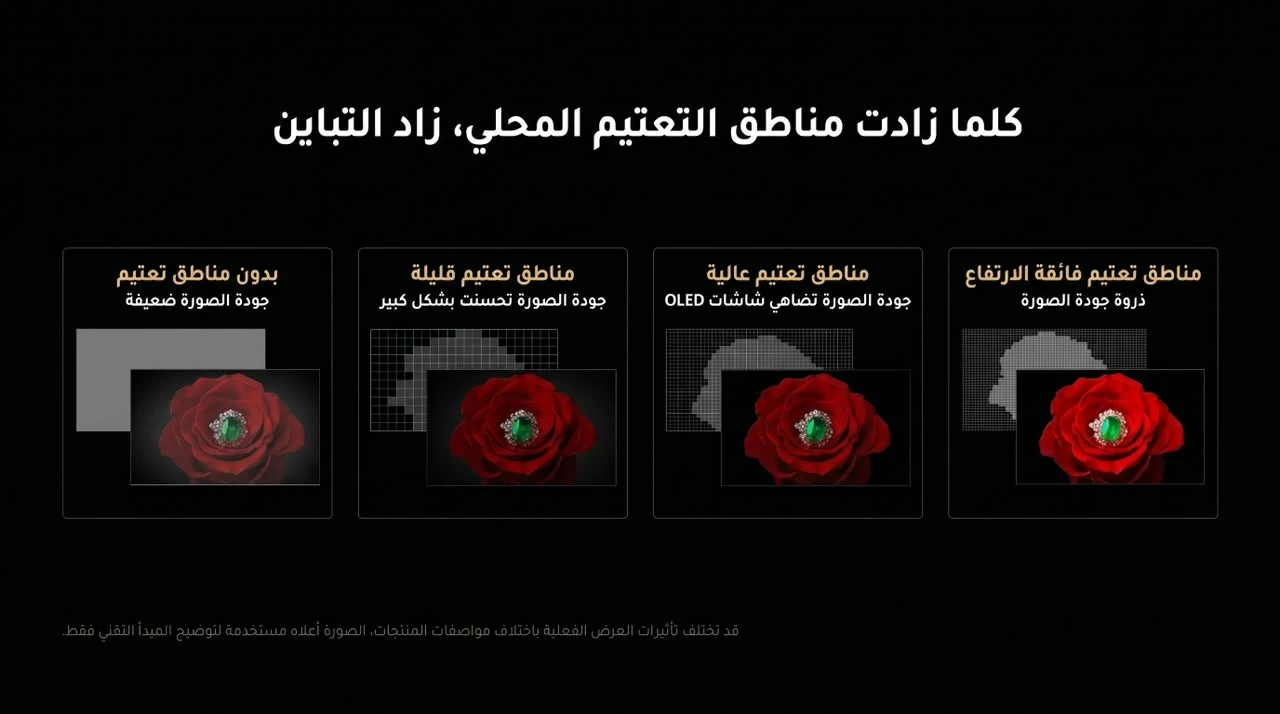
وغالباً ما تعود هذه المشكلة إلى عدم الدقة في التحكم بالإضاءة الخلفية للشاشة، إذ قد لا تتمكن من خفض مستويات الإضاءة بالقدر الكافي في المناطق الداكنة من الصورة. وقد ينتج ذلك عن محدودية عدد مناطق التعتيم، أو ضعف كفاءة تقنية التعتيم المحلي، أو افتقار نظام الإضاءة الخلفية إلى إمكانية التحكم الكامل بالإضاءة عبر مختلف أجزاء الشاشة. ويؤدي ذلك إلى تسرّب الضوء إلى المناطق التي يُفترض أن تكون مظلمة، مما يحول دون ظهور اللون الأسود بعمقه الحقيقي ويؤثر سلباً في جودة الصورة وتجربة المشاهدة.
في المقابل، تتميز أجهزة تلفزيون Mini LED المصممة بتقنيات متطورة للتحكم بالإضاءة بقدرتها على إظهار اللون الأسود بعمقه الحقيقي. إذ تبدو المشاهد المظلمة واضحة ومتجانسة، دون أي توهج أو ضبابية أو بقع مضيئة غير مرغوب فيها. وتسهم هذه الميزة في تحقيق ما يُعرف لدى خبراء تقنيات العرض بـ«التباين الحقيقي»، أي القدرة على إبراز الفروقات بوضوح بين أكثر المناطق سطوعاً وأشدها ظلاماً في الصورة، مع الحفاظ على أدق التفاصيل في كليهما.
ولكن، لماذا يُعدّ ذلك مهماً؟ لأن التباين يلعب دوراً محورياً في تعزيز واقعية المحتوى ومنح المشاهد تجربة بصرية أكثر إبهاراً وعمقاً. فعلى سبيل المثال، تبدو السماء المرصعة بالنجوم أكثر روعة عندما تظهر المساحات المظلمة المحيطة بها باللون الأسود العميق. كما تبرز التفاصيل الساطعة في الأفلام المدعومة بتقنية النطاق الديناميكي العالي (HDR) بصورة أكثر وضوحاً وتأثيراً عند عرضها على خلفيات سوداء داكنة. ولا تقتصر فوائد التباين المحسّن على المحتوى السينمائي فحسب، بل تمتد أيضاً إلى المحتوى اليومي، حيث تبدو الصور أكثر طبيعية وواقعية وعمقاً.
وعند المقارنة بين أجهزة التلفزيون في صالات العرض، يمكن للمستهلكين إجراء اختبار بسيط لتقييم جودة الصورة. فما عليهم سوى طلب عرض محتوى يتضمن مشاهد يغلب عليها الظلام، مثل لقطات للفضاء أو مشاهد لمدينة ليلاً أو مقاطع سينمائية ذات إضاءة خافتة، ثم التركيز على المناطق الداكنة في الصورة. هل تبدو سوداء بالفعل، أم تميل إلى اللون الرمادي الباهت؟ وهل يمكن ملاحظة تسرّب الضوء حول العناصر الساطعة، مثل الترجمة النصية أو النجوم؟ وهل تحافظ الصورة على تفاصيلها الدقيقة في المناطق المضيئة والمظلمة على حد سواء؟
ويمكن للإجابات عن هذه الأسئلة أن تكشف الكثير عن مدى كفاءة التلفزيون في التحكم بالإضاءة، وقدرته على تقديم تجربة مشاهدة عالية الجودة.
ورغم أهمية المصطلحات التسويقية والمواصفات التقنية في مساعدة المستهلكين على اتخاذ قرارات الشراء، فإنها لا تعكس دائماً الصورة الكاملة للأداء الفعلي للشاشة. لذلك، عند التفكير في شراء تلفزيون جديد، تذكّر أن أحد أبرز المؤشرات على جودة الصورة لا يكمن فقط في مدى سطوع الشاشة، بل في قدرتها على إظهار اللون الأسود بعمقه الحقيقي.
When searching for a new television, consumers find themselves faced with a wide array of technical specifications, ranging from brightness levels and refresh rates to AI-supported processors and color gamuts. Amidst these details, one of the simplest and most important criteria for evaluating picture quality is often overlooked: the television's ability to display black accurately and deeply.
The ability of a television to realistically show shades of black directly affects contrast levels, image depth, and overall realism. In fact, the most significant differences between high-end screens and those from budget categories are often more apparent in dark scenes than in bright ones.
In Mini LED televisions that lack precise backlighting control technologies, scenes that are supposed to be very dark, such as the night sky or dimly lit rooms, or the black bars that appear at the top and bottom of the screen when watching movies, may appear closer to dark gray rather than true black. Instead of these dark areas blending seamlessly with the scene's background, they may look hazy or uneven, reducing the sense of image depth and realism.
This issue often stems from inaccuracies in controlling the screen's backlighting, as it may not be able to lower brightness levels sufficiently in the dark areas of the image. This can result from a limited number of dimming zones, poor local dimming efficiency, or a lack of full control over the lighting across different parts of the screen. This leads to light leaking into areas that are supposed to be dark, preventing true black from appearing and negatively impacting image quality and viewing experience.
In contrast, Mini LED televisions designed with advanced backlighting control technologies excel at displaying black in its true depth. Dark scenes appear clear and uniform, without any glow, haze, or unwanted bright spots. This feature contributes to what display technology experts refer to as "true contrast," meaning the ability to clearly highlight the differences between the brightest and darkest areas of the image while preserving the finest details in both.
But why is this important? Because contrast plays a crucial role in enhancing the realism of content and providing viewers with a more stunning and immersive visual experience. For example, a starry sky looks more magnificent when the surrounding dark areas appear in deep black. Bright details in HDR-supported films stand out more clearly and impactfully when displayed against dark black backgrounds. The benefits of improved contrast are not limited to cinematic content; they extend to everyday content as well, making images appear more natural, realistic, and deep.
When comparing televisions in showrooms, consumers can conduct a simple test to evaluate picture quality. They just need to request content that includes dark-dominated scenes, such as shots of space, nighttime cityscapes, or dimly lit cinematic clips, and then focus on the dark areas of the image. Do they actually look black, or do they lean towards a dull gray? Is there noticeable light leakage around bright elements, such as subtitles or stars? Does the image maintain its fine details in both bright and dark areas?
The answers to these questions can reveal a lot about how well the television controls lighting and its ability to deliver a high-quality viewing experience.
While marketing terms and technical specifications are important in helping consumers make purchasing decisions, they do not always reflect the complete picture of the screen's actual performance. Therefore, when considering the purchase of a new television, remember that one of the most significant indicators of picture quality lies not only in how bright the screen is but also in its ability to display black in its true depth.