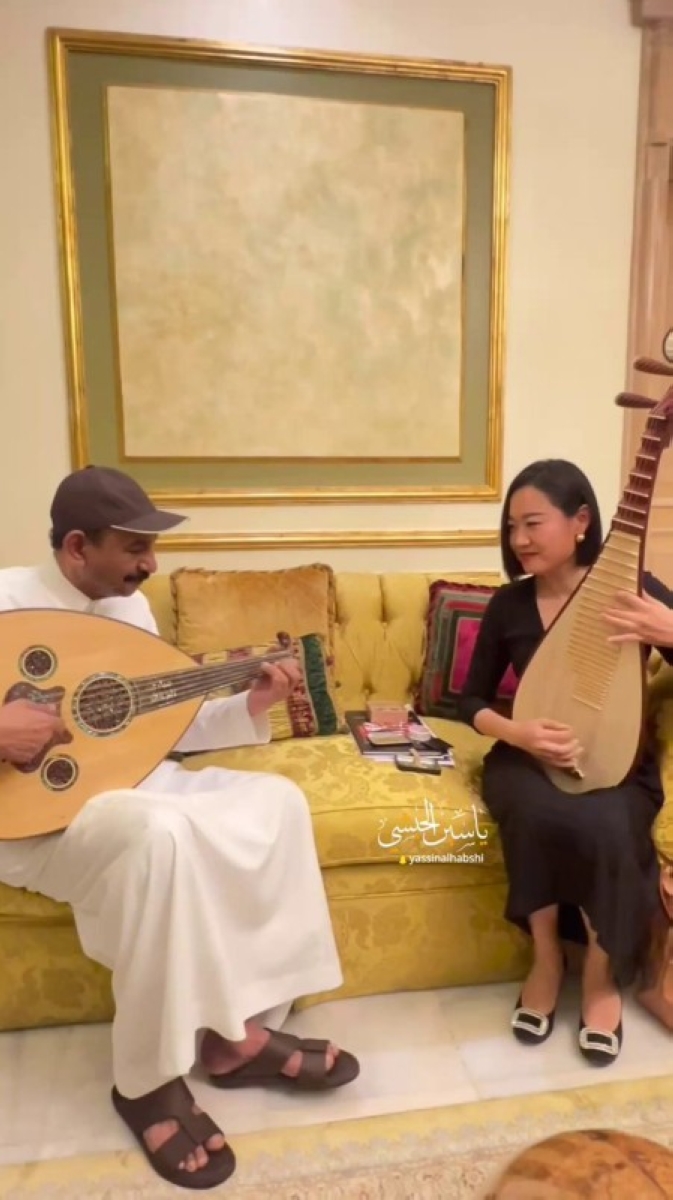
اغتنمت العازفة الصينية جو تشاو، المتخصصة في آلة «البيبا»، زيارتها إلى السعودية للمشاركة في فعاليات العام الثقافي السعودي – الصيني بلقاء الفنان عبادي الجوهر أحد أبرز رموز العزف على آلة العود في العالم العربي.
وقالت «تشاو» في تصريحات إعلامية «بعد مشاركتي في عرض موسيقي بالمتحف الوطني بالرياض 28 سبتمبر، قررت استثمار الأيام المتبقية قبل عودتي إلى الصين بزيارة الجوهر في جدة، وتواصلت مع وكيل أعماله ورئيس رابطة محبيه لترتيب اللقاء، وتم الأمر في اليوم التالي»، واصفة أخطبوط العود بالجبل الشامخ من الموسيقى.
وأضافت العازفة الصينية «كنت أتابع موسيقى عبادي الجوهرمنذ سنوات، وكتبت بحثين أكاديميين عن فنه في العزف على العود، لكن رؤيته يعزف أمامي غيّرت مفهومي عن الأداء الموسيقي الراقي، وأدهشني بقدرته على المزج بين القوة والهدوء في العزف، فالكثير من الموسيقيين قادرون على أداء التقنيات المعقدة، لكن عبادي يمتلك سلاسة نادرة وانسجامًا طبيعيًا يجعل موسيقاه تنبض بالحياة»، مؤكدة بأن أكثر ما لفتها هو سعة معرفة (أبو سارة) بالمقامات والموسيقى العربية، حيث شرح لها أصول بعض المقامات ومعانيها اللغوية، ما يعكس ثقافة موسيقية واسعة وتجربة متعمقة.
وروت «تشاو» لحظة أدهشتها أثناء اللقاء «عزف خلالها عبادي مقطعًا من سيمفونية موزارت رقم 40 على آلة العود بسلاسة مذهلة، وهو أمر في غاية الصعوبة مقارنة بالعزف على البيانو». وتشير إلى أنه ما زال يتدرب يوميًا رغم مسيرته الطويلة، قائلة: «هذا التفصيل يعني الكثير لأي موسيقي محترف، فالمحافظة على مرونة الأصابع بعد سن الثلاثين تتطلب انضباطًا وجهدًا كبيرًا».
وأشارت إلى أن عبادي كان يصغي باهتمام إلى عزفها ثم يوجّهها بدقة إلى النغمة أو الإيقاع الذي أخطأت فيه، كما نبهها إلى تفاصيل دقيقة مثل مقام البيات بربع التون وثبات اليد اليسرى، وعلّمني مقطوعته (تِبِيه) نغمةً بنغمة، كما أهداني آلة عود خاصة به، ومعها مجموعة من ريش العزف وزيت العود، وقال لي: «تمرّني عشر ساعات يوميًا وسأرسل لك مقاطع تدريب». كانت كلماته حافزًا كبيرًا، وجعلتني أرى فيه فنانًا حقيقيًا يؤمن بمسؤوليته تجاه الجيل الجديد. وترى جو تشاو أن عبادي الجوهر يمثل نموذجًا للفنان الذي يجمع بين الأصالة والمعاصرة.
وأضافت «بعد عودتي إلى الصين، سجلت نسخة من مقطوعته (قالوا ترى) على آلة البيبا، إهداءً إلى هذه التجربة الفريدة، وإلى عام الثقافة السعودي – الصيني الذي جمع بيننا».
The Chinese musician Joe Zhao, who specializes in the "pipa" instrument, took advantage of her visit to Saudi Arabia to participate in the Saudi-Chinese Cultural Year events by meeting the artist Abadi Al-Johar, one of the most prominent figures in playing the oud in the Arab world.
Joe Zhao stated in media remarks, "After my participation in a musical performance at the National Museum in Riyadh on September 28, I decided to make the most of the remaining days before my return to China by visiting Al-Johar in Jeddah. I contacted his agent and the head of his fan association to arrange the meeting, and it was set for the next day," describing the oud maestro as a towering mountain of music.
The Chinese musician added, "I have been following Abadi Al-Johar's music for years and have written two academic papers about his art in playing the oud. However, seeing him perform in front of me changed my perception of high musical performance. I was amazed by his ability to blend strength and calmness in his playing. Many musicians can perform complex techniques, but Abadi possesses a rare smoothness and a natural harmony that makes his music come alive." She emphasized that what impressed her most was Abu Sarah's vast knowledge of maqamat (musical modes) and Arabic music, as he explained to her the origins of some maqamat and their linguistic meanings, reflecting a broad musical culture and deep experience.
Joe Zhao recounted a moment that astonished her during the meeting: "During this time, Abadi played a piece from Mozart's Symphony No. 40 on the oud with astonishing smoothness, which is extremely difficult compared to playing on the piano." She noted that he still practices daily despite his long career, saying, "This detail means a lot to any professional musician, as maintaining finger flexibility after the age of thirty requires discipline and great effort."
She pointed out that Abadi was listening attentively to her playing and then precisely guided her to the note or rhythm she had missed. He also alerted her to subtle details such as the bayat maqam with a quarter tone and the stability of the left hand, and he taught me his piece (Tibih) note by note. He even gifted me a special oud of his own, along with a set of playing plectrums and oud oil, saying, "Practice for ten hours a day, and I will send you training clips." His words were a great motivation and made me see him as a true artist who believes in his responsibility towards the new generation. Joe Zhao believes that Abadi Al-Johar represents a model of an artist who combines authenticity and modernity.
She added, "After my return to China, I recorded a version of his piece (Qalu Tara) on the pipa, as a tribute to this unique experience and to the Saudi-Chinese Cultural Year that brought us together."