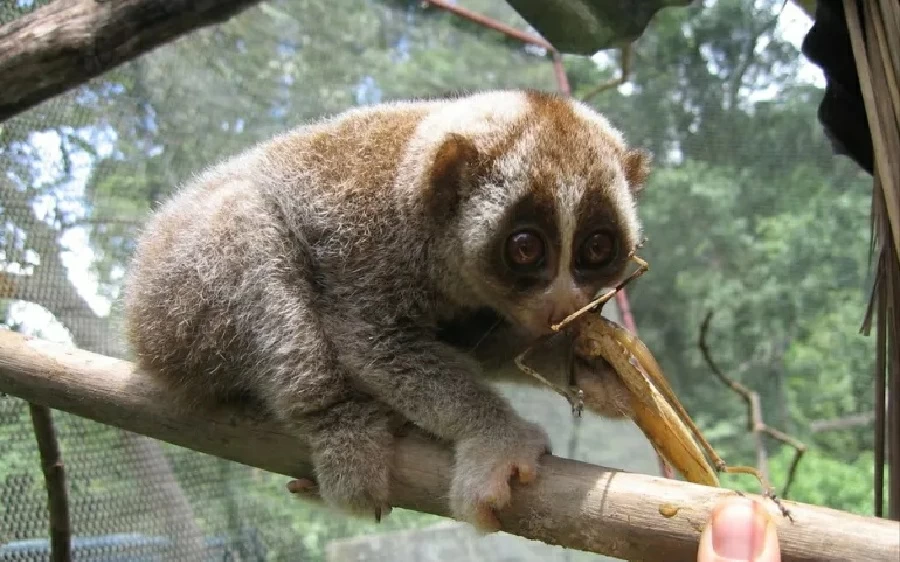
عاد اللوريس البطيء، المعروف بكونه الرئيسيات السام الوحيد في العالم، إلى السجلات العلمية بعد نحو 89 عاماً من غياب التوثيق، في اكتشاف أعاد الأمل إلى الباحثين في إمكانية العثور على أنواع أخرى يُعتقد أنها اختفت من الطبيعة.
وجاءت إعادة توثيق هذا الحيوان في جزيرة بانجكا الإندونيسية، حيث رصد باحثون من مركز (ألوبي) لإنقاذ الحياة البرية أكثر من 90 حيواناً، عُثر على عدد منها في حدائق المنازل وعلى جوانب الطرق وبالقرب من أسلاك الكهرباء.
وتمكن المركز من إنقاذ الحيوانات التي احتاجت إلى التدخل، قبل إعادة 86 منها إلى بيئتها الطبيعية، في جهود تهدف إلى تعزيز فرص بقائها وحمايتها من المخاطر المحيطة بها.
ويتميز اللوريس البطيء بعيونه الكبيرة ونشاطه الليلي، فيما يبلغ طوله نحو 25 سنتيمتراً. وعلى الرغم من مظهره الهادئ، يمتلك آلية دفاعية نادرة؛ إذ ينشّط سمه عبر لعق غدة موجودة في ذراعه، ويمكن أن تتسبب عضته في تفاعلات تحسسية شديدة لدى البشر، قد تصل في بعض الحالات إلى صدمة الحساسية المفرطة.
وقال الدكتور تيمون غلاو، من المركز، إن إعادة توثيق هذا النوع تمثل مؤشراً مشجعاً على إمكانية اكتشاف حيوانات أخرى يُعتقد أنها انقرضت، لكنها ربما لا تزال تعيش في مناطق لم تخضع لأبحاث ميدانية منذ عقود.
ورغم هذه المؤشرات الإيجابية، لا تزال التهديدات البيئية تلقي بظلالها على مستقبل الحيوان، إذ تتقلص موائله الطبيعية بفعل التعدين غير القانوني للقصدير وإزالة الغابات لتوسيع مزارع نخيل الزيت، ما يزيد الضغوط على تجمعاته البرية.
ويصنف الاتحاد الدولي لحفظ الطبيعة اللوريس البطيء المعني ضمن فئة الأنواع المهددة بالانقراض بدرجة حرجة، الأمر الذي يعزز الحاجة إلى حماية موائله، وتكثيف عمليات الرصد والإنقاذ، والحد من الأنشطة البشرية التي تهدد استمراره في البرية.
The slow loris, known as the only venomous primate in the world, has returned to scientific records after nearly 89 years of documentation absence, in a discovery that has renewed hope for researchers in the possibility of finding other species believed to have disappeared from nature.
This animal was re-documented on Bangka Island in Indonesia, where researchers from the (Alobi) Wildlife Rescue Center observed more than 90 animals, some of which were found in home gardens, along roadsides, and near power lines.
The center was able to rescue the animals that needed intervention, before returning 86 of them to their natural habitat, in efforts aimed at enhancing their chances of survival and protecting them from surrounding dangers.
The slow loris is characterized by its large eyes and nocturnal activity, with a length of about 25 centimeters. Despite its calm appearance, it has a rare defense mechanism; it activates its venom by licking a gland located in its arm, and its bite can cause severe allergic reactions in humans, which in some cases can lead to anaphylactic shock.
Dr. Timon Glaw from the center stated that the re-documentation of this species represents an encouraging indicator of the possibility of discovering other animals believed to be extinct, but which may still live in areas that have not undergone field research for decades.
Despite these positive indicators, environmental threats continue to cast a shadow over the future of the animal, as its natural habitats are shrinking due to illegal tin mining and deforestation to expand palm oil plantations, increasing pressures on its wild populations.
The International Union for Conservation of Nature classifies the slow loris in question as critically endangered, which underscores the need to protect its habitats, intensify monitoring and rescue operations, and reduce human activities that threaten its survival in the wild.