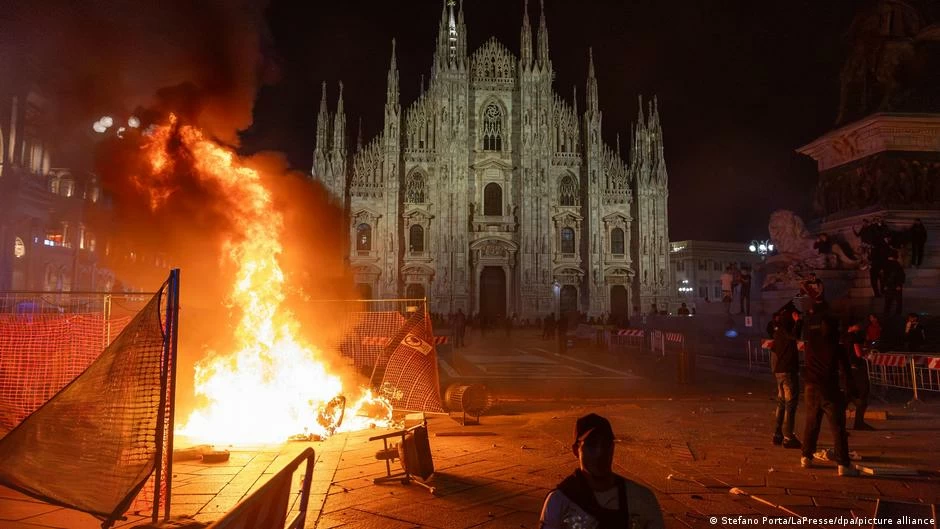
احتجزت الشرطة الإيطالية مئات الشبان عقب أعمال شغب ونهب شهدتها مدينة ميلانو، (الأحد)، خلال احتجاجات على تراجع الخدمات العامة وارتفاع تكاليف المعيشة، فيما أعلنت الحكومة تحركاً لبحث سبل احتواء الاضطرابات.
وقالت السلطات، (الاثنين)، إن الشرطة اقتادت 271 شاباً إلى مراكزها على خلفية الأحداث، موضحة أن 32 شخصاً اعتُقلوا رسمياً، بينهم 23 قاصراً و13 أجنبياً، بينما أُحيل 28 آخرون إلى السلطات القضائية.
وشهدت ميلانو، أكبر مدن إيطاليا وأحد أبرز مراكزها الاقتصادية، مواجهات بين محتجين وقوات الأمن، تخللتها أعمال نهب لمتاجر وتخريب للممتلكات العامة والخاصة. وأظهرت مشاهد تلفزيونية عناصر شرطة مكافحة الشغب وهم يستخدمون الغاز المسيل للدموع وخراطيم المياه لتفريق الحشود، في حين أضرم متظاهرون النار في حاويات للقمامة واقتحموا متاجر معروفة في وسط المدينة.
وجاءت أعمال العنف في اليوم الثاني من الاحتجاجات، التي ارتبطت بالغضب من تراجع مستوى الخدمات العامة وارتفاع تكاليف المعيشة، في مؤشر على الضغوط الاجتماعية والاقتصادية التي تواجهها قطاعات من السكان، وسط مخاوف من تحول الاحتجاجات إلى مواجهات أوسع مع السلطات.
ونددت رئيسة الوزراء الإيطالية جورجا ميلوني بأعمال الشغب، وأعلنت عقد اجتماع حكومي، (الاثنين)، لمناقشة سبل التعامل مع الوضع. وتأتي التطورات في وقت ستستعد فيه ميلوني لخوض استحقاق انتخابي العام القادم، ما يضع حكومتها أمام تحدي احتواء الغضب الاجتماعي والحفاظ على الأمن العام.
وتعيد أحداث ميلانو إلى الواجهة التوترات التي تشهدها دول أوروبية على خلفية ارتفاع نفقات المعيشة والقلق بشأن جودة الخدمات العامة. وشهدت فرنسا بدورها احتجاجات شارك فيها آلاف الأشخاص، بحسب المادة المقدمة، على خلفية مطالب اجتماعية ومعيشية، في سياق أوسع من الضغوط التي تواجهها الحكومات الأوروبية في موازنة الأوضاع المالية مع مطالب المواطنين.
وفي الوقت الذي تضع فيه السلطات الإيطالية أعمال النهب والتخريب في صدارة استجابتها الأمنية، يبقى التعامل مع الأسباب المعيشية للاحتجاجات عاملاً أساسياً في احتواء التوتر ومنع تجدده.
The Italian police detained hundreds of young people following riots and looting that took place in Milan on Sunday during protests against the decline in public services and the rising cost of living, while the government announced a move to discuss ways to contain the unrest.
The authorities stated on Monday that the police took 271 young people to their stations in connection with the events, explaining that 32 individuals were officially arrested, including 23 minors and 13 foreigners, while 28 others were referred to the judicial authorities.
Milan, Italy's largest city and one of its main economic centers, witnessed clashes between protesters and security forces, accompanied by looting of stores and vandalism of public and private property. Television footage showed riot police using tear gas and water cannons to disperse crowds, while demonstrators set fire to garbage containers and stormed well-known stores in the city center.
The violence occurred on the second day of protests, which were linked to anger over the decline in public services and the rising cost of living, indicating the social and economic pressures faced by segments of the population, amid fears that the protests could escalate into broader confrontations with the authorities.
Italian Prime Minister Giorgia Meloni condemned the riots and announced a government meeting on Monday to discuss ways to address the situation. These developments come as Meloni prepares for an electoral challenge next year, placing her government in a position to contain social anger and maintain public security.
The events in Milan bring to the forefront the tensions experienced by European countries due to rising living expenses and concerns about the quality of public services. France also witnessed protests involving thousands of people, according to the submitted material, driven by social and living demands, in a broader context of the pressures faced by European governments in balancing financial situations with citizens' demands.
While the Italian authorities prioritize responses to looting and vandalism in their security measures, addressing the living conditions that sparked the protests remains a key factor in containing tensions and preventing their resurgence.