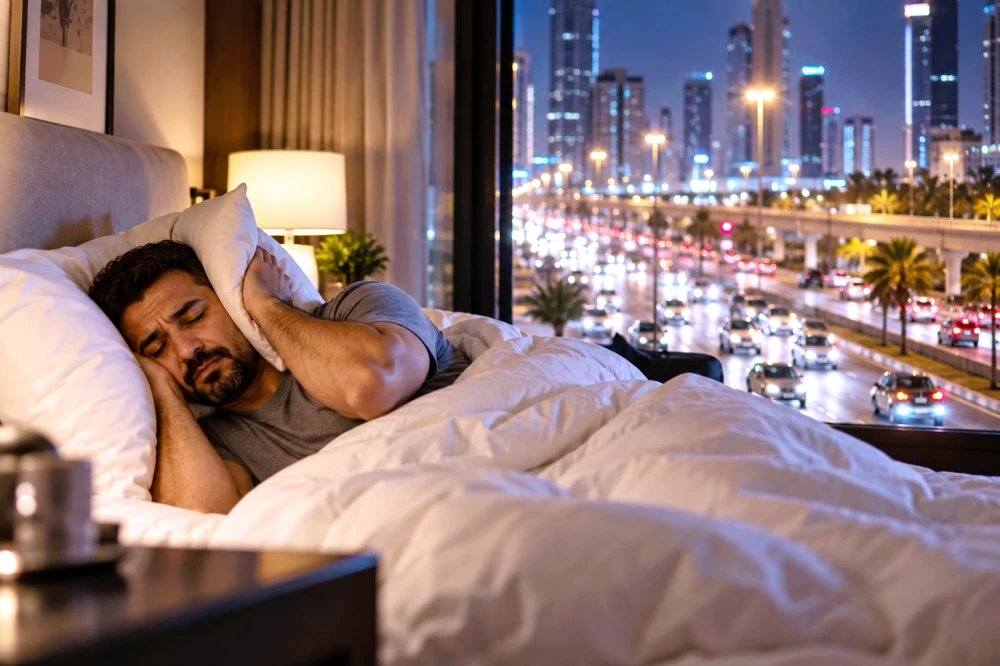
تدخل الضوضاء الليلية ضمن العوامل البيئية، التي تستقطب اهتمام الباحثين في صحة الإنسان، بعدما ربطت دراسات بين التعرض المستمر لأصوات المرور والطائرات والأنشطة الحضرية واضطرابات النوم وارتفاع ضغط الدم ومخاطر أمراض القلب والأوعية الدموية.
وتشير أبحاث، تناولت تأثير الضجيج البيئي، إلى أن الجسم قد يستجيب للأصوات المرتفعة خلال النوم، حتى عندما يواصل الشخص نومه دون استيقاظ كامل، إذ يمكن أن تحدث استجابات عصبية وهرمونية مرتبطة بالتوتر، تؤثر في جودة الراحة الليلية.
وتزداد أهمية هذه النتائج في المدن المكتظة، خصوصاً لدى السكان القريبين من الطرق الرئيسية والمطارات والمناطق التي تستمر فيها الحركة المرورية حتى ساعات متأخرة.
ويفرق الباحثون بين التعرض العابر للأصوات المرتفعة والضوضاء المزمنة، التي قد تؤثر في النوم على المدى الطويل، مع اختلاف مستوى التأثر تبعاً لشدة الصوت ومدته والحالة الصحية والعوامل البيئية المحيطة.
ويساعد تحسين عزل النوافذ وتقليل مصادر الضجيج داخل المنزل، واختيار بيئة نوم هادئة في الحد من التعرض، فيما تبقى معالجة الضوضاء الحضرية جزءاً من مسؤولية التخطيط البيئي والصحة العامة.
Nighttime noise falls under environmental factors that attract the attention of researchers in human health, after studies have linked continuous exposure to traffic sounds, airplanes, and urban activities with sleep disturbances, high blood pressure, and risks of cardiovascular diseases.
Research addressing the impact of environmental noise indicates that the body may respond to loud sounds during sleep, even when a person continues to sleep without fully waking up, as neurological and hormonal responses related to stress can occur, affecting the quality of nighttime rest.
The importance of these findings increases in crowded cities, especially for residents near main roads, airports, and areas where traffic continues late into the night.
Researchers differentiate between transient exposure to loud sounds and chronic noise, which may affect sleep in the long term, with varying levels of impact depending on the intensity and duration of the sound, health status, and surrounding environmental factors.
Improving window insulation and reducing noise sources within the home, as well as choosing a quiet sleeping environment, help mitigate exposure, while addressing urban noise remains part of the responsibility of environmental planning and public health.