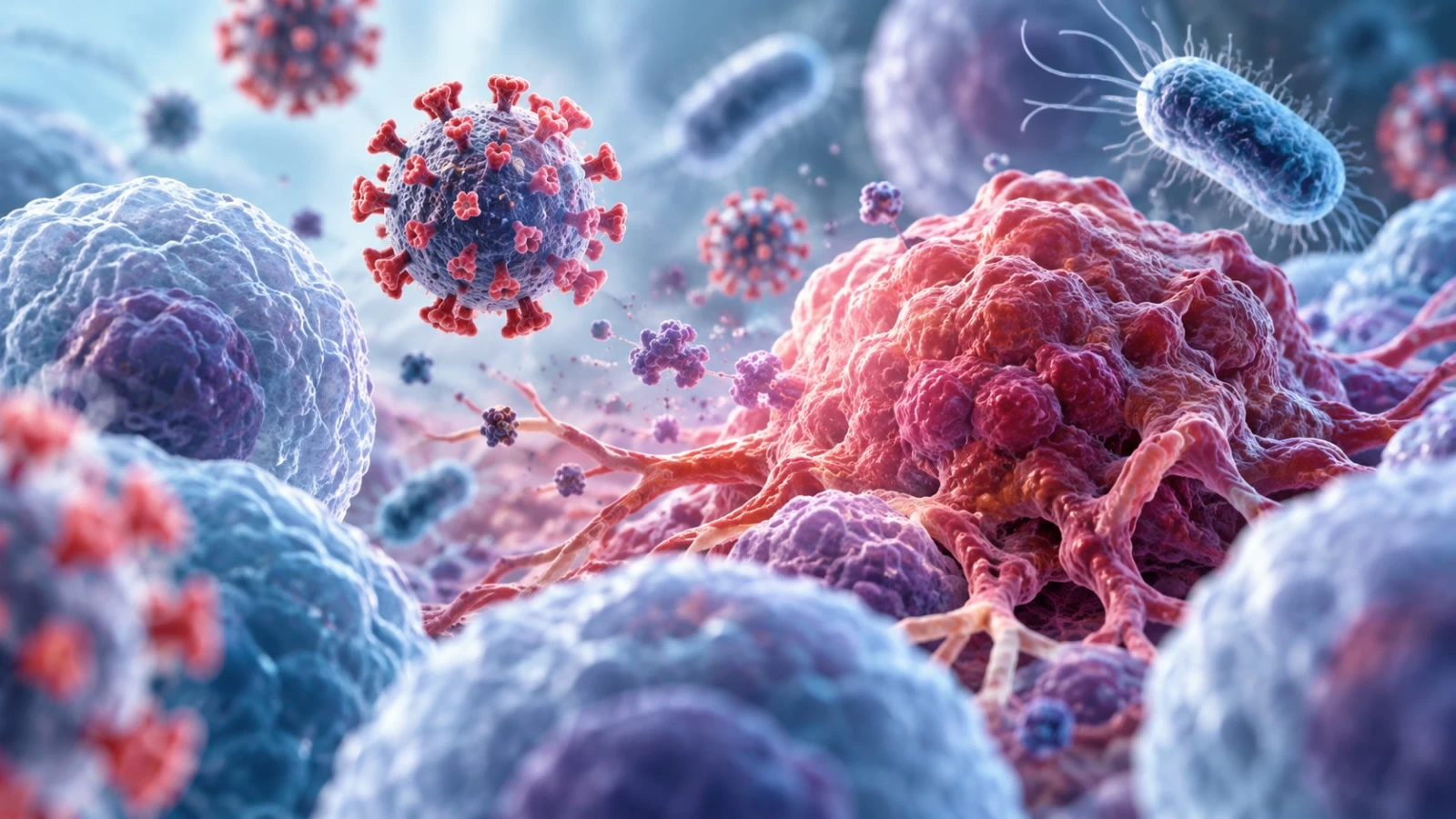
كشفت دراسة عالمية حديثة أن نحو واحدة من كل 8 حالات سرطان جديدة حول العالم ترتبط بعوامل مُعدية، في نتائج تسلط الضوء على دور بعض الفايروسات والبكتيريا والطفيليات في زيادة خطر الإصابة بأنواع معينة من السرطان.
وأجرت الدراسة الوكالة الدولية لبحوث السرطان التابعة لمنظمة الصحة العالمية، ونُشرت في دورية «The Lancet Oncology»، واعتمدت على تقديرات الإصابة بالسرطان عالمياً خلال عام 2024.
2.3 مليون حالة
وقدّر الباحثون أن نحو 2.3 مليون حالة سرطان جديدة خلال عام 2024 يمكن نسبها إلى عوامل مُعدية، بما يمثل نحو 12% من إجمالي حالات السرطان الجديدة المسجلة عالمياً.
وشملت الدراسة 12 عاملاً معدياً مصنفاً من مسببات السرطان لدى البشر، من بينها بكتيريا الملوية البوابية، وفايروس الورم الحليمي البشري، وفايروسا التهاب الكبد «B» و«C»، وفايروس إبشتاين-بار.
السرطان نفسه غير معدٍ
ولا تعني نتائج الدراسة أن السرطان نفسه مرض معدٍ أو أنه ينتقل من شخص إلى آخر، وإنما تشير إلى أن بعض أنواع العدوى المزمنة يمكن أن تزيد خطر الإصابة بأنواع محددة من السرطان مع مرور الوقت.
وقد تسبب بعض أنواع العدوى تغيرات في خلايا الجسم أو التهابات مزمنة ترفع احتمالات تطور السرطان، إلا أن الإصابة بأحد هذه الفايروسات أو البكتيريا لا تعني بالضرورة الإصابة بالسرطان، إذ لا تتطور غالبية حالات العدوى إلى أورام سرطانية.
«الملوية البوابية» في الصدارة
وتصدرت بكتيريا الملوية البوابية «H. pylori» قائمة العوامل المعدية المرتبطة بالسرطان، إذ نُسب إليها نحو 760 ألف حالة خلال عام 2024، غالبيتها مرتبطة بسرطان المعدة.
وجاء فايروس الورم الحليمي البشري «HPV» بعد ذلك بنحو 750 ألف حالة، فيما ارتبط فايروس التهاب الكبد «B» بنحو 360 ألف حالة، وفايروس إبشتاين-بار بنحو 260 ألف حالة، وفايروس التهاب الكبد «C» بنحو 160 ألف حالة.
وأوضحت الدراسة أن هذه العوامل الخمسة تقف وراء الغالبية العظمى من حالات السرطان المرتبطة بالعدوى عالمياً.
تفاوت بين مناطق العالم
وأظهرت النتائج تفاوتاً واضحاً بين مناطق العالم، إذ استحوذت منطقة شرق آسيا على نحو 42% من حالات السرطان المرتبطة بالعوامل المعدية عالمياً، مدفوعة بشكل رئيسي بانتشار بكتيريا الملوية البوابية وفايروس التهاب الكبد «B».
كما سجلت دول أفريقيا جنوب الصحراء عبئاً مرتفعاً من بعض أنواع السرطان المرتبطة بالعدوى، خصوصاً المرتبطة بفايروس الورم الحليمي البشري وعدد من الفايروسات الأخرى.
وأشارت الدراسة إلى أن أكثر من ثلاثة أرباع حالات السرطان المرتبطة بالعوامل المعدية وقعت في الدول منخفضة ومتوسطة الدخل.
الوقاية تقلل الخطر
وأكد الباحثون أن جزءاً مهماً من هذه الحالات يمكن الوقاية منه عبر وسائل متاحة حالياً، من بينها التطعيم ضد فايروس الورم الحليمي البشري والتهاب الكبد «B»، إضافة إلى الكشف عن بعض أنواع العدوى وعلاجها، مثل بكتيريا الملوية البوابية والتهاب الكبد «C».
وشدد الباحثون على أهمية توسيع برامج التطعيم والفحص والعلاج للحد من حالات السرطان المرتبطة بالعوامل المعدية حول العالم.
A recent global study revealed that about one in every 8 new cancer cases worldwide is linked to infectious factors, highlighting the role of certain viruses, bacteria, and parasites in increasing the risk of developing specific types of cancer.
The study was conducted by the International Agency for Research on Cancer, part of the World Health Organization, and published in the journal "The Lancet Oncology," relying on estimates of cancer incidence globally for the year 2024.
2.3 million cases
Researchers estimated that approximately 2.3 million new cancer cases in 2024 could be attributed to infectious factors, representing about 12% of the total new cancer cases recorded globally.
The study included 12 known infectious factors associated with cancer, including Helicobacter pylori bacteria, human papillomavirus, hepatitis viruses "B" and "C," and Epstein-Barr virus.
Cancer itself is not contagious
The findings confirmed that the association of infections with cancer does not mean that cancer itself is an infectious disease or that it can be transmitted from one person to another.
However, some types of infections, especially if they persist for long periods, may cause changes in body cells or chronic inflammation that increase the risk of developing specific types of cancer in the future.
Additionally, being infected with one of these viruses or bacteria does not necessarily mean developing cancer, as the majority of infections do not progress to cancerous tumors.
"Helicobacter pylori" at the forefront
Helicobacter pylori bacteria topped the list of infectious factors associated with cancer, accounting for about 760,000 cases in 2024, most of which are linked to stomach cancer.
Human papillomavirus (HPV) followed with around 750,000 cases, while hepatitis virus "B" was associated with about 360,000 cases, Epstein-Barr virus with about 260,000 cases, and hepatitis virus "C" with about 160,000 cases.
The study indicated that these five factors are responsible for the vast majority of infection-related cancer cases globally.
Variations between regions of the world
The results showed a clear variation in the number of cases between regions of the world, with East Asia accounting for about 42% of infection-related cancers globally, primarily driven by the prevalence of Helicobacter pylori bacteria and hepatitis virus "B."
Sub-Saharan African countries recorded a high burden of certain types of infection-related cancers, particularly those associated with human papillomavirus and several other viruses.
The study noted that more than three-quarters of cancer cases linked to infectious factors occurred in low- and middle-income countries.
Prevention reduces risk
Researchers emphasized that a significant portion of these cases can be prevented through currently available means, including vaccination against human papillomavirus and hepatitis "B," as well as screening and treating certain types of infections, such as Helicobacter pylori and hepatitis "C."
They stressed the importance of expanding vaccination, screening, and treatment programs to reduce the number of cancer cases associated with infectious factors worldwide.