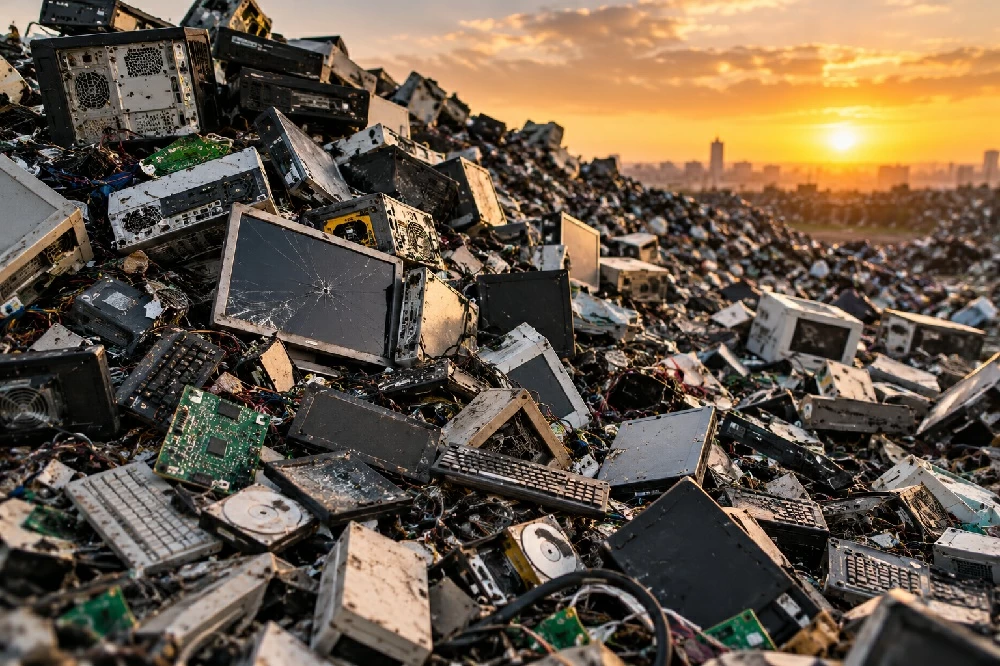
بينما تتجه أنظار العالم إلى القدرات المتنامية للذكاء الاصطناعي، وما يرافقها من سباق محموم لتطوير الخوادم والمعالجات والبنية التحتية اللازمة لتشغيله، يبرز وجه آخر أقل بريقًا لهذه الثورة التكنولوجية؛ نفايات إلكترونية قد تتراكم بكميات هائلة وتفرض تحديًا بيئيًا متزايدًا خلال العقود المقبلة.
وحذرت منظمة شبكة بازل للعمل (BAN)، المعنية بمتابعة قضايا المخلفات حول العالم، من أن التوسّع السريع في تقنيات الذكاء الاصطناعي قد يقود إلى قفزة كبيرة في حجم النفايات الإلكترونية، متوقعة في تحليل وصفته بغير المسبوق وصول الكميات المتراكمة إلى نحو617 مليون طن بحلول عام 2050؛ وهي كمية هائلة شبّهتها المنظمة بما يكفي لتطويق كوكب الأرض نحو ست مرات.
نفايات إلكترونية
ولا تقتصر المخلفات المرتبطة بهذه الطفرة على أجهزة الكمبيوتر التقليدية، بل تمتد إلى البنية التحتية التي تقوم عليها أنظمة الذكاء الاصطناعي نفسها، من الخوادم ومعدات معالجة البيانات، إلى وحدات معالجة الرسومات، وأجهزة الشبكات وأنظمة التبريد، فضلًا عن الأجهزة الشخصية التي بدأت تدمج قدرات الذكاء الاصطناعي بصورة متزايدة.
ومع استمرار تسارع دورة تطوير الأجهزة، فإن المعدات التي تبدو حديثة اليوم قد تتحول خلال فترة قصيرة إلى خردة إلكترونية، سواء بسبب استبدالها بتقنيات أكثر كفاءة أو نتيجة الحاجة إلى قدرات حوسبة أكبر لمواكبة التطور المتلاحق في نماذج الذكاء الاصطناعي؛ وهو ما يفتح الباب أمام سؤال بيئي لا يتعلق فقط بما تستهلكه هذه التقنيات، وإنما بما تتركه خلفها بعد انتهاء عمر أجهزتها.
وتزداد حساسية المشكلة، بحسب المنظمة، بسبب طبيعة بعض المواد الداخلة في تصنيع هذه المعدات، التي قد تجعل التعامل مع المخلفات الإلكترونية والتخلص منها بصورة آمنة أكثر تعقيدًا. وحذرت (شبكة بازل للعمل) من وجود مواد كيميائية شديدة السمية وصعبة التحلل ضمن بعض هذه النفايات، بما يثير مخاوف بشأن آثارها المحتملة في البيئة والصحة العامة إذا لم تخضع لعمليات معالجة وإعادة تدوير مناسبة.
«تسونامي» في الأفق
ويشير هذا السيناريو إلى أن فاتورة الذكاء الاصطناعي البيئية قد لا تتوقف عند الكهرباء والمياه اللازمتين لتشغيل مراكز البيانات، وهما جانبان حظيا باهتمام واسع خلال السنوات الأخيرة، بل قد تمتد إلى دورة حياة الأجهزة نفسها؛ من لحظة تصنيعها ونقلها وتشغيلها، وصولًا إلى مرحلة خروجها من الخدمة وتحولها إلى مخلفات.
ونبّه مؤسس المنظمة جيم باكيت، إلى أن النقاش الدائر حول التأثير البيئي للذكاء الاصطناعي ينصب بدرجة كبيرة على استهلاك الطاقة والمياه، في حين لا يحظى مصير المعدات المادية التي تشغّل هذه الأنظمة بالقدر نفسه من الاهتمام، رغم أنها تشكل جزءًا أساسيًا من البنية التي تقوم عليها الثورة الرقمية الجديدة.
ووصف باكيت ما قد ينتج عن هذا المسار بأنه «تسونامي» من النفايات الإلكترونية، محذرًا من أن الطفرة الحالية في الذكاء الاصطناعي يمكن أن تضخم حجم المشكلة القائمة أصلًا بصورة غير مسبوقة.
جزء من الماضي
وتضع هذه التحذيرات العالم أمام مفارقة لافتة؛ فالتكنولوجيا التي يُنظر إليها باعتبارها إحدى أهم أدوات المستقبل قد تحمل معها، إذا لم تُواكبها حلول فعالة لإدارة مخلفاتها، إرثًا ماديًا ضخمًا يصعب تجاهله. وبينما تتسابق الشركات على تطوير معالجات أكثر قوة وخوادم أكثر قدرة، يبقى السؤال مفتوحًا حول مصير أجيال الأجهزة التي ستفقد مكانها سريعًا في هذا السباق.
فقد لا يكون التحدي الحقيقي، في السنوات المقبلة، هو كيفية بناء أنظمة ذكاء اصطناعي أكثر قوة فحسب، بل كيفية التعامل مع الجبال الإلكترونية التي ستتراكم عندما تصبح أجيال اليوم من الخوادم والمعالجات والمعدات جزءًا من الماضي. وبذلك، قد تحمل ثورة الذكاء الاصطناعي وجهين متناقضين: عالمًا رقميًا أكثر تطورًا من جهة، وأثرًا ماديًا متناميًا من جهة أخرى، ما يجعل إدارة النفايات وإعادة تدوير المعدات جزءًا لا يمكن فصله عن الحديث عن مستقبل هذه التكنولوجيا.
As the world focuses on the growing capabilities of artificial intelligence, accompanied by a frantic race to develop the servers, processors, and infrastructure necessary to operate it, another, less glamorous side of this technological revolution emerges; electronic waste that may accumulate in enormous quantities and pose an increasing environmental challenge over the coming decades.
The Basel Action Network (BAN), an organization concerned with monitoring waste issues around the world, warned that the rapid expansion of artificial intelligence technologies could lead to a significant jump in the volume of electronic waste, predicting in an unprecedented analysis that the accumulated amounts could reach about 617 million tons by 2050; a staggering quantity that the organization likened to enough to encircle the planet Earth about six times.
Electronic Waste
The waste associated with this boom is not limited to traditional computers, but extends to the infrastructure on which artificial intelligence systems themselves rely, from servers and data processing equipment to graphics processing units, networking devices, and cooling systems, as well as personal devices that are increasingly integrating artificial intelligence capabilities.
As the pace of hardware development continues to accelerate, equipment that seems modern today may quickly turn into electronic scrap, whether due to being replaced by more efficient technologies or the need for greater computing power to keep up with the rapid evolution of artificial intelligence models; this raises an environmental question that concerns not only what these technologies consume but also what they leave behind after their devices reach the end of their life cycle.
The problem's sensitivity increases, according to the organization, due to the nature of some materials used in manufacturing this equipment, which may complicate the safe handling and disposal of electronic waste. The Basel Action Network warned of the presence of highly toxic and non-biodegradable chemicals among some of this waste, raising concerns about their potential impacts on the environment and public health if not subjected to appropriate processing and recycling operations.
A "Tsunami" on the Horizon
This scenario suggests that the environmental bill of artificial intelligence may not stop at the electricity and water needed to operate data centers, aspects that have received widespread attention in recent years, but may extend to the lifecycle of the devices themselves; from the moment they are manufactured, transported, and operated, to the stage when they are decommissioned and turned into waste.
Jim Puckett, the founder of the organization, pointed out that the ongoing discussion about the environmental impact of artificial intelligence largely focuses on energy and water consumption, while the fate of the physical equipment that powers these systems does not receive the same level of attention, despite being an essential part of the infrastructure on which the new digital revolution is built.
Puckett described what may result from this trajectory as a "tsunami" of electronic waste, warning that the current boom in artificial intelligence could exacerbate the existing problem in unprecedented ways.
A Part of the Past
These warnings present the world with a striking paradox; the technology that is viewed as one of the most important tools of the future may carry with it, if not accompanied by effective solutions for managing its waste, a massive physical legacy that is hard to ignore. While companies race to develop more powerful processors and more capable servers, the question remains open about the fate of generations of devices that will quickly lose their place in this race.
The real challenge in the coming years may not only be how to build more powerful artificial intelligence systems but also how to deal with the electronic mountains that will accumulate when today's generations of servers, processors, and equipment become part of the past. Thus, the artificial intelligence revolution may bear two contradictory faces: a more advanced digital world on one hand, and a growing physical impact on the other, making waste management and recycling of equipment an inseparable part of the conversation about the future of this technology.