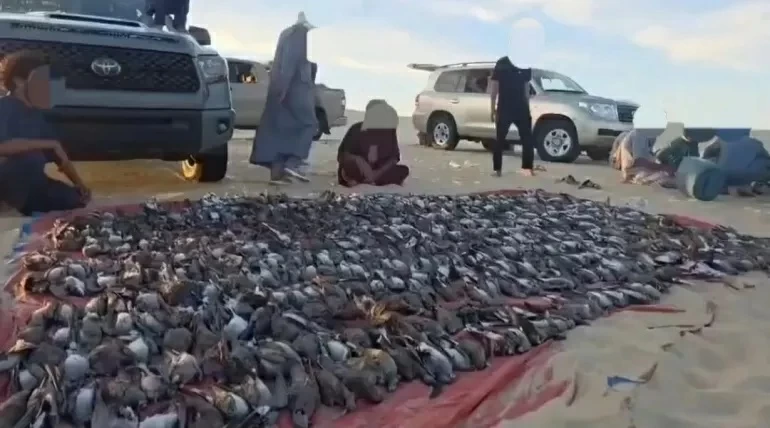
لم يعد منظر بنادق الصيد على السواحل الليبية مجرد رحلة للتنزه بين أحضان الطبيعة، بل تحول لدى قطاع واسع إلى سباق أرقام ومباهاة على منصات التواصل الاجتماعي بأعداد الطرائد النافقة.
تداول ناشطون صوراً صادمة لمجمدات منزلية تحتفظ بآلاف الطيور المهاجرة، بينها لافتات مدون عليها كشوفات تفيد باحتواء الحاوية الواحدة على أكثر من 1000 طائر، وهو ما أثار حفيظة الجمعيات المهتمة بالحياة البرية التي حذرت من تحول الهواية إلى استنزاف غير مدروس.
ويرى متخصصون في شؤون البيئة أن الأزمة تجاوزت مفهوم الشغف الرياضي لتلامس مربع التجارة، إذ يباع زوج طيور «القمري الأوروبي» المهدد بالانقراض بأسعار تصل إلى 100 دينار ليبي، بينما تُعرض أطباق طائر «الشحيم» بأسعار مرتفعة، ما فتح الشهية للتوسع في استخدام الشباك والمعدات الحديثة لجمع أكبر حصيلة ممكنة.
وتشير تقارير حماية الطبيعة إلى أن الساحل الليبي الممتد لنحو 2000 كيلومتر يُعد خط إمداد ونقطة استراحة حيوية لملايين الطيور القادمة من أوروبا باتجاه العمق الأفريقي، غير أن غياب الضوابط جعل المنطقة ضمن أعلى المناطق تسجيلاً للصيد المفرط بحسب التقديرات الدولية.
وفي الوقت الذي يتطلع فيه صيادون قدامى لوضع حدود تحمي بيئتهم من ندرة الطرائد، تجد الأجهزة المختصة نفسها أمام نصوص تشريعية يعود تاريخ إصدارها لستينيات القرن الماضي، إذ تتضمن العقوبات غرامات رمزية لم تعد تشكل رادعاً أمام مكاسب التجارة البرية.
وينادي ناشطون بضرورة تحديث قوانين الصيد عبر تحديد المواسم والأعداد المسموح بها لكل فرد، إلى جانب حظر وسائل الصيد الجماعية لضمان استدامة التنوع البيولوجي وحماية المسارات الطبيعية للطيور المهاجرة عبر البلاد.
The sight of hunting rifles on the Libyan coasts has ceased to be merely a trip to enjoy nature; instead, it has transformed for a wide sector into a race for numbers and boasting on social media platforms about the quantities of dead game.
Activists circulated shocking images of home freezers holding thousands of migratory birds, including signs indicating that each container contains more than 1,000 birds, which has raised the ire of wildlife organizations that warned of the hobby turning into an unstudied depletion.
Environmental specialists believe that the crisis has surpassed the concept of sporting passion to touch on the realm of commerce, as a pair of the endangered "European Turtle Dove" is sold for prices reaching 100 Libyan dinars, while dishes of the "Shahim" bird are offered at high prices, which has opened the appetite for expanding the use of nets and modern equipment to collect the largest possible haul.
Nature protection reports indicate that the Libyan coast, extending for about 2,000 kilometers, is a vital supply line and resting point for millions of birds coming from Europe towards the African interior. However, the absence of regulations has made the area one of the highest regions for recorded overfishing according to international estimates.
While veteran hunters look forward to establishing limits to protect their environment from the scarcity of game, the relevant authorities find themselves facing legislative texts dating back to the 1960s, as the penalties include symbolic fines that no longer serve as a deterrent against the profits of wildlife trade.
Activists are calling for the need to update hunting laws by specifying the seasons and quantities allowed for each individual, in addition to banning collective hunting methods to ensure the sustainability of biodiversity and protect the natural pathways of migratory birds across the country.