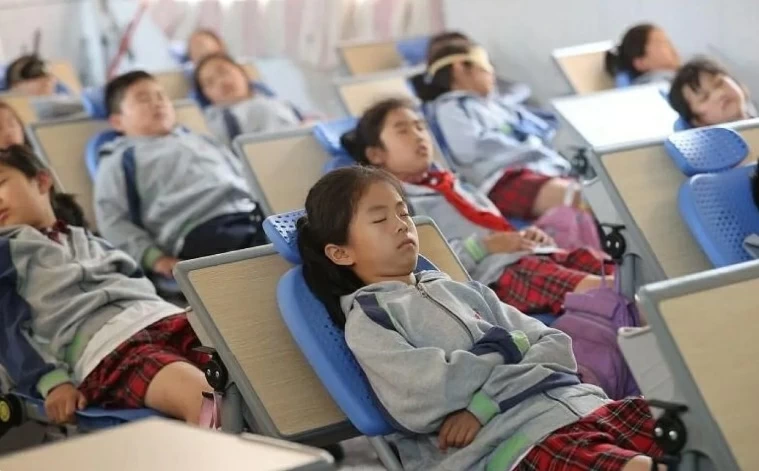
تواصل المدارس الصينية ابتكار طرق غير تقليدية لمنح الطلاب قسطًا من الراحة خلال يومهم الدراسي، بعدما بدأت مؤسسات تعليمية في أنحاء البلاد اعتماد مقاعد ومكاتب تتحول إلى أسرّة صغيرة مخصصة للقيلولة، في خطوة تعكس اهتمامًا متزايدًا براحة الطلاب خلال فترة الظهيرة.
وفي مدينة ووهو بمقاطعة آنهوي، أُدرج توفير مئات مجموعات القيلولة ضمن مشروعات تحسين مستوى المعيشة لعام 2026، وبدأت مدارس التعليم الإلزامي بالفعل في استخدام هذه المقاعد التي يمكن تعديلها لتتحول من كرسي دراسي عادي إلى مساحة استرخاء مريحة خلال استراحة الغداء.
وتتيح هذه التصاميم للطلاب الاستلقاء بدلًا من النوم على المكاتب بطريقة مرهقة للرقبة والذراعين، إذ تأتي المقاعد بمساند ظهر قابلة للإمالة وأجزاء قابلة للتمديد؛ ما يجعلها تجمع بين وظيفة الكرسي التقليدي وسرير القيلولة في آن واحد.
وتأتي هذه الخطوة بعد إصدار الهيئة الوطنية لتنظيم السوق في الصين معيارًا فنيًا خاصًا بمكاتب وكراسي القيلولة، يتضمن مواصفات دقيقة تتعلق بالارتفاع وزوايا الإمالة والمساحة أسفل المكاتب، لضمان ملاءمتها لاحتياجات الطلاب ومراحل نموهم.
وتخصص المدارس الصينية عادة نحو ساعتين لفترة الغداء والراحة، في إطار سياسات حكومية تهدف منذ سنوات إلى تعزيز حصول الطلاب على نوم كافٍ خلال اليوم الدراسي، بما في ذلك تشجيع القيلولة في منتصف اليوم كجزء من روتين صحي متكامل.
Chinese schools continue to innovate unconventional ways to give students a break during their school day, as educational institutions across the country have started adopting seats and desks that transform into small beds designated for napping, in a move that reflects a growing interest in student comfort during the afternoon period.
In the city of Wuhu in Anhui Province, the provision of hundreds of nap sets has been included in the living standards improvement projects for 2026, and compulsory education schools have already begun using these adjustable seats that can transform from a regular desk chair into a comfortable relaxation space during lunch breaks.
These designs allow students to lie down instead of sleeping on desks in a way that strains the neck and arms, as the seats come with adjustable backrests and extendable parts; thus, they combine the function of a traditional chair and a nap bed at the same time.
This step follows the issuance of a technical standard by the National Market Regulation Administration in China for nap desks and chairs, which includes precise specifications related to height, tilt angles, and space under the desks, to ensure they meet the needs of students and their growth stages.
Chinese schools typically allocate about two hours for lunch and rest, as part of government policies aimed for years at enhancing students' access to adequate sleep during the school day, including encouraging napping in the middle of the day as part of a comprehensive healthy routine.