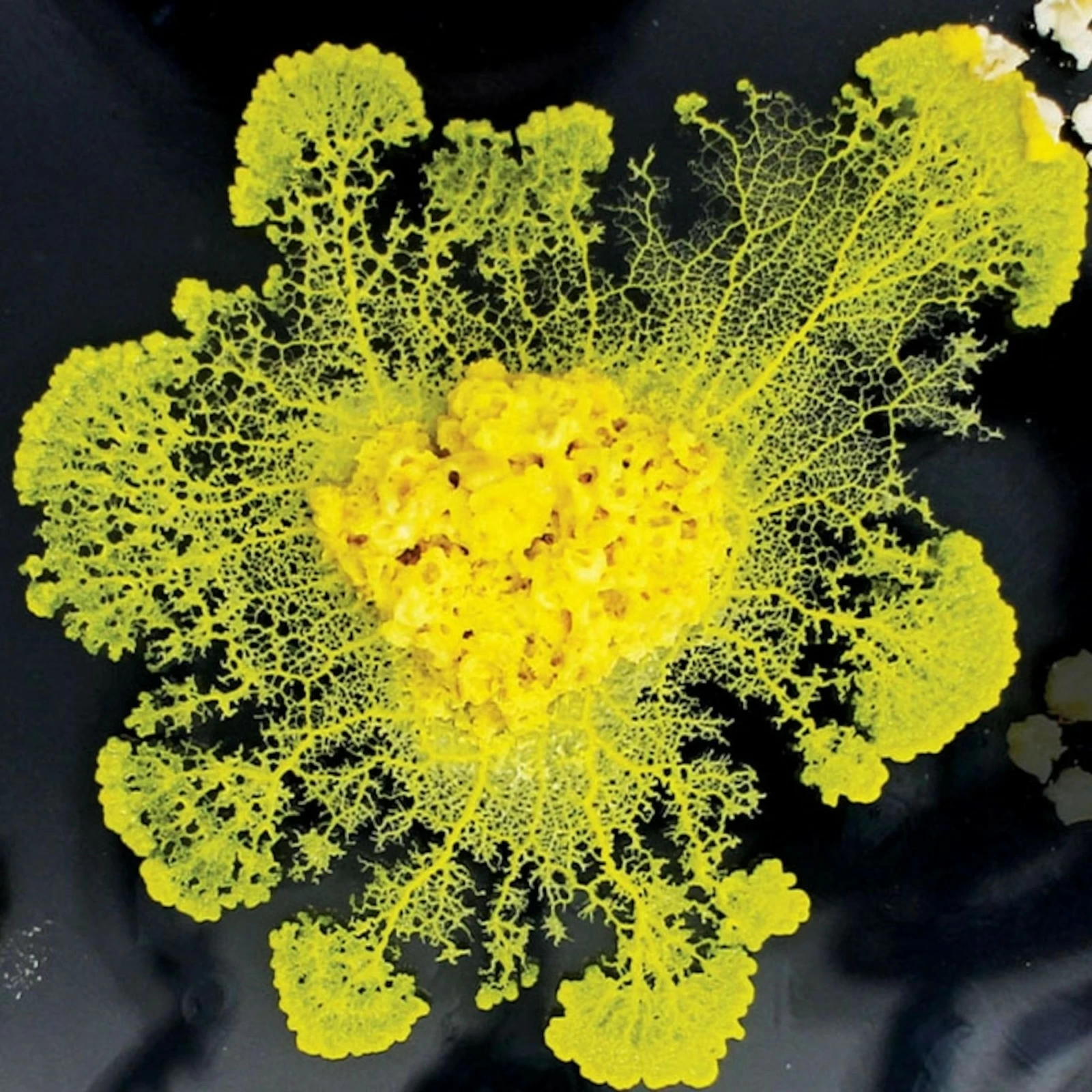
أعاد كائن وحيد الخلية من العفن الغروي «Physarum polycephalum» لفت أنظار العلماء إلى قدراته غير المعتادة، إذ يستطيع الاستجابة للبيئة وتغيير سلوكه والتكيف مع تجاربه السابقة، رغم افتقاره إلى الدماغ والجهاز العصبي.
ويُعد هذا الكائن من العفن الغروي، ويظهر غالباً على هيئة كتلة أو شبكة هلامية صفراء، ويقضي معظم حياته في البحث عن الغذاء، بما في ذلك البكتيريا والفطريات والكائنات الدقيقة الأخرى.
يحل المتاهات ويختار أقصر المسارات
وأظهرت تجارب علمية أن «Physarum polycephalum» يستطيع العثور على أقصر مسار بين مصدرين للغذاء داخل المتاهات، من خلال إعادة تنظيم شبكته الأنبوبية والتخلي عن المسارات الأقل فاعلية.
وفي تجارب أخرى، استطاع تكوين شبكات تحاكي بدرجة لافتة شبكات النقل والسكك الحديدية، من بينها شبكة السكك الحديدية في منطقة طوكيو، بعدما أعاد تنظيم أنابيبه حول مصادر الغذاء بطريقة تحقق كفاءة عالية.
تعلم دون خلايا عصبية
ولا تقتصر قدراته على إيجاد المسارات؛ فقد أظهرت تجارب علمية أن العفن الغروي يمكن أن يُظهر نوعاً بسيطاً من التعلم يُعرف باسم «التعوّد».
وفي دراسة نشرتها مجلة «Nature»، عُرض الكائن لجسور عولجت بمواد منفّرة مثل الكينين أو الكافيين. ومع تكرار التعرض، أصبح يعبر هذه الجسور بسرعة أكبر، في إشارة إلى انخفاض استجابته للمنبه المتكرر. وبعد يومين من التوقف عن التعرض للمواد، عادت استجابته للنفور.
شبكة أنابيب تحتفظ بآثار التجربة
وتشير أبحاث أخرى إلى أن «Physarum polycephalum» يعتمد على شبكة من الأنابيب الداخلية لنقل المواد داخل الخلية، ويمكن لهذه الشبكة أن تتغير استجابةً لمصادر الغذاء.
وأظهرت دراسة أن الأنابيب القريبة من الغذاء تصبح أكثر سماكة، بينما تتراجع الأنابيب الأقل فائدة، ما يسمح للكائن بالاحتفاظ بأثر مكاني لموقع الغذاء السابق والاستفادة منه في حركته اللاحقة.
هل يمكن وصفه بـ«الذكاء»؟
ورغم هذه القدرات، لا يعني ذلك أن الكائن يمتلك ذكاءً أو تفكيراً شبيهاً بالإنسان؛ فالباحثون يستخدمون مفاهيم مثل التعلم والتعوّد ومعالجة المعلومات لوصف سلوكيات تحدث من دون وجود جهاز عصبي.
وتشير هذه الدراسات إلى أن بعض أشكال معالجة المعلومات والتكيف مع البيئة يمكن أن تظهر لدى كائنات لا تمتلك خلايا عصبية، وهو ما يوسع النقاش العلمي حول طبيعة التعلم والإدراك.
تجربة كشفت قدراته في المتاهات
وكان الباحث الياباني توشيوكي ناكاغاكي من أبرز العلماء الذين درسوا هذه الظاهرة، إذ نشر عام 2000 دراسة في مجلة «Nature» أظهرت قدرة «Physarum polycephalum» على إيجاد أقصر مسار بين نقطتين داخل متاهة.
وأصبحت هذه التجارب من أبرز الأمثلة على قدرة كائن وحيد الخلية على حل مشكلة معقدة نسبياً دون امتلاك دماغ أو جهاز عصبي.
هل يحتاج التعلّم إلى دماغ؟
وتطرح هذه النتائج سؤالاً علمياً مثيراً: هل يحتاج التعلم ومعالجة المعلومات بالضرورة إلى دماغ؟
ويواصل العلماء دراسة «Physarum polycephalum» لفهم كيفية حدوث هذه العمليات في الكائنات غير العصبية، كما ألهمت قدراته أبحاثاً في مجالات الحوسبة وتصميم الشبكات وحل المشكلات.
A single-celled organism from the slime mold "Physarum polycephalum" has drawn scientists' attention to its unusual capabilities, as it can respond to its environment, change its behavior, and adapt based on past experiences, despite lacking a brain and nervous system.
This organism is a type of slime mold, often appearing as a yellow gelatinous mass or network, spending most of its life searching for food, including bacteria, fungi, and other microorganisms.
Solving mazes and choosing the shortest paths
Scientific experiments have shown that "Physarum polycephalum" can find the shortest path between two food sources within mazes by reorganizing its tubular network and abandoning less effective pathways.
In other experiments, it was able to form networks that strikingly mimic transportation and railway networks, including the railway network in the Tokyo area, after reorganizing its tubes around food sources in a way that achieves high efficiency.
Learning without nerve cells
Its capabilities are not limited to finding paths; scientific experiments have shown that the slime mold can exhibit a simple type of learning known as "habituation."
In a study published in the journal "Nature," the organism was exposed to bridges treated with aversive substances like quinine or caffeine. With repeated exposure, it began to cross these bridges more quickly, indicating a decrease in its response to the repeated stimulus. After two days of stopping exposure to the substances, its aversion response returned.
A network of tubes retains traces of experience
Other research indicates that "Physarum polycephalum" relies on a network of internal tubes to transport materials within the cell, and this network can change in response to food sources.
One study showed that the tubes near the food become thicker, while less useful tubes recede, allowing the organism to retain a spatial trace of the previous food location and utilize it in its subsequent movements.
Can it be described as "intelligent"?
Despite these capabilities, this does not mean that the organism possesses intelligence or thinking similar to humans; researchers use concepts like learning, habituation, and information processing to describe behaviors that occur without the presence of a nervous system.
These studies suggest that some forms of information processing and adaptation to the environment can occur in organisms that lack nerve cells, which broadens the scientific discussion about the nature of learning and perception.
An experiment revealed its capabilities in mazes
The Japanese researcher Toshiyuki Nakagaki was one of the prominent scientists who studied this phenomenon, publishing a study in 2000 in the journal "Nature" that demonstrated "Physarum polycephalum's" ability to find the shortest path between two points within a maze.
These experiments have become some of the most notable examples of a single-celled organism solving a relatively complex problem without possessing a brain or nervous system.
Does learning require a brain?
These findings raise an intriguing scientific question: Does learning and information processing necessarily require a brain?
Scientists continue to study "Physarum polycephalum" to understand how these processes occur in non-neuronal organisms, and its capabilities have inspired research in fields such as computing, network design, and problem-solving.