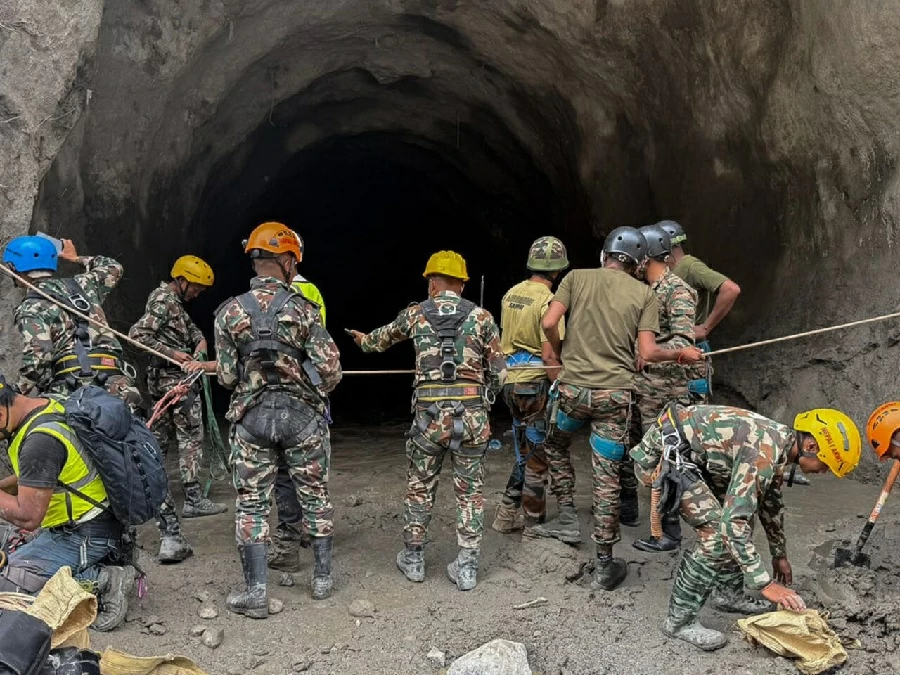
تواصل فرق الإنقاذ في نيبال جهودها المكثفة للوصول إلى عشرات العمال المحاصرين داخل ثلاثة أنفاق تابعة لمشاريع للطاقة الكهرومائية، وذلك بعد مرور أسبوعين على الفيضانات المدمرة التي اجتاحت مناطق واسعة من جبال الهيمالايا وامتدت آثارها إلى التبت الصينية، مخلفةً آلاف المفقودين ومئات الضحايا.
وتعرض ما لا يقل عن 11 مشروعًا للطاقة الكهرومائية لأضرار جسيمة بعدما انهار نهر جليدي على الحدود بين نيبال والصين في 26 أغسطس، ما أدى إلى طمر مداخل الأنفاق تحت كميات هائلة من الطين والأنقاض، وعزل العمال داخلها.
وقال دارما راج أوبريتي، رئيس الهيئة الوطنية للحد من مخاطر الكوارث: إن التركيز الأكبر ينصب على مشروع تشيليمي للطاقة الكهرومائية، حيث يُعتقد بوجود عمال محاصرين؛ نظرًا لوجود مرافق داخلية يمكن أن توفر لهم الطعام لفترة محدودة. كما تعمل الفرق على فتح ممرات في أنفاق مشروعي أبر تريشولي 3 إيه و3 بي، اللذين يربط بينهما نفق داخلي، وقد جرى تزويدهما بالأكسجين عبر أنابيب خاصة، إلى جانب إرسال معدات جديدة لتسهيل عمليات الوصول.
وأكد رئيس الوزراء باليندرا شاه أن الحكومة لن تتراخى في عمليات البحث والإنقاذ، مشيرًا إلى أن الجهود الحالية تعكس الحس الإنساني للشعب النيبالي. وتشير تقديرات الجيش إلى أن نحو 121 شخصًا من أصل 900 مفقود في مشاريع الطاقة قد يكونون داخل الأنفاق، بينما كان آخرون يعملون في مواقع مختلفة خارج الشبكة الداخلية.
وخلال الأيام الماضية، تمكنت فرق الإنقاذ من إخراج أربعة ناجين؛ بينهم مواطن صيني وعاملان في قطاع الطاقة، إضافة إلى امرأة نيبالية انتُشلت من منزلها المدفون.
وتؤكد الإحصاءات الرسمية أن الانهيار الطيني أودى بحياة ما لا يقل عن 1399 شخصًا، فيما لا يزال أكثر من 5400 في عداد المفقودين في نيبال والتبت، وسط تأكيد البلدين أن تغير المناخ كان العامل الرئيس وراء الانهيار الجليدي الذي تسبب في الكارثة.
The rescue teams in Nepal continue their intensive efforts to reach dozens of workers trapped inside three tunnels belonging to hydropower projects, two weeks after devastating floods swept across vast areas of the Himalayas, with effects extending to Chinese Tibet, leaving thousands missing and hundreds dead.
At least 11 hydropower projects have suffered severe damage after a glacier collapsed on the border between Nepal and China on August 26, burying the entrances of the tunnels under massive amounts of mud and debris, isolating the workers inside.
Dharma Raj Upreti, head of the National Disaster Risk Reduction Authority, stated that the main focus is on the Chilime hydropower project, where it is believed that trapped workers exist; as there are internal facilities that can provide them with food for a limited time. The teams are also working to open passages in the tunnels of the Upper Trishuli 3A and 3B projects, which are connected by an internal tunnel, and they have been supplied with oxygen through special pipes, in addition to sending new equipment to facilitate access operations.
Prime Minister Balendra Shah confirmed that the government will not relent in its search and rescue operations, noting that the current efforts reflect the humanitarian spirit of the Nepali people. Army estimates suggest that about 121 people out of 900 missing in the energy projects may be inside the tunnels, while others were working at various sites outside the internal network.
In recent days, rescue teams have managed to bring out four survivors; including a Chinese national and two energy sector workers, along with a Nepali woman who was pulled from her buried home.
Official statistics confirm that the mudslide has claimed the lives of at least 1,399 people, while more than 5,400 remain missing in Nepal and Tibet, with both countries affirming that climate change was the main factor behind the glacier collapse that caused the disaster.