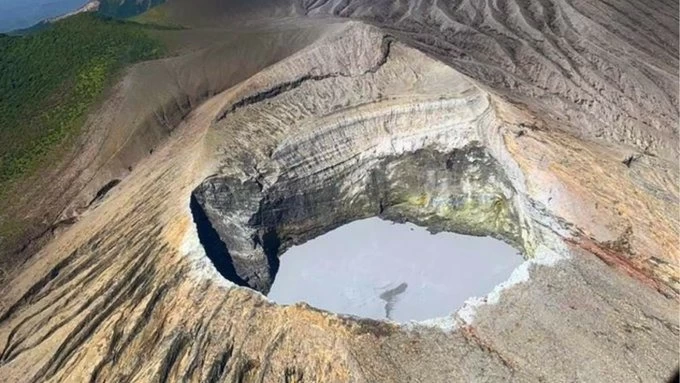
سجل بركان رينكون دي لا فييخا في كوستاريكا 84 ثوراناً مائياً منذ بداية موجة نشاطه الحالية في يوليو، بالتزامن مع تضاعف انبعاثات ثاني أكسيد الكبريت تقريباً خلال أسبوع.
ويواصل البركان الواقع شمال غربي كوستاريكا نشاطه اللافت، بعدما سجل 15 ثوراناً خلال الأسبوع الأخير وحده، مقارنة بـ10 ثورات في الأسبوع السابق، وفق بيانات مرصد علم البراكين والزلازل في كوستاريكا «OVSICORI».
ولم يقتصر تصاعد النشاط على زيادة عدد الثورات، إذ رصد العلماء ارتفاعاً كبيراً في انبعاثات غاز ثاني أكسيد الكبريت «SO₂»، التي بلغت ذروتها خلال الأسبوع الأخير نحو 4524 طناً يومياً، مقابل 2422 طناً يومياً في الأسبوع السابق.
ويشير ارتفاع انبعاثات الغازات إلى استمرار النشاط داخل النظام البركاني، ما يدفع العلماء إلى مواصلة مراقبة التغيرات في سلوك البركان، خصوصاً مع استمرار الثورات وتفاوت قوتها.
تحذيرات من ثورات أقوى
ويبقي مرصد علم البراكين والزلازل البركان عند المستوى الثالث من النشاط، المصنف على أنه مستوى «الحذر»، في ظل استمرار الثورات المتكررة وارتفاع انبعاثات الغازات.
وقال عالم البراكين في المرصد جيفروي أفارد إن رينكون دي لا فييخا لا يزال «نشطاً جداً»، مشيراً إلى تسجيل ثورات متكررة خلال الفترة الأخيرة، كان بعضها قوياً بصورة ملحوظة.
ولا يستبعد الخبراء استمرار النشاط أو حدوث ثورات أكثر قوة خلال الفترة القادمة، في وقت يواصل فيه المختصون تحليل المؤشرات الزلزالية والغازية والحرارية للبركان لرصد أي تغير قد يشير إلى تصعيد جديد.
ومنذ بدء مرحلة النشاط الحالية في 2 يوليو وحتى 21 أغسطس، سجل البركان 84 ثوراناً مائياً، تسببت أربعة منها في حدوث تدفقات طينية بركانية تعرف باسم «اللاهارات».
وانحدرت هذه التدفقات عبر الأنهار الموجودة على الجانب الشمالي من البركان، وهو ما يمثل أحد المخاطر الرئيسية المرتبطة بالنشاط البركاني، خاصة في المناطق الواقعة أسفل المنحدرات ومجاري المياه.
بركان نشط تحت المراقبة
ويعد رينكون دي لا فييخا واحداً من أبرز البراكين النشطة في كوستاريكا، ويقع ضمن سلسلة جبال جواناكاستي، على بعد نحو 25 كيلومتراً شمال شرقي مدينة ليبيريا.
ويخضع البركان لمراقبة مستمرة من جانب العلماء لرصد النشاط الزلزالي، وانبعاثات الغازات، ودرجات الحرارة، وغيرها من المؤشرات التي يمكن أن تساعد في اكتشاف أي تغيرات في سلوكه.
وتضم كوستاريكا عدداً من البراكين النشطة، مستفيدة من موقعها ضمن منطقة نشطة جيولوجياً على امتداد حزام النار في المحيط الهادئ، ما يجعل النشاط البركاني ظاهرة متكررة في البلاد.
The Rincon de la Vieja volcano in Costa Rica has recorded 84 water eruptions since the beginning of its current activity wave in July, coinciding with a nearly doubling of sulfur dioxide emissions within a week.
The volcano, located in the northwest of Costa Rica, continues its remarkable activity, having recorded 15 eruptions in the last week alone, compared to 10 eruptions in the previous week, according to data from the Costa Rican Volcanology and Seismology Observatory "OVSICORI".
The increase in activity has not been limited to the number of eruptions; scientists have also observed a significant rise in sulfur dioxide (SO₂) emissions, which peaked in the last week at about 4,524 tons per day, compared to 2,422 tons per day in the previous week.
The rise in gas emissions indicates ongoing activity within the volcanic system, prompting scientists to continue monitoring changes in the volcano's behavior, especially with the ongoing eruptions and their varying intensity.
Warnings of Stronger Eruptions
The Volcanology and Seismology Observatory maintains the volcano at a level three activity status, classified as "caution," in light of the ongoing repeated eruptions and rising gas emissions.
Volcanologist at the observatory, Geffroy Avard, stated that Rincon de la Vieja remains "very active," noting that repeated eruptions have been recorded recently, some of which were notably strong.
Experts do not rule out the possibility of continued activity or even stronger eruptions in the coming period, as specialists continue to analyze seismic, gas, and thermal indicators of the volcano to detect any changes that may signal a new escalation.
Since the start of the current activity phase on July 2 until August 21, the volcano has recorded 84 water eruptions, four of which caused volcanic mudflows known as "lahars."
These flows descended through rivers located on the northern side of the volcano, representing one of the main hazards associated with volcanic activity, especially in areas located below slopes and watercourses.
An Active Volcano Under Observation
Rincon de la Vieja is one of the most prominent active volcanoes in Costa Rica, located within the Guanacaste mountain range, about 25 kilometers northeast of Liberia city.
The volcano is under continuous monitoring by scientists to track seismic activity, gas emissions, temperatures, and other indicators that can help detect any changes in its behavior.
Costa Rica is home to several active volcanoes, benefiting from its location within a geologically active area along the Pacific Ring of Fire, making volcanic activity a recurring phenomenon in the country.