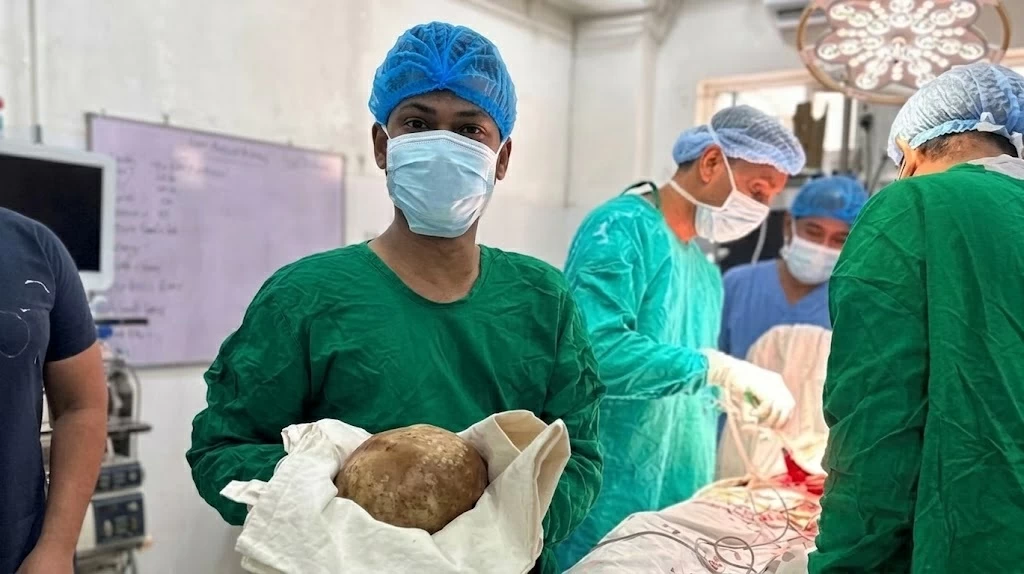
في واقعة طبية نادرة أثارت دهشة الأطباء، نجح فريق جراحي في سريلانكا في استخراج حصوة مثانة عملاقة من رجل يبلغ من العمر 55 عامًا، بلغ وزنها 3.1 كيلوغرام، في عملية قد تُسجَّل ضمن أكبر الحالات الموثقة عالميًا. وتمت الجراحة في مستشفى مدينة ترينكومالي شرقي البلاد، بعد اكتشاف الحصوة أثناء علاج المريض من جلطة دماغية.
وكانت الفحوص الأولية قد أظهرت معاناة الرجل من صعوبة في التبول، قبل أن تكشف العملية عن حصوة ضخمة بلغ طولها نحو 17 سنتيمترًا، وهو حجم وصفه الأطباء بأنه «يقارب بيضة النعامة»، بينما يعادل وزنها تقريبًا وزن طفل مكتمل النمو.
وقال الطبيب براهالاهان بالاكريشنان، قائد الفريق الطبي: «إن الحصوة قد تكون الأكبر من نوعها التي جرى توثيقها جراحيًا وفق السجلات المتاحة»، مشيرًا إلى أن حالة المريض مستقرة لكنه لا يزال يتلقى العلاج من مشكلات صحية أخرى. ورجّح الفريق أن الحصوة بقيت في المثانة مدة تتراوح بين 5 و10 سنوات قبل اكتشافها.
وتشير بيانات موسوعة (غينيس) إلى أن أكبر حصوة مثانة موثقة سابقًا كانت بوزن 1.9 كيلوغرام وطول 17.9 سنتيمترًا، أُزيلت من مريض في البرازيل عام 2003، ما يجعل الحصوة السريلانكية أثقل بكثير من الرقم المسجل، بانتظار إجراءات التوثيق الرسمية.
وبحسب المصادر الطبية، تتكون حصوات المثانة عندما تتبلور المعادن في البول وتتحول إلى كتل صلبة، وغالبًا ما يحدث ذلك عند عدم تفريغ المثانة بالكامل، ما يسمح بتراكم البول الأكثر تركيزًا وتشكّل البلورات تدريجيًا. وقد تكون بعض الحصوات صغيرة بحجم حبات الرمل، بينما تتطلب الحصوات الأكبر تدخلاً جراحيًا بسبب انسداد مجرى البول أو صعوبة التبول.
In a rare medical incident that astonished doctors, a surgical team in Sri Lanka successfully extracted a giant bladder stone weighing 3.1 kilograms from a 55-year-old man, in a procedure that may be recorded among the largest documented cases globally. The surgery took place at Trincomalee City Hospital in the eastern part of the country, after the stone was discovered while treating the patient for a stroke.
Initial examinations had shown that the man was suffering from difficulty urinating, before the operation revealed a massive stone measuring about 17 centimeters in length, a size described by doctors as "comparable to an ostrich egg," while its weight is roughly equivalent to that of a fully grown child.
Dr. Prahalahan Balakrishnan, the leader of the medical team, stated: "This stone may be the largest of its kind documented surgically according to available records," noting that the patient's condition is stable but he is still receiving treatment for other health issues. The team speculated that the stone had been in the bladder for a period ranging from 5 to 10 years before being discovered.
According to data from the Guinness World Records, the largest previously documented bladder stone weighed 1.9 kilograms and measured 17.9 centimeters in length, removed from a patient in Brazil in 2003, making the Sri Lankan stone significantly heavier than the recorded figure, pending official documentation procedures.
According to medical sources, bladder stones form when minerals in urine crystallize and turn into solid masses, often occurring when the bladder is not completely emptied, allowing for the accumulation of more concentrated urine and the gradual formation of crystals. Some stones may be as small as grains of sand, while larger stones require surgical intervention due to urinary obstruction or difficulty in urination.