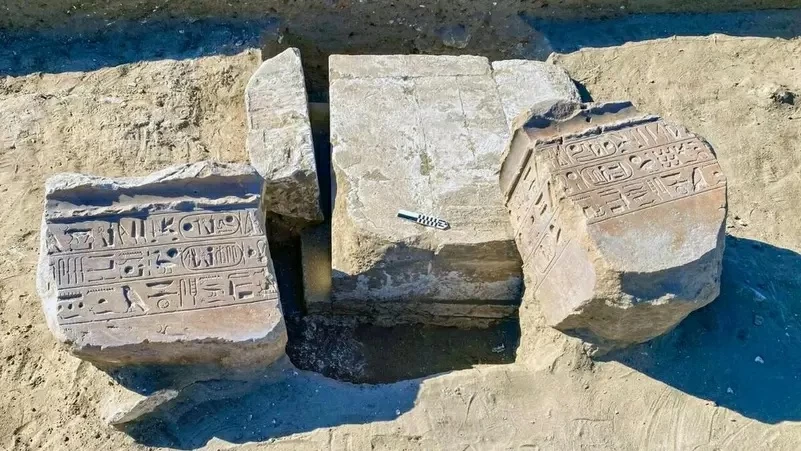
كشفت بعثة أثرية مصرية تعمل في موقع «تل أبو صيفي» بمحافظة الإسماعيلية عن شواهد أثرية جديدة تعزز ارتباط الموقع بمدينة «مسن» المصرية القديمة، التي ورد ذكرها في النصوص والمصادر التاريخية خلال عصر الدولة الحديثة.
أبرز النتائج
ومن أبرز نتائج أعمال الحفائر، العثور على عتب ضخم من الحجر الرملي يعود إلى عهد الملك رمسيس الثاني، نُقشت عليه ألقاب الملك الفرعوني، إلى جانب نص كتابي يوثق أعمال ترميم تمثال المعبود «حورس سيد مدينة مسن»، وهو ما يمثل دليلاً مهماً في دراسة هوية الموقع وعلاقته بالمدينة القديمة، وفق بيان لرئاسة مجلس الوزراء المصري. كما كشفت البعثة عن بقايا المعبد الرئيسي، بما في ذلك عدد من الغرف الداخلية ومنطقة قدس الأقداس، إلى جانب طريقين حجريين متعاقبين وسور ضخم يحيط بالحرم الأثري، ومدعم ببوابات وغرف داخلية وتتابعات لطبقات بناء مختلفة.
سور ضخم
من جانبه، أوضح الأمين العام للمجلس الأعلى للآثار الدكتور هشام الليثي، أن أعمال الموسم الحالي استكملت سلسلة من الحفائر التي أجريت بالموقع على مدار العقود الماضية، وأسهمت نتائجها في إعادة قراءة بعض العناصر المعمارية التي اكتُشفت سابقاً بصورة أكثر دقة، بما يعزز فهم التخطيط الأصلي للموقع وتتابعه التاريخي. ونوه إلى أن البعثة استكملت الكشف عن سور ضخم من الطوب اللبن، يضم بوابات وغرفاً داخلية وطبقات بناء مختلفة، موضحاً أن الدراسات أثبتت أنه يمثل السور الخارجي للحرم المحيط بالمعبد وليس المعبد نفسه، وهو ما يصحح التفسير السابق لبعض أجزاء الموقع.
بقايا معبد
بدوره، قال رئيس قطاع الآثار المصرية بالمجلس الأعلى للآثار محمد عبد البديع: «إن البعثة رصدت بقايا طريقين حجريين متعاقبين يؤديان من خارج منطقة التحصين إلى داخل المعبد، أولهما طريق يرجع إلى العصر البطلمي، ويعلوه طريق روماني أقل اتساعاً». وأشار إلى أن أعمال الحفائر كشفت أيضاً عن بقايا المعبد، بما يشمل غرفاً تخزينية متتابعة في الناحية الشمالية، وغرفاً خدمية أوسع في الناحية الجنوبية، وصولاً إلى منطقة قدس الأقداس التي تعرضت للهدم نتيجة أعمال التحجير في أواخر العصر الروماني.
An Egyptian archaeological mission working at the site of "Tell Abu Seifi" in Ismailia Governorate has revealed new archaeological evidence that strengthens the connection of the site to the ancient Egyptian city of "Mesen," which was mentioned in texts and historical sources during the New Kingdom period.
Key Findings
Among the most significant results of the excavations is the discovery of a massive sandstone threshold dating back to the reign of King Ramses II, inscribed with the titles of the Pharaoh, alongside a written text documenting restoration work on the statue of the deity "Horus, Lord of the City of Mesen." This represents important evidence in studying the identity of the site and its relationship with the ancient city, according to a statement from the Egyptian Prime Minister's office. The mission also uncovered the remains of the main temple, including several inner rooms and the Holy of Holies, as well as two successive stone pathways and a massive wall surrounding the archaeological sanctuary, supported by gates, internal rooms, and layers of different construction phases.
Massive Wall
For his part, Dr. Hisham El-Leithi, Secretary-General of the Supreme Council of Antiquities, explained that the current season's work completed a series of excavations conducted at the site over the past decades, and the results have contributed to a more accurate reinterpretation of some architectural elements previously discovered, enhancing the understanding of the original layout of the site and its historical sequence. He noted that the mission has completed the discovery of a massive mudbrick wall, which includes gates, internal rooms, and various construction layers, clarifying that studies have shown it represents the outer wall of the sanctuary surrounding the temple, not the temple itself, which corrects the previous interpretation of some parts of the site.
Remains of the Temple
For his part, Mohamed Abdel Badi, Head of the Egyptian Antiquities Sector at the Supreme Council of Antiquities, stated: "The mission has recorded the remains of two successive stone pathways leading from outside the fortified area into the temple, the first of which dates back to the Ptolemaic period, topped by a narrower Roman road." He pointed out that the excavations also revealed the remains of the temple, including successive storage rooms on the northern side, and wider service rooms on the southern side, leading to the Holy of Holies, which was destroyed due to quarrying activities in the late Roman period.