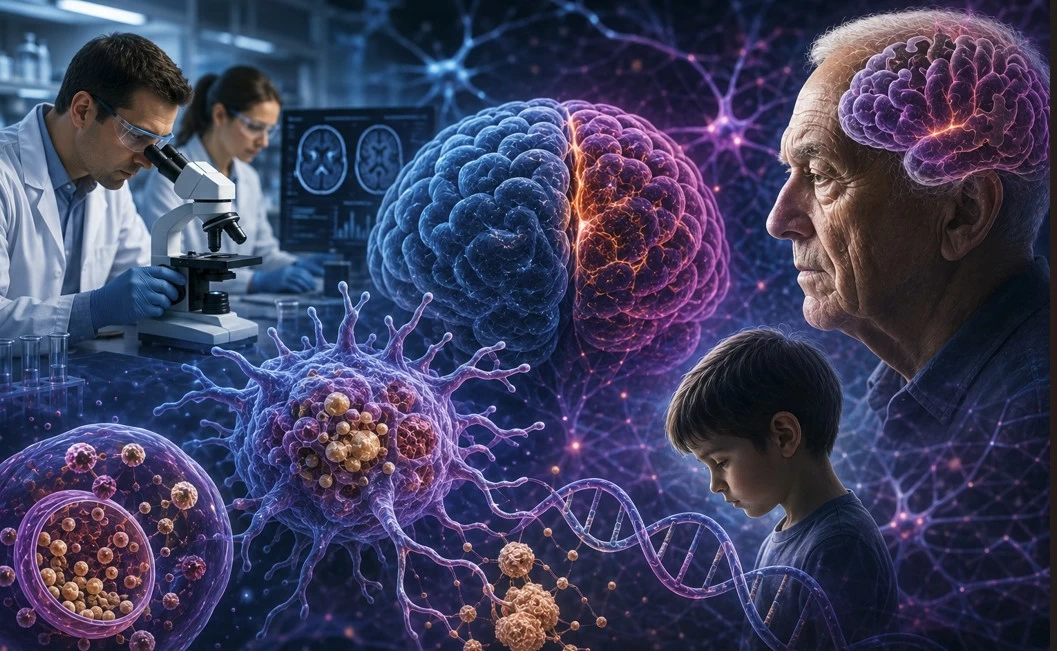
اكتشف باحثون أمريكيون مساراً خلوياً رئيسياً مشتركاً بين اضطراب نادر يصيب الأطفال ومرض الزهايمر الأكثر شيوعًا، ما يكشف عن آلية موحدة لتدهور الدماغ في كلتا الحالتين.
وأظهرت الدراسة، التي قادها فريق علمي من جامعة كاليفورنيا في سان دييغو، كيفية استجابة الخلايا المناعية في الدماغ، المعروفة باسم الخلايا الدبقية الصغيرة، لتراكم النفايات الخلوية، وكيف يمكن لهذه الاستجابة أن تتحول من دفاعية إلى مدمرة، ما يفتح آفاقًا جديدة لفهم الأمراض التنكسية العصبية وعلاجها.
تراكم النفايات الخلوية
وأجرى خبراء الجامعة خلال الدراسة تجارب على مجموعة من النماذج الحيوانية المخبرية لهذا الاضطراب، ولاحظوا أن هذه النفايات تتراكم في عدة أنواع من الخلايا، إلا أن الخلايا الدبقية الصغيرة في الدماغ كانت الأكثر تضررًا، إذ تتضخم وتمتلئ بالدهون والبروتينات، وتفقد قدرتها على حماية الخلايا العصبية.
مفاتيح جينية تتحول من الحماية إلى الضرر
وحدد الباحثون عائلة بروتينية تُعرف بـ MITF/TFE، تعمل كمفاتيح جينية رئيسية، إذ يجري تنشيطها من وضع «إيقاف» إلى «تشغيل» عندما تصبح الإنزيمات المحللة الليزوزومية في الخلايا الدبقية مثقلة بالإجهاد.
ويؤدي ذلك إلى تغيير برنامجها الجيني في محاولة لحماية الدماغ، إلا أن هذه الاستجابة تصبح، مع مرور الوقت، غير قادرة على التكيف، وتتحول إلى محرك للالتهاب وموت الخلايا العصبية.
أوجه التشابه مع مرض الزهايمر
ووجد الباحثون أن المفاتيح الجينية ذاتها تنشط في الخلايا الدبقية الصغيرة لدى مرضى الزهايمر، ما يشير إلى أن عملية الإجهاد الناتجة عن فشل الليزوزومات في سانفيليبو هي نفسها التي تحدث في أدمغة المصابين بالزهايمر.
لكن، بخلاف الأمراض العصبية المعقدة المرتبطة بالشيخوخة، فإن سانفيليبو له سبب جيني واضح ومباشر، كما أن هذه الخلايا تحاول تقليل الضرر في المراحل المبكرة من المرض قبل أن تصبح مرهقة.
ويشير ذلك إلى أن التدخل المبكر باستخدام العلاج بالإنزيمات البديلة أو العلاجات الخلوية قد يكون أكثر فعالية إذا تم قبل تحول الخلايا المناعية إلى الحالة الضارة، وهو ما يمثل أملًا جديدًا في علاج هذه الأمراض المستعصية.
آلية جديدة لفهم التنكس العصبي
وأوضح كريستوفر بالاك، المؤلف الرئيسي للدراسة والباحث في المختبر بالجامعة، أن هذا الاكتشاف وفر إطارًا واضحًا لدراسة الأمراض التنكسية الشائعة وفهم آلياتها.
وأشار إلى أن العديد من الباحثين يعتقدون أن لويحات الأميلويد، التي تتشكل خارج الخلايا الدبقية، هي التي تسبب فشل الليزوزومات من الخارج، لكن دراستهم أثبتت أن الضرر يمكن أن يأتي مباشرة من داخل الخلية نفسها، وأن الليزوزومات وحدها كافية لإحداث التنكس العصبي، ما قد ينطبق أيضًا على أمراض كبرى مثل ألزهايمر.
آفاق لتطوير أدوية جديدة
وتكمن أهمية هذا الاكتشاف في أنه سيفتح أبواب الدراسات المستقبلية أمام تطوير أدوية جديدة تستهدف هذه المفاتيح الجينية، بدلًا من الأساليب التقليدية التي تركز على مستقبلات سطح الخلية، ما قد يسمح بالحفاظ على الخلايا الدبقية الصغيرة في حالة وقائية ومنعها من التسبب في تلف الدماغ.
American researchers have discovered a key cellular pathway shared between a rare disorder affecting children and the more common Alzheimer's disease, revealing a unified mechanism for brain degeneration in both cases.
The study, led by a scientific team from the University of California, San Diego, demonstrated how immune cells in the brain, known as microglia, respond to the accumulation of cellular waste, and how this response can shift from protective to destructive, opening new avenues for understanding and treating neurodegenerative diseases.
Accumulation of Cellular Waste
During the study, university experts conducted experiments on a range of laboratory animal models for this disorder and observed that this waste accumulates in several types of cells, but the microglia in the brain were the most affected, as they swell and fill with fats and proteins, losing their ability to protect neurons.
Genetic Switches Turning from Protection to Harm
The researchers identified a protein family known as MITF/TFE, which acts as key genetic switches, being activated from an "off" to an "on" position when the lysosomal degrading enzymes in microglia become overloaded with stress.
This leads to a change in their genetic program in an attempt to protect the brain, but this response becomes, over time, unable to adapt and turns into a driver of inflammation and neuronal death.
Similarities to Alzheimer's Disease
The researchers found that the same genetic switches are activated in microglia in Alzheimer's patients, indicating that the stress process resulting from lysosomal failure in Sanfilippo is the same as that occurring in the brains of Alzheimer's patients.
However, unlike the complex neurodegenerative diseases associated with aging, Sanfilippo has a clear and direct genetic cause, and these cells attempt to reduce damage in the early stages of the disease before becoming overwhelmed.
This suggests that early intervention using enzyme replacement therapy or cellular treatments may be more effective if done before immune cells transition to the harmful state, representing a new hope for treating these intractable diseases.
A New Mechanism for Understanding Neurodegeneration
Christopher Balak, the lead author of the study and a researcher in the university lab, explained that this discovery provides a clear framework for studying common degenerative diseases and understanding their mechanisms.
He noted that many researchers believe that amyloid plaques, which form outside microglia, are what cause lysosomal failure from the outside, but their study demonstrated that damage can come directly from within the cell itself, and that lysosomes alone are sufficient to induce neurodegeneration, which may also apply to major diseases like Alzheimer's.
Prospects for Developing New Drugs
The significance of this discovery lies in its potential to open doors for future studies aimed at developing new drugs targeting these genetic switches, rather than traditional methods focusing on cell surface receptors, which may allow for keeping microglia in a protective state and preventing them from causing brain damage.