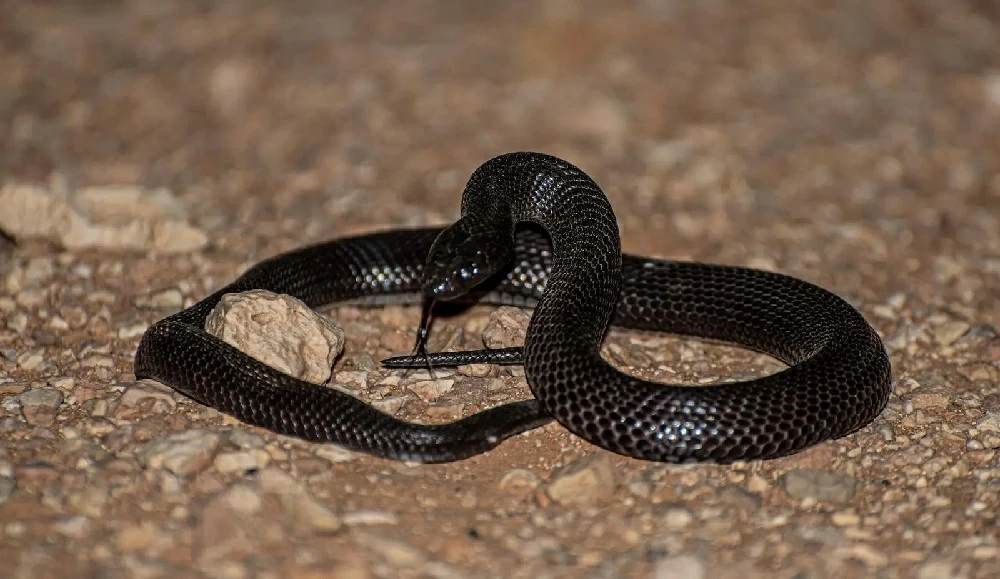
يُعد الصِّل الأسود «كوبرا الصحراء»، المعروف علميًا باسم «Walterinnesia aegyptia» أحد أنواع الثعابين السامة التي تعيش في البيئات الصحراوية، وسُجّل وجوده في منطقة الحدود الشمالية بوصفه أحد مكونات التنوع الأحيائي، لما يؤديه من دور في تنظيم أعداد الكائنات داخل النظام البيئي.
ويتميّز بلونه الداكن اللامع، ويعيش في البيئات الصحراوية وشبه الصحراوية والمناطق الصخرية، ويُعدُّ من الأنواع قليلة المشاهدة؛ نظرًا لفترة نشاطه الليلية واعتماده على العيش في الجحور والشقوق، ويعتمد في غذائه على القوارض وبعض الزواحف وغيرها من الفرائس الصغيرة.
وأوضح رئيس جمعية أمان البيئة بمنطقة الحدود الشمالية ناصر بن ارشيد المجلاد أن الصِّل الأسود يمثل جزءًا من التنوع الأحيائي في المنطقة، ويؤدي دورًا في تنظيم أعداد بعض الكائنات، لا سيما القوارض، بما يسهم في المحافظة على التوازن الطبيعي للبيئة الصحراوية، مبيّنًا أن نشاط الثعابين يزداد عادةً مع ارتفاع درجات الحرارة خلال الأشهر الدافئة، إذ تخرج من مخابئها بحثًا عن الغذاء، وتزداد فرص مشاهدتها خلال فصل الصيف، خصوصًا في ساعات المساء الأولى، فيما يقل نشاطه مع انخفاض درجات الحرارة خلال فصل الشتاء.
وأشار المجلاد إلى أن طبيعة منطقة الحدود الشمالية، بما تضمه من بيئات صحراوية وصخرية وأودية وشعاب، توفر موائل مناسبة لعدد من أنواع الزواحف، مؤكدًا أهمية المحافظة عليها وعدم العبث بها أو الإضرار بها.
ونبّه إلى ضرورة عدم الاقتراب من الكائنات في البرية ومنها الصل الأسود ومحاولة الإمساك به أو استفزازه عند مشاهدته، والابتعاد عنه مسافة آمنة، إذ قد يتخذ سلوكًا دفاعيًا عند شعوره بالخطر، داعيًا إلى الاستعانة بالجهات المختصة عند ظهوره في المواقع المأهولة.
وأكد أن تعزيز الوعي بالتنوع الأحيائي يسهم في فهم الأدوار التي تؤديها الزواحف في البيئة، والمحافظة على الكائنات الفطرية وموائلها الطبيعية، بما يدعم استدامة التنوع الأحيائي في المنطقة.
The black cobra, scientifically known as "Walterinnesia aegyptia," is considered the "desert cobra" and is one of the venomous snake species that inhabit desert environments. Its presence has been recorded in the Northern Borders region as part of the biodiversity, playing a role in regulating the populations of organisms within the ecosystem.
It is characterized by its shiny dark color and lives in desert, semi-desert, and rocky areas. It is one of the less commonly seen species due to its nocturnal activity and reliance on living in burrows and crevices. Its diet consists of rodents, some reptiles, and other small prey.
The head of the Environmental Safety Association in the Northern Borders region, Nasser bin Arshid Al-Majlad, explained that the black cobra represents a part of the biodiversity in the area and plays a role in regulating the numbers of certain organisms, particularly rodents, contributing to the maintenance of the natural balance of the desert environment. He noted that snake activity usually increases with rising temperatures during the warm months, as they emerge from their hiding places in search of food, and the chances of seeing them increase during the summer, especially in the early evening hours, while their activity decreases with falling temperatures in winter.
Al-Majlad pointed out that the nature of the Northern Borders region, with its desert, rocky environments, valleys, and cliffs, provides suitable habitats for several species of reptiles, emphasizing the importance of preserving them and not disturbing or harming them.
He warned against approaching wild creatures, including the black cobra, and attempting to catch or provoke it when seen, advising to maintain a safe distance, as it may exhibit defensive behavior when it feels threatened. He called for contacting the relevant authorities when it appears in populated areas.
He confirmed that raising awareness about biodiversity contributes to understanding the roles that reptiles play in the environment and preserving native species and their natural habitats, thus supporting the sustainability of biodiversity in the region.