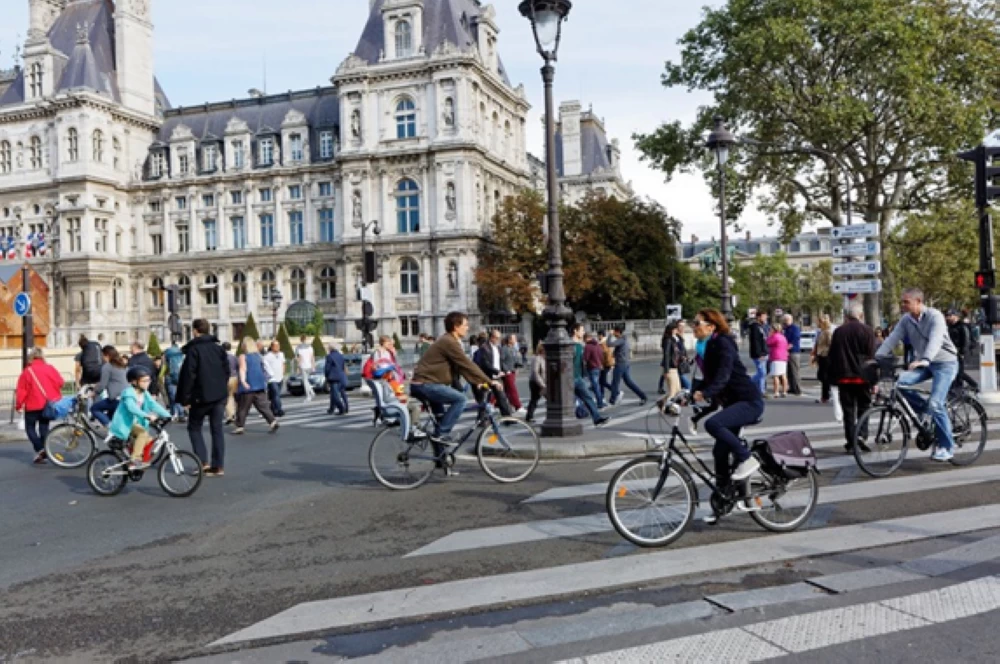
تشهد باريس تحولاً متسارعاً في نمط التنقل داخلها، مع تراجع حضور السيارات الخاصة وتوسع مسارات الدراجات ومناطق المشاة والتشجير، ضمن سياسات تعيد تشكيل الشوارع وتجعل الاعتماد على السيارة أقل جاذبية.
ولم تتحول العاصمة الفرنسية إلى مدينة بلا سيارات، لكن بيانات بلدية باريس تكشف تغيراً واضحاً في حركة السكان؛ إذ انخفضت حركة السيارات داخل المدينة بنحو 60% منذ 2002، في حين ارتفعت حركة الدراجات بنحو 47% منذ 2020، وبلغ طول شبكة مسارات الدراجات في 2025 نحو 1607 كيلومترات.
وتُظهر بيانات التعداد التي أوردتها بلدية باريس أن الدراجة أصبحت وسيلة التنقل إلى العمل لنحو 10.1% من العاملين المقيمين في العاصمة، مقابل 9% للسيارة، في مؤشر يعكس تقدّم الدراجات على السيارات في رحلات العمل.
أما في وسط باريس، فأظهرت دراسة لمعهد منطقة باريس أن المشي يمثل 53.3% من الرحلات، يليه النقل العام بنسبة 30%، ثم الدراجات بـ11.2%، بينما لا تتجاوز حصة السيارات 4.3%.
ولا يقتصر التحول على وسائل التنقل، بل يمتد إلى شكل الشوارع نفسها؛ إذ أصبح شارع ريفولي، أحد أشهر شوارع العاصمة، مخصصاً للمشاة والدراجات والمركبات المصرح لها، فيما تواصل المدينة تحويل أجزاء من الشوارع إلى مساحات للمشاة والدراجات والتشجير.
وفي منطقة غراند بولفار أوبرا، تشمل عمليات إعادة التصميم 24 شارعاً يجري تحويلها للمشاة أو تقليل حركة السيارات فيها، إلى جانب 6.5 كيلومتر من تجهيزات الدراجات ومشاريع لزيادة المساحات المزروعة.
كما شمل التحول الطريق الدائري الشهير، إذ خُفضت السرعة القصوى عليه إلى 50 كيلومتراً في الساعة، وبدأ في 2025 تشغيل مسار مخصص للحافلات وسيارات الأجرة والمركبات التي تقل شخصين على الأقل وفئات أخرى مسموح لها.
وتستند هذه التغييرات إلى مفهوم «مدينة الـ15 دقيقة»، الذي يقوم على جعل الاحتياجات اليومية، من المدارس والمتاجر إلى الخدمات والترفيه، قريبة من مكان السكن، بحيث يمكن الوصول إليها سيراً أو بالدراجة أو بوسائل النقل العام بدل الاعتماد المستمر على السيارة.
ورغم ذلك، لا تزال فكرة «باريس بلا سيارات» مبالغاً فيها؛ إذ استقرت حركة السيارات تقريباً في 2025 بعد سنوات من التراجع، وانخفض متوسط سرعتها داخل باريس إلى 9.6 كيلومتر في الساعة.
وما يحدث فعلياً أن السيارة لم تختفِ من باريس، لكنها تفقد تدريجياً المكانة التي احتلتها لعقود في شوارع المدينة، في تجربة تطرح سؤالاً أوسع حول مستقبل المدن وقدرتها على تمكين سكانها من العيش والتنقل دون الحاجة إلى السيارة في كل رحلة.
Paris is witnessing a rapid transformation in its mode of transportation, with a decline in the presence of private cars and an expansion of bike lanes, pedestrian areas, and greenery, as part of policies that are reshaping the streets and making reliance on cars less attractive.
The French capital has not turned into a car-free city, but data from the Paris municipality reveals a clear change in the movement of residents; car traffic within the city has decreased by about 60% since 2002, while bike traffic has increased by approximately 47% since 2020, with the length of the bike lane network reaching about 1,607 kilometers by 2025.
Data from the census provided by the Paris municipality shows that bicycles have become the mode of transportation to work for about 10.1% of workers residing in the capital, compared to 9% for cars, indicating a shift in favor of bicycles over cars for commuting.
In central Paris, a study by the Paris Region Institute showed that walking accounts for 53.3% of trips, followed by public transport at 30%, then bicycles at 11.2%, while the share of cars does not exceed 4.3%.
The transformation is not limited to modes of transportation but extends to the shape of the streets themselves; for instance, Rue Rivoli, one of the most famous streets in the capital, has been designated for pedestrians, bicycles, and authorized vehicles, while the city continues to convert parts of the streets into spaces for pedestrians, bicycles, and greenery.
In the Grand Boulevard Opera area, redesign efforts include 24 streets being converted for pedestrians or reducing car traffic, along with 6.5 kilometers of bike facilities and projects to increase green spaces.
The transformation has also affected the famous ring road, where the maximum speed has been reduced to 50 kilometers per hour, and in 2025, a lane dedicated to buses, taxis, and vehicles carrying at least two people, along with other permitted categories, will be operational.
These changes are based on the concept of the "15-minute city," which aims to make daily needs, from schools and shops to services and entertainment, close to where people live, allowing access by walking, biking, or public transport instead of continuous reliance on cars.
Despite this, the idea of a "car-free Paris" is exaggerated; car traffic has stabilized around 2025 after years of decline, and its average speed within Paris has dropped to 9.6 kilometers per hour.
What is actually happening is that cars have not disappeared from Paris, but they are gradually losing the status they held for decades in the city's streets, in an experience that raises a broader question about the future of cities and their ability to enable residents to live and move without needing a car for every trip.