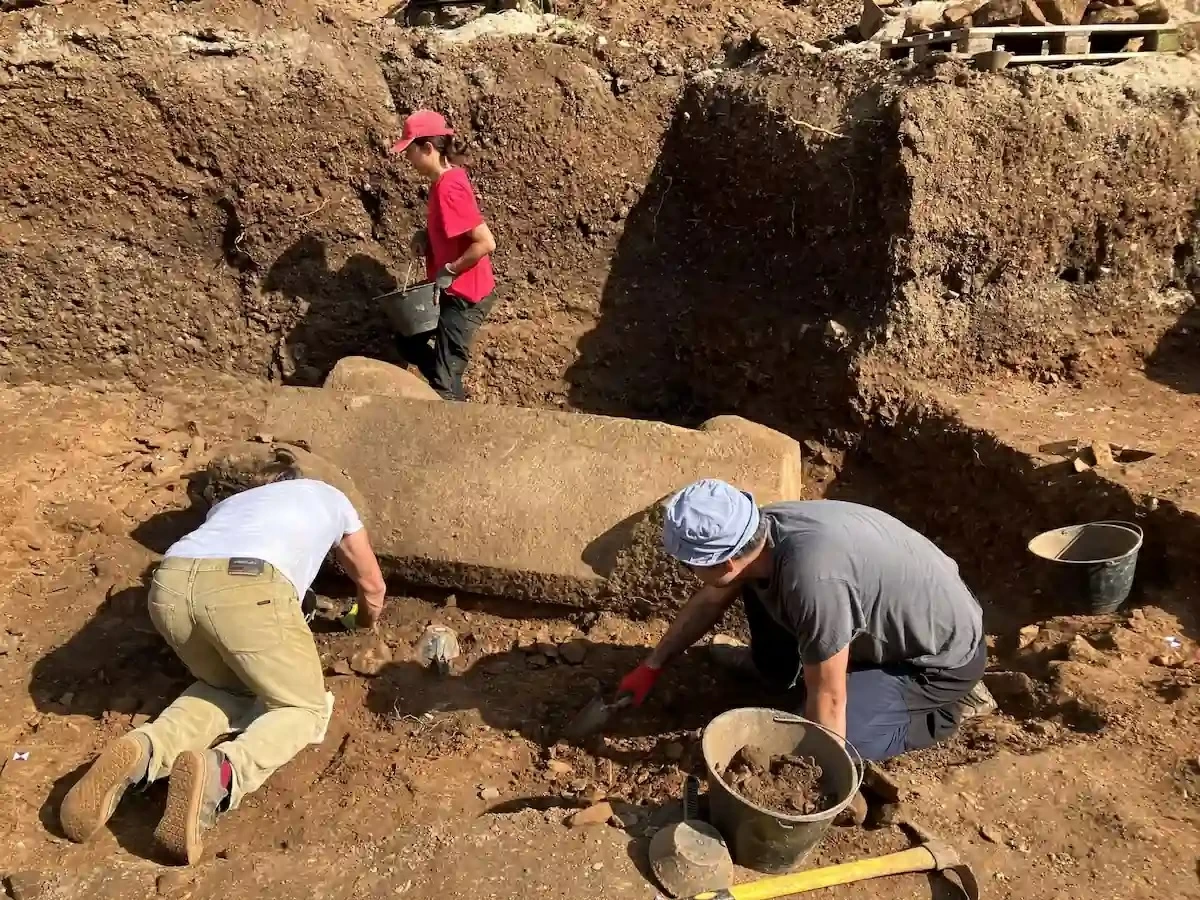
في كشف أثري استثنائي يعزز السجل التاريخي العريق للساحل الأدرياتيكي، عثر علماء الآثار في كرواتيا على تابوت حجري نادر يعود إلى العصر الروماني المتأخر، وتحديداً بين القرنين الرابع والسادس الميلاديين، وذلك في مدينة «كافتا» الساحلية التي بُنيت فوق أنقاض مدينة «إبيداوروم» اليونانية القديمة.
وجاء هذا الاكتشاف غير المتوقع، الذي نشره موقع «greekreporter»، خلال أعمال تنقيب وقائية في موقع «زورينا 8» أشرفت عليها «متاحف ومعارض كونافلي» لدراسة جزء من مقبرة تعود إلى أواخر العصور القديمة، على بُعد 15 كيلومتراً جنوب دوبروفنيك.
وكشفت الحفريات تنوعاً لافتاً في الأنماط والتقاليد الجنائزية داخل المقبرة ذاتها، حيث عثر العلماء على قبور مبنية من الحجارة، ومدافن داخل جرار فخارية، إلى جانب قبور مشيدة من ألواح حجرية وبلاط الأسقف. ومع ذلك، ظل هذا التابوت الحجري المكتشف سليماً تماماً في مكانه الأصلي دون أن تمسه يد العبث طوال القرون الماضية، ما يمنحه ندرة بالغة في كرواتيا؛ إذ يزن نحو 5 أطنان ونُحت بالكامل من الحجر الجيري المحلي، وهو ما يراه الخبراء دليلاً حاسماً على براعة ورشة نحت حجرية محلية نشطت في المنطقة ولم يُستورد من الخارج.
وفي محاولة لفك لغز المقبرة، حدد علماء الآثار مكان الدفن الأساسي لشخص واحد داخل التابوت، ورغم أن بقايا الهيكل العظمي كانت محفوظة بشكل سيئ، إلا أن الفريق استخرج آثاراً عضوية ومواد أخرى ستخضع لتحاليل مخبرية دقيقة، يأمل الباحثون أن تكشف تفاصيل حيوية تخص صحة الشخص المدفون، ونظامه الغذائي، وظروف وفاته، لفهم طبيعة المجتمع القديم خلال القرون الأخيرة من النفوذ الروماني. وتقديراً لهذه القيمة التاريخية، وفور انتهاء الأبحاث الميدانية بقيادة عالمة الآثار هيلينا بوهارا، جرى نقل التابوت وعرضه في ساحة عامة بالقرب من ضريح عائلة «راتشيتش» ومقبرة «القديس روكو»، ليتيح للزوار فرصة الاطلاع عن كثب على التراث القديم للمدينة وتعميق صلتهم بماضيها الحضاري.
In an exceptional archaeological discovery that enhances the rich historical record of the Adriatic coast, archaeologists in Croatia have found a rare stone sarcophagus dating back to the late Roman period, specifically between the 4th and 6th centuries AD, in the coastal city of "Cavtat," which was built over the ruins of the ancient Greek city of "Epidaurum."
This unexpected discovery, reported by "greekreporter," occurred during preventive excavation work at the "Zorina 8" site supervised by "Konavle Museums and Exhibitions" to study a part of a cemetery dating back to the late antiquity, located 15 kilometers south of Dubrovnik.
The excavations revealed a remarkable diversity in burial patterns and traditions within the cemetery itself, where scientists found graves made of stones, burials inside pottery jars, alongside graves constructed from stone slabs and roof tiles. However, this discovered stone sarcophagus remained completely intact in its original position without being disturbed by human hands throughout the past centuries, granting it extreme rarity in Croatia; it weighs about 5 tons and is entirely carved from local limestone, which experts see as crucial evidence of the skill of a local stone carving workshop that thrived in the area and was not imported from abroad.
In an attempt to unravel the mystery of the cemetery, archaeologists identified the primary burial location of one individual inside the sarcophagus, and although the skeletal remains were poorly preserved, the team extracted organic traces and other materials that will undergo precise laboratory analyses. Researchers hope these will reveal vital details regarding the health of the buried individual, their diet, and the circumstances of their death, to understand the nature of ancient society during the final centuries of Roman influence. In recognition of this historical value, as soon as the field research led by archaeologist Helena Bohara concluded, the sarcophagus was moved and displayed in a public square near the "Racic" family tomb and the "St. Rocco" cemetery, allowing visitors the opportunity to closely explore the ancient heritage of the city and deepen their connection to its civilizational past.