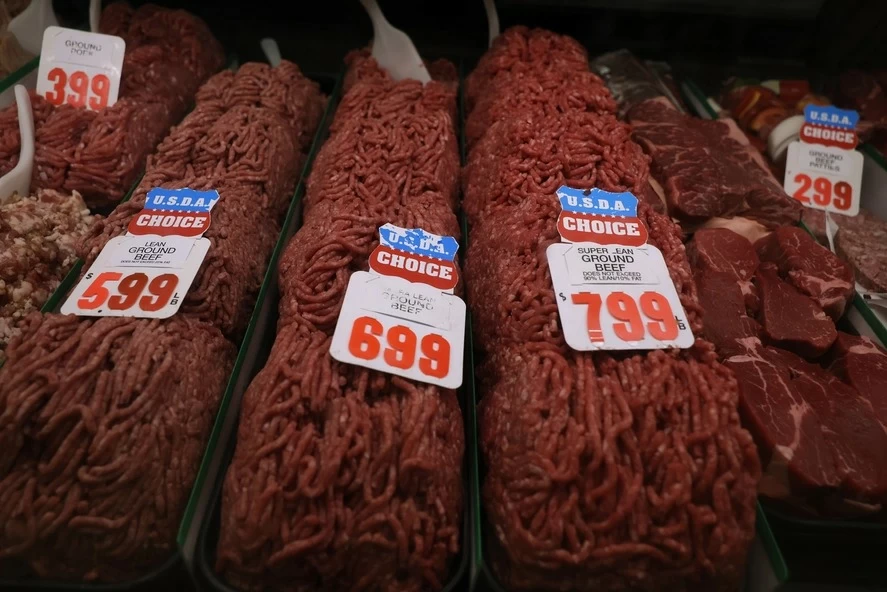
عاد الرئيس الأمريكي دونالد ترمب من زيارته إلى الصين ليجد نفسه أمام واحدة من أكثر الأزمات الاقتصادية والسياسية حساسية داخليًا، وهي الارتفاع القياسي في أسعار اللحوم الحمراء، خاصة لحم البقر، في وقت تزداد فيه الضغوط الشعبية مع اقتراب الانتخابات الرئاسية.
وبحسب صحيفة «بوليتيكو» تواجه إدارة ترمب قرارًا معقدًا بشأن إصدار أمر تنفيذي مؤقت لتخفيف الرسوم الجمركية على واردات لحوم البقر، وهي خطوة تهدف إلى خفض الأسعار للمستهلكين، لكنها قد تثير غضب المزارعين ومربي الماشية الأمريكيين، الذين يشكلون قاعدة انتخابية جمهورية تقليدية مهمة.
وكان من المقرر توقيع القرار هذا الأسبوع، إلا أن معارضة قوية من مشرعين يمثلون الولايات الزراعية وجماعات الضغط المرتبطة بصناعة الماشية دفعت البيت الأبيض إلى تأجيله مؤقتًا.
وتشهد أسعار لحوم البقر في الولايات المتحدة ارتفاعًا متواصلًا، حيث زادت بنسبة 2.7% خلال الشهر الماضي فقط، فيما اقترب سعر رطل اللحم المفروم من 7 دولارات، بزيادة تقارب 12% مقارنة بالصيف الماضي، ما يجعل القضية تمس بشكل مباشر تكاليف المعيشة التي تهيمن على اهتمامات الناخبين.
ويرى مسؤولون مقربون من البيت الأبيض أن ترمب يدرك تمامًا حساسية القضية بالنسبة للأسر الأمريكية، خاصة مع ارتباطها بالأسعار اليومية في المطاعم والفنادق، إلا أن المخاوف تتزايد من عدم شعور الناخبين بأي تحسن قبل موعد الانتخابات.
في المقابل، يحذر الجمهوريون في الكونغرس من أن خفض الرسوم على اللحوم المستوردة قد يفاقم أوضاع المزارعين المحليين الذين يعانون بالفعل من الجفاف وارتفاع تكاليف الإنتاج ومخاطر صحية تهدد قطعان الماشية.
وأكدت السيناتور الجمهورية سينثيا لوميس أن الإدارة تسير على «حبل مشدود» بين حماية المنتجين المحليين والاستجابة لغضب المستهلكين.
وخلال الأيام الماضية، مارس ممثلو قطاع الزراعة ضغوطًا كبيرة على البيت الأبيض لشرح التداعيات السلبية المحتملة لأي زيادة في الواردات، خاصة في ولايات تعتمد اقتصاديًا على تربية الماشية مثل كانساس ووايومنغ.
ورغم أن الإدارة تدرس تعديل القرار التنفيذي لتقليل تأثيره على المنتجين الأمريكيين، إلا أن المفاوضات لا تزال مستمرة، وسط خلافات داخلية حول أفضل السبل لتحقيق توازن سياسي واقتصادي.
في الوقت نفسه، قد توفر التطورات الدولية متنفسًا محدودًا للإدارة، بعد إعلان الصين تجديد مئات تراخيص استيراد اللحوم الأمريكية، ما قد يساعد في دعم قطاع التصدير المحلي.
وقال مصدر مقرب من البيت الأبيض: «لا أعتقد أنه سيولي اهتماماً كبيراً لأصحاب المزارع كما سيوليه للشعب الأمريكي، هذا ما يفعله، إنه لا يريد أن يضطر إلى فرض رسوم باهظة على نزلاء فنادقه، مثلاً، 25 أو 30 دولاراً مقابل وجبة هامبرغر».
لكن خبراء الاقتصاد يشككون في قدرة زيادة الواردات وحدها على خفض الأسعار بشكل ملموس، مشيرين إلى أن جذور الأزمة ترتبط أيضًا بارتفاع تكاليف الوقود والنقل والإنتاج نتيجة التوترات الجيوسياسية، بما في ذلك الحرب مع إيران.
ويحذر بعض المحللين من أن ترمب قد يواجه خسارة سياسية مزدوجة، إذا أغضب المزارعين دون أن ينجح فعليًا في خفض الأسعار للمستهلكين.
من جانبهم، يؤكد منتجو الماشية أن فتح السوق أمام المزيد من اللحوم المستوردة سيضر بالإنتاج المحلي على المدى الطويل، بدلًا من معالجة الأسباب الحقيقية لنقص المعروض وارتفاع الأسعار.
وفي ظل استمرار الغموض حول تفاصيل القرار وتوقيته، تتزايد حالة الإحباط داخل قطاع الماشية، الذي يطالب الإدارة بتوفير قدر أكبر من الوضوح والاستقرار بدلًا من القرارات المفاجئة.
ومع بقاء أقل من ستة أشهر على الانتخابات، تبدو أزمة أسعار اللحوم اختبارًا سياسيًا واقتصاديًا حاسمًا لترامب، في معركة دقيقة بين حماية المستهلك الأمريكي والحفاظ على دعم أحد أكثر القطاعات ولاءً له انتخابيًا.
U.S. President Donald Trump returned from his visit to China to find himself facing one of the most sensitive economic and political crises domestically, which is the record rise in red meat prices, especially beef, at a time when public pressure is increasing with the presidential elections approaching.
According to Politico, the Trump administration is facing a complex decision regarding the issuance of a temporary executive order to ease tariffs on beef imports, a step aimed at lowering prices for consumers, but it could provoke anger among American farmers and cattle ranchers, who form an important traditional Republican electoral base.
The decision was scheduled to be signed this week; however, strong opposition from lawmakers representing agricultural states and lobbying groups associated with the cattle industry has led the White House to temporarily postpone it.
Beef prices in the United States are experiencing a continuous rise, having increased by 2.7% just last month, while the price of a pound of ground beef is nearing $7, an increase of nearly 12% compared to last summer, making the issue directly impact the cost of living that dominates voters' concerns.
Officials close to the White House believe that Trump is fully aware of the sensitivity of the issue for American families, especially as it relates to daily prices in restaurants and hotels, but fears are growing that voters may not feel any improvement before the election date.
In contrast, Republicans in Congress warn that reducing tariffs on imported meats could exacerbate the situation for local farmers who are already suffering from drought, rising production costs, and health risks threatening livestock.
Republican Senator Cynthia Lummis confirmed that the administration is walking a "tightrope" between protecting local producers and responding to consumer anger.
In recent days, representatives from the agricultural sector have exerted significant pressure on the White House to explain the potential negative repercussions of any increase in imports, especially in states that economically rely on cattle ranching like Kansas and Wyoming.
Although the administration is considering modifying the executive order to lessen its impact on American producers, negotiations are still ongoing, amid internal disagreements over the best ways to achieve a political and economic balance.
At the same time, international developments may provide limited relief for the administration, following China's announcement of renewing hundreds of import licenses for American meats, which could help support the local export sector.
A source close to the White House said: "I don't think he will pay much attention to the farmers as he will to the American people; that's what he does, he doesn't want to have to impose exorbitant fees on his hotel guests, for example, $25 or $30 for a hamburger meal."
However, economists are skeptical about the ability of increasing imports alone to significantly lower prices, pointing out that the roots of the crisis are also linked to rising fuel, transportation, and production costs due to geopolitical tensions, including the war with Iran.
Some analysts warn that Trump may face a double political loss if he angers farmers without actually succeeding in lowering prices for consumers.
For their part, cattle producers assert that opening the market to more imported meats will harm local production in the long term, rather than addressing the real causes of supply shortages and rising prices.
Amid ongoing uncertainty about the details and timing of the decision, frustration is growing within the cattle sector, which is demanding the administration provide greater clarity and stability instead of sudden decisions.
With less than six months remaining until the elections, the meat price crisis appears to be a crucial political and economic test for Trump, in a delicate battle between protecting the American consumer and maintaining support from one of his most loyal electoral sectors.