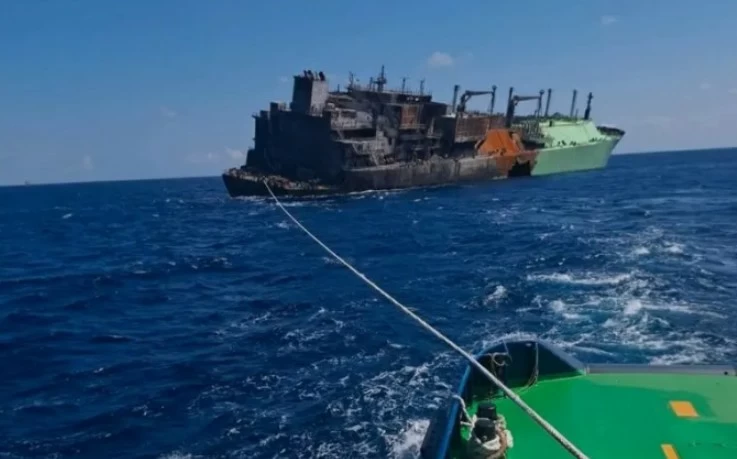
أصدرت مصلحة الموانئ والنقل البحري الليبية تعميماً ملاحياً عاجلاً حذّرت فيه من مخاطر الناقلة الروسية (ARCTIC METAGAZ)، التي أصبحت خارج السيطرة في عرض البحر المتوسط، شمال مدينة بنغازي، وذلك عقب انقطاع حبل الجر أثناء عملية سحبها.
وفي 4 مارس الماضي تعرضت ناقلة الغاز الروسية لانفجارات في البحر المتوسط قبالة سواحل بنغازي.
وأوضحت المصلحة أن الناقلة انفصلت عن قاطرة السحب نتيجة عطل فني، ما أدى إلى انجرافها بشكل حر، مع تعذر إعادة ربطها حتى اللحظة.
وبيّنت أن الناقلة تبعد نحو (120) ميلاً بحرياً شمال بنغازي، وتشكل خطراً على الملاحة البحرية، لاسيما أنها لا تزال تحمل كميات من الغاز الطبيعي المسال ومواد وقود، الأمر الذي يرفع من احتمالات التلوث البيئي أو وقوع حوادث بحرية.
ودعت مصلحة الموانئ والنقل البحري الليبية جميع السفن والوحدات البحرية العاملة في المنطقة إلى توخي أقصى درجات الحيطة والحذر، والالتزام بمسافة أمان لا تقل عن 5 أميال بحرية من موقع الناقلة.
كما شددت على ضرورة الإبلاغ الفوري عبر قنوات الاتصال البحرية المعتمدة عن أي مستجدات تتعلق بحالة الناقلة، بما في ذلك أي تسرب أو انبعاثات أو تغير في وضعها.
The Libyan Ports and Maritime Transport Authority issued an urgent maritime circular warning of the dangers posed by the Russian tanker (ARCTIC METAGAZ), which has become uncontrollable in the Mediterranean Sea, north of the city of Benghazi, following the disconnection of the towing cable during its towage operation.
On March 4, the Russian gas tanker was subjected to explosions in the Mediterranean Sea off the coast of Benghazi.
The authority clarified that the tanker separated from the towing vessel due to a technical malfunction, which led to it drifting freely, with no possibility of reconnecting it at this moment.
It indicated that the tanker is approximately (120) nautical miles north of Benghazi and poses a danger to maritime navigation, especially since it still carries quantities of liquefied natural gas and fuel materials, which increases the likelihood of environmental pollution or maritime accidents.
The Libyan Ports and Maritime Transport Authority urged all ships and marine units operating in the area to exercise the utmost caution and to maintain a safety distance of no less than 5 nautical miles from the location of the tanker.
It also emphasized the necessity of immediate reporting through the approved maritime communication channels of any updates regarding the condition of the tanker, including any leaks, emissions, or changes in its status.