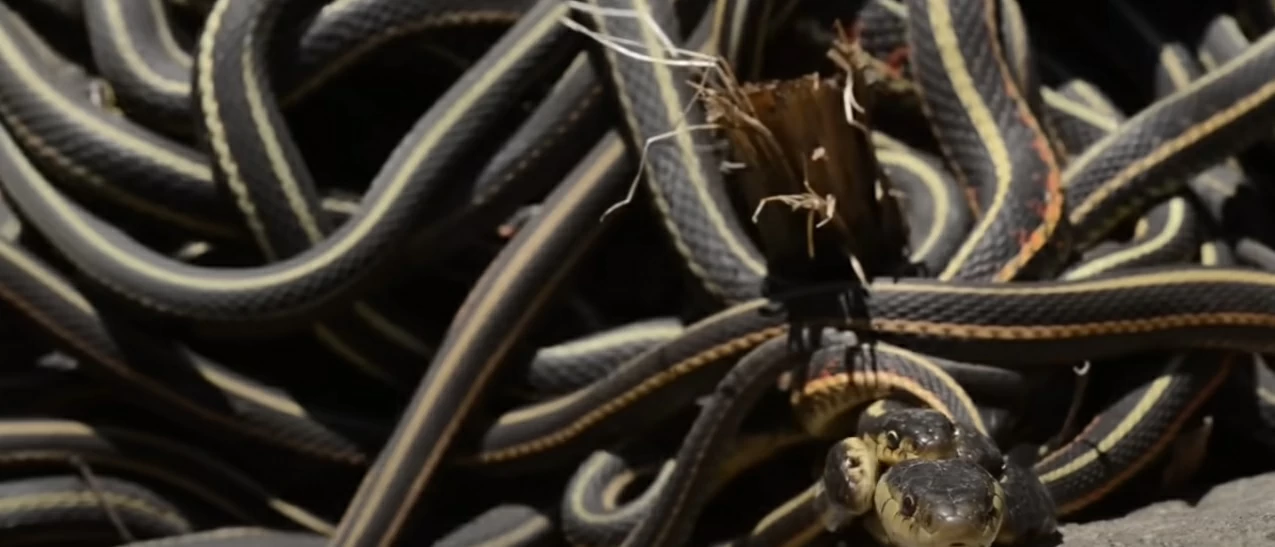
في بلدية أرمسترونغ بمقاطعة مانيتوبا، تجسد الطبيعة عرضاً مذهلاً يثير الدهشة والرعب معًا، حيث تشكل «أوكار نارسيس للأفاعي» أكبر تجمع للثعابين على وجه الأرض. هناك، يلجأ نحو 100 ألف من ثعابين «الرباط حمراء الجانب» سنويًا إلى كهوف جيرية قديمة للهروب من البرد القارس، حيث تظل درجة الحرارة فوق الصفر حتى عندما ينخفض السطح إلى 30 درجة تحت الصفر.
مع بداية الربيع، وتحديدًا في أواخر أبريل وأوائل مايو، تخرج عشرات الآلاف من الثعابين في وقت واحد، محولةً المروج إلى ما يشبه «سجادة ملتوية» من الحراشف المتشابكة. الغاية من هذا الخروج الجماعي بسيطة لكنها قوية وتتمثل في التزاوج، حيث تطلق الإناث «فيرمونات» قوية تجذب الذكور لتكوين ما يعرف بـ«كرات التزاوج»، وهي كرات متشابكة من الثعابين تتدحرج أحيانًا على الأرض في مشهد مذهل.
وأظهرت الملاحظات العلمية تفاصيل غريبة، إذ يميل معظم الذكور إلى استخدام الجانب الأيمن من أعضائهم التناسلية، ما يزيد من فرص نقل جيناتهم بنجاح. ورغم العدد الهائل، فإن هذه الثعابين غير مؤذية للبشر، فسمّها خفيف ويستخدم فقط لشلّ حركة فرائسها الصغيرة مثل الضفادع والديدان، ما يجعلها مصدر إعجاب علمي أكثر من كونها تهديدًا حقيقيًا.
In the Armstrong municipality of Manitoba, nature embodies a stunning display that evokes both awe and terror, as the "Narcissus dens of snakes" represent the largest gathering of snakes on the planet. There, around 100,000 of the "Red-sided Garter Snakes" annually retreat to ancient limestone caves to escape the bitter cold, where the temperature remains above freezing even when the surface drops to 30 degrees below zero.
With the onset of spring, specifically in late April and early May, tens of thousands of snakes emerge at once, transforming the meadows into what resembles a "twisted carpet" of intertwined scales. The purpose of this mass emergence is simple yet powerful: mating, as females release strong "pheromones" that attract males to form what is known as "mating balls," which are tangled clusters of snakes that sometimes roll on the ground in a breathtaking spectacle.
Scientific observations have revealed strange details, as most males tend to use the right side of their reproductive organs, increasing the chances of successfully passing on their genes. Despite the enormous numbers, these snakes are harmless to humans; their venom is mild and is used only to immobilize their small prey, such as frogs and worms, making them more of a scientific marvel than a real threat.