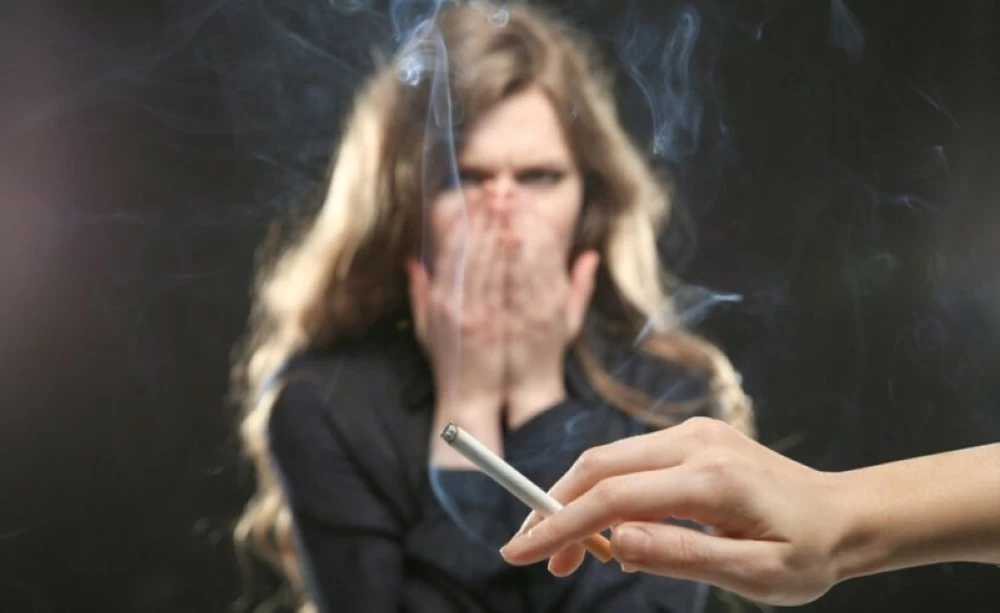
في دراسة حديثة توصل علماء صينيون إلى أن دخان التبغ المتراكم في الأماكن المغلقة لا يتوقف ضرره على إفساد الطلاء الداخلي فحسب، بل يشكّل أيضاً تهديداً مباشراً للصحة.
ووفقاً لمؤلفي الدراسة، التي نشرت نتائجها في مجلة «Building and Environment» فإنها توضّح ما يتحول إليه دخان التبغ ومدة استمرار مشتقاته في تلويث الهواء.
رواسب سامة
ويشير الباحثون إلى أن «الدخان الثالث»، أي الرواسب السامة لدخان التبغ التي تمتصها الأسطح مثل الجدران، والأثاث، والسجاد، والستائر، يختلف عن التدخين السلبي المباشر. فبينما يُستنشق التدخين السلبي مباشرة من الهواء، يصبح «الدخان الثالث» جزءاً من البيئة الداخلية نفسها ويستمر في إطلاق جسيمات وغازات بشكل ديناميكي، مؤثراً في جودة الهواء مع مرور الوقت.
وتمكن خبراء معهد فيزياء الغلاف الجوي التابع لأكاديمية العلوم الصينية باستخدام تقنيات متقدمة لمراقبة الهواء من تتبع انبعاث الجسيمات الدقيقة والغازات من الأسطح الملوثة.
«الدخان الثالث» ملوِّث مستقر
وأظهرت النتائج اختلافاً جوهرياً بين نوعَي الدخان؛ فالجسيمات الناتجة عن التدخين السلبي تتشتت بسرعة نسبية، بينما يتحول «الدخان الثالث» إلى ملوث مستقر يبقى في الهواء لفترات طويلة بعد التدخين، وإن كان بتركيز منخفض. كما تتغير تركيبته الكيميائية تدريجياً، ويزداد محتواه من مركبات النيتروجين، ما يشير إلى تكوّن مواد أكثر سمية.
وكشفت الدراسة تأثير مواد التشطيب الداخلية على استمرار التلوث، إذ تعمل المواد المسامية، مثل السجاد الصوفي والتنجيد القماشي، كخزانات عميقة تمتص المواد الكيميائية ثم تطلقها ببطء مرة أخرى في الهواء. وتؤدي هذه العملية إلى فشل التهوية في إزالة التلوث، ما يسمح بتراكم الدخان المتبقي داخل الغرف لساعات وحتى أيام بعد تدخين سيجارة واحدة.
In a recent study, Chinese scientists found that tobacco smoke accumulated in enclosed spaces not only damages interior paint but also poses a direct threat to health.
According to the authors of the study, published in the journal "Building and Environment," it clarifies what tobacco smoke turns into and how long its derivatives continue to pollute the air.
Toxic Residues
The researchers point out that "thirdhand smoke," which refers to the toxic residues of tobacco smoke absorbed by surfaces such as walls, furniture, carpets, and curtains, is different from direct secondhand smoke. While secondhand smoke is inhaled directly from the air, "thirdhand smoke" becomes part of the indoor environment itself and continues to release particles and gases dynamically, affecting air quality over time.
Experts from the Institute of Atmospheric Physics at the Chinese Academy of Sciences were able to track the emission of fine particles and gases from contaminated surfaces using advanced air monitoring techniques.
"Thirdhand Smoke" as a Stable Pollutant
The results showed a fundamental difference between the two types of smoke; the particles resulting from secondhand smoke disperse relatively quickly, while "thirdhand smoke" turns into a stable pollutant that remains in the air for long periods after smoking, albeit at low concentrations. Its chemical composition also gradually changes, increasing its nitrogen compound content, indicating the formation of more toxic substances.
The study revealed the impact of interior finishing materials on the persistence of pollution, as porous materials, such as wool carpets and fabric upholstery, act as deep reservoirs that absorb chemicals and then slowly release them back into the air. This process leads to ventilation failure in removing pollution, allowing residual smoke to accumulate inside rooms for hours and even days after smoking a single cigarette.