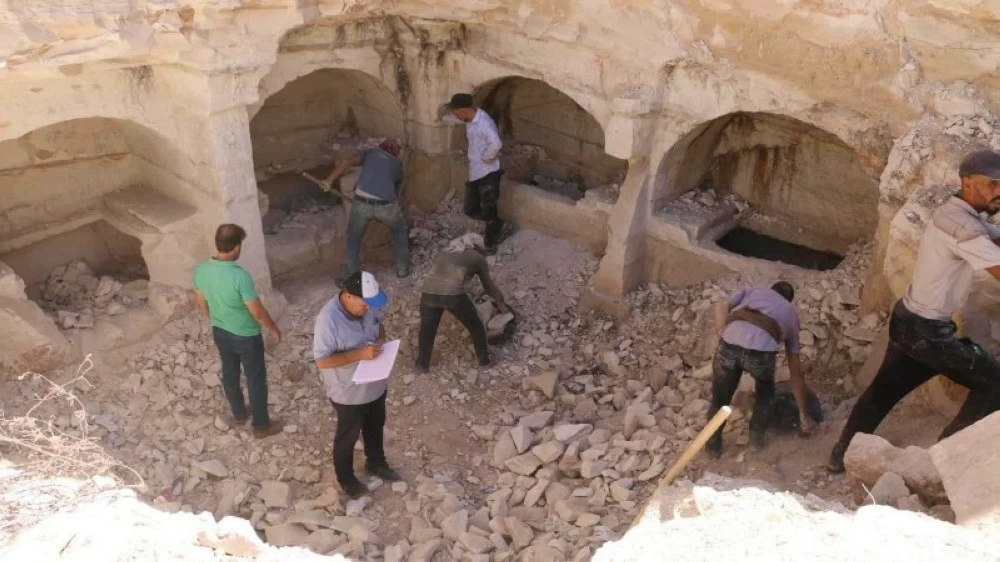
أعلنت المديرية العامة للآثار والمتاحف اكتشاف مدافن أثرية مهمة في مدينة معرة النعمان بمحافظة إدلب، في اكتشاف وصفه خبراء الآثار بأنه قد يغير فهمنا للتاريخ القديم للمنطقة. ونفّذت الفرق الفنية الرسومات الهندسية التفصيلية، والرفع الطبوغرافي للموقع، إضافة إلى توثيق المكتشفات عبر تصوير احترافي دقيق.
وأكدت المديرية أن المدافن تقع في أرض مملوكة لأحد المواطنين، وأصدرت توصيات ملزمة لصاحب العقار للحفاظ على هذه الكنوز التاريخية القيمة. ويعود تاريخ المدينة إلى قرون طويلة، إذ تشتهر بأنها مسقط رأس الشاعر أبو العلاء المعري وتقع بالقرب من مملكتي إيبلا وأفاميا، وكانت مسرحاً لصراعات وحروب تاريخية بين الإمبراطوريات القديمة.
ولم يقتصر العمل على الاكتشاف الجديد فقط، فقد أعلن متحف إدلب استعادة 1234 رقماً مسمارياً من أقدم وسائل الكتابة في التاريخ، إلى جانب 189 قطعة أثرية متنوعة تشمل أسرجة فخارية وقطعاً من العاج وقطعتين ذهبيتين فاخرتين، كانت قد فقدت خلال الحرب السورية.
وتستمر الجهود المبذولة في سورية لاستعادة إرثها التاريخي الغني، بالتعاون مع الإنتربول الدولي، بعد تعرض المواقع والمتاحف لعمليات نهب واعتداءات واسعة، كان آخرها السطو على المتحف الوطني بدمشق في نوفمبر الماضي، ما جعل هذا الاكتشاف في معرة النعمان حدثاً تاريخياً وفنياً فريداً يسلط الضوء على قيمة التراث السوري.
The General Directorate of Antiquities and Museums announced the discovery of significant archaeological tombs in the city of Maaret al-Numan in Idlib Governorate, a discovery that experts describe as potentially changing our understanding of the ancient history of the region. The technical teams carried out detailed engineering drawings and topographic surveys of the site, in addition to documenting the findings through precise professional photography.
The directorate confirmed that the tombs are located on land owned by a private citizen and issued binding recommendations to the property owner to preserve these valuable historical treasures. The city's history dates back many centuries, as it is famous for being the birthplace of the poet Abu al-Ala al-Maari and is located near the ancient kingdoms of Ebla and Apamea, having been a theater for historical conflicts and wars between ancient empires.
The work did not stop at the new discovery alone; the Idlib Museum announced the recovery of 1,234 cuneiform tablets, one of the oldest forms of writing in history, along with 189 diverse archaeological pieces including pottery lamps, ivory items, and two exquisite gold pieces that had been lost during the Syrian war.
Efforts continue in Syria to recover its rich historical heritage, in cooperation with Interpol, after sites and museums were subjected to extensive looting and assaults, the latest of which was the robbery of the National Museum in Damascus last November, making this discovery in Maaret al-Numan a unique historical and artistic event that highlights the value of Syrian heritage.