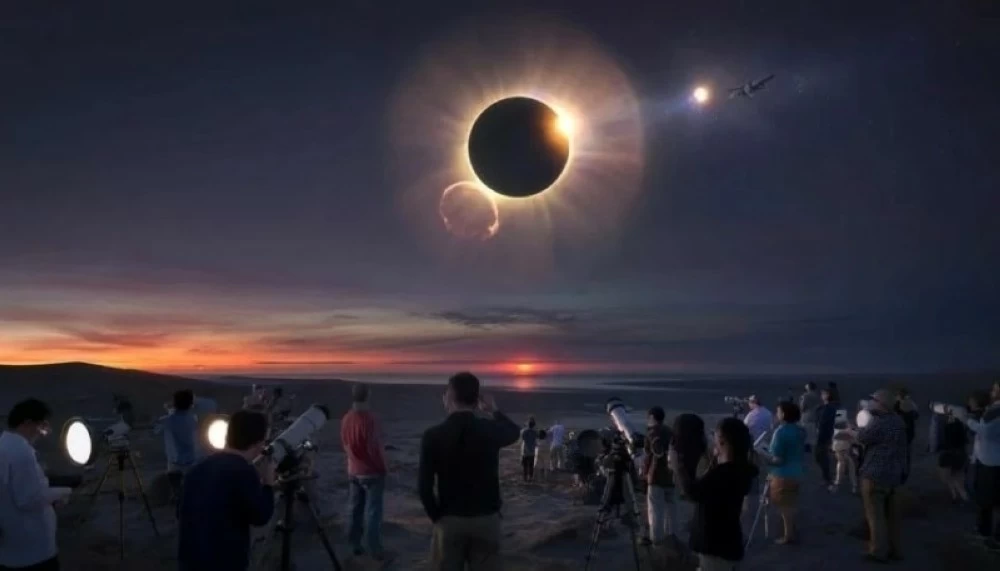
يستعد العالم لمشاهدة حدث فلكي استثنائي في صيف العام 2027، حيث سيحدث أطول كسوف كلي للشمس منذ أكثر من 100 عام، مع احتلال مصر موقعاً مميزاً يتيح رصد هذه الظاهرة النادرة.
وبحسب وكالة الفضاء الأمريكية، سيحدث الكسوف يوم 2 أغسطس 2027، وسيمتد لمدة 6 دقائق و23 ثانية، متجاوزاً كسوف أبريل 2024 الذي استمر 4 دقائق و28 ثانية فوق أمريكا الشمالية. وسيبدأ ظل القمر رحلته من المحيط الأطلسي عند شروق الشمس، مروراً بثلاث قارات قبل أن يصل إلى مصر.
ويمتد مسار الكسوف من جنوب إسبانيا وجبل طارق، مروراً بشمال إفريقيا، بما في ذلك المغرب والجزائر وتونس وليبيا، وصولاً إلى مصر، حيث تسجل مدينتا الأقصر وأسوان أطول فترة من الظلام الكلي. ثم يواصل الظل رحلته نحو الخليج العربي، مروراً بالمملكة العربية السعودية واليمن، قبل أن ينتهي في القرن الأفريقي بالصومال.
ويحدث هذا الطول غير المعتاد نتيجة محاذاة كونية نادرة، إذ يصل القمر إلى نقطة الحضيض الأقرب إلى الأرض ما يجعل حجمه الظاهري أكبر، في حين تكون الأرض بالقرب من نقطة الأوج أبعد نقطة عن الشمس، ما يجعل قرص الشمس أصغر قليلاً، وبالتالي يمتد حجب ضوء الشمس لفترة أطول.
ويجب على الراغبين في مشاهدة الكسوف استخدام نظارات شمسية معتمدة بمواصفات ISO 12312-2، أو اللجوء لطرق المشاهدة غير مباشرة لتجنب إصابات العين. وستحتاج بعض الدول، مثل الأمريكتين وآسيا، إلى السفر لرصد مرحلة الكسوف الكلي، بينما يشاهد سكان شمال شرق الولايات المتحدة كسوفاً جزئياً فقط.
يذكر أن كسوف 11 يوليو 1991 كان آخر حدث مماثل استمر 6 دقائق و53 ثانية، فيما سجل أطول كسوف موثق في التاريخ 7 دقائق و28 ثانية عام 743 قبل الميلاد فوق المحيط الهندي. ويتوقع العلماء أن يكون الحدث التالي المماثل طويل الأمد في الولايات المتحدة عام 2045، بينما لن يحدث كسوف مماثل في الطول حتى عام 2114.
The world is preparing to witness an extraordinary astronomical event in the summer of 2027, as the longest total solar eclipse in over 100 years will occur, with Egypt occupying a special position that allows for the observation of this rare phenomenon.
According to the American space agency, the eclipse will take place on August 2, 2027, and will last for 6 minutes and 23 seconds, surpassing the eclipse of April 2024, which lasted 4 minutes and 28 seconds over North America. The shadow of the moon will begin its journey from the Atlantic Ocean at sunrise, passing through three continents before reaching Egypt.
The path of the eclipse extends from southern Spain and Gibraltar, through North Africa, including Morocco, Algeria, Tunisia, and Libya, reaching Egypt, where the cities of Luxor and Aswan will experience the longest duration of total darkness. The shadow will then continue its journey towards the Arabian Gulf, passing through Saudi Arabia and Yemen, before ending in the Horn of Africa in Somalia.
This unusual length occurs due to a rare cosmic alignment, as the moon reaches its perigee closest to the Earth, making its apparent size larger, while the Earth is near its apogee, the farthest point from the sun, making the sun's disk slightly smaller, thus extending the blockage of sunlight for a longer period.
Those wishing to view the eclipse should use certified solar glasses that meet ISO 12312-2 specifications, or resort to indirect viewing methods to avoid eye injuries. Some countries, such as those in the Americas and Asia, will need to travel to observe the total eclipse phase, while residents of the northeastern United States will only see a partial eclipse.
It is worth mentioning that the eclipse on July 11, 1991, was the last similar event that lasted 6 minutes and 53 seconds, while the longest documented eclipse in history lasted 7 minutes and 28 seconds in 743 BC over the Indian Ocean. Scientists expect the next similar long-duration event in the United States to occur in 2045, while a similarly long eclipse will not happen again until 2114.