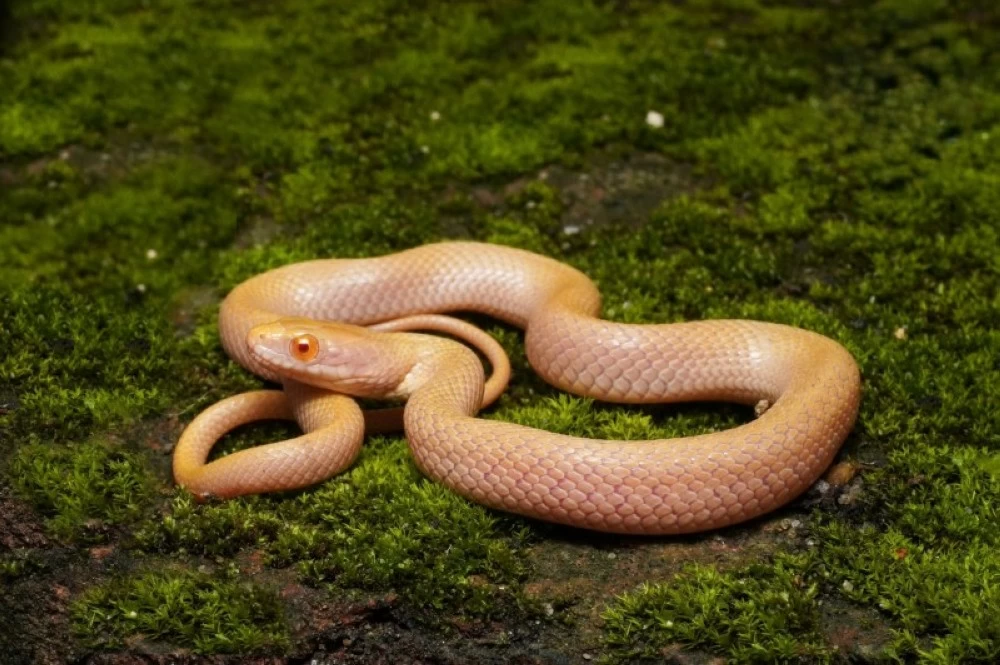
في اكتشاف نادر أشبه بعالم الخيال، رصدت ولاية آسام الهندية أول ثعبان ماء آسيوي مهق (ألبينو) يتجول في الحياة البرية، ليكشف الستار عن واحد من أكثر الكائنات ندرة وغموضاً في المنطقة، البالغ طوله 29 سنتيمتراً، عُثر عليه قرب حديقة حيوان ولاية آسام والحديقة النباتية في جواهاتي، قبل أن يؤكد خبراء الحياة البرية هويته بدقة عبر دراسة مقاييسه وخصائصه الجسدية الفريدة.
ويمتاز هذا النوع النادر بغياب مادة الميلانين، ما يمنحه قشوراً شاحبة وعينين حمراوين أو وردية اللون، وهي سمات المهق التي تجعل الثعبان مميزاً وسهل الرصد مقارنة بأقرانه.
وبعد توثيق حالته ودراسته، أُعيد إطلاقه بأمان في موطنه الطبيعي داخل غابة محمية، ما أتاح للباحثين متابعة هذا الشذوذ الوراثي الفريد في بيئته الأصلية.
ورغم افتقار الثعبان للألوان الطبيعية، إلا أنه يحتفظ بالصفات الشكلية الأساسية للـkeelback المتقلب من جسم نحيل ورأس مسطح، ما يمنحه القدرة على الحركة بسهولة في اليابسة والمياه.
ويعتمد هذا النوع غير السام على خفته في صيد الأسماك والضفادع، لكن لونه الفاتح يزيد من تعرضه للحيوانات المفترسة، وهو ما يفسِّر ندرة الثعابين المهق في الطبيعة.
ويشير الباحثون إلى أن المهق، الناتج عن طفرة وراثية تمنع إنتاج الميلانين، قد يعوق قدرة الثعابين على التخفّي وتنظيم حرارة الجسم، ما يجعل بقاءها في البرية أكثر صعوبة.
In a rare discovery reminiscent of a fantasy world, the Indian state of Assam has spotted the first Asian water snake with albinism wandering in the wild, unveiling one of the rarest and most mysterious creatures in the region. Measuring 29 centimeters in length, it was found near the Assam State Zoo and the Botanical Garden in Guwahati, before wildlife experts accurately confirmed its identity by studying its measurements and unique physical characteristics.
This rare species is distinguished by the absence of melanin, giving it pale scales and red or pink eyes, which are traits of albinism that make the snake distinctive and easy to spot compared to its peers.
After documenting its condition and studying it, it was safely released back into its natural habitat within a protected forest, allowing researchers to monitor this unique genetic anomaly in its original environment.
Despite the snake's lack of natural colors, it retains the basic morphological traits of the keelback, with a slender body and a flattened head, enabling it to move easily on land and in water.
This non-venomous species relies on its agility to catch fish and frogs, but its light coloration increases its exposure to predators, which explains the rarity of albino snakes in the wild.
Researchers indicate that albinism, resulting from a genetic mutation that prevents melanin production, may hinder the snakes' ability to camouflage and regulate body temperature, making their survival in the wild more challenging.