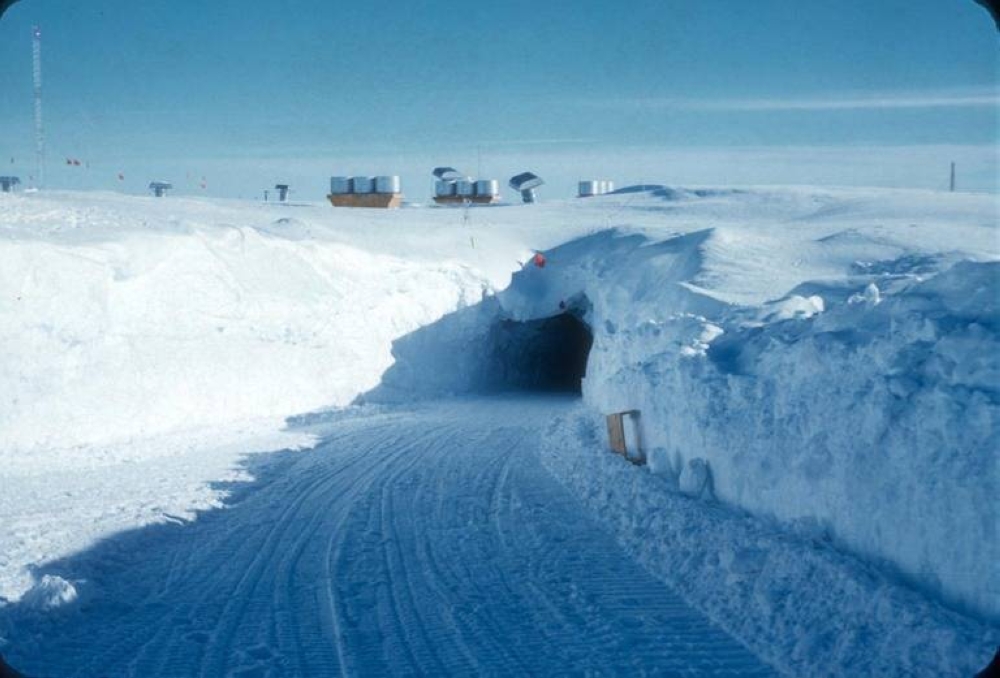
في لحظة اكتشاف غير متوقعة، وبينما كان فريق من علماء وكالة الفضاء الأمريكية (ناسا) يجري اختبارات روتينية لرادار فوق شمال غرينلاند، تم العثور على بقايا قاعدة نووية سرية دُفنت لعقود تحت الجليد القطبي، إذ أظهرت أجهزتهم وجود مجموعة من المستوطنات المترابطة بشبكة من الأنفاق عميقاً داخل الغطاء الجليدي، وكأنها «حضارة من الماضي جُمدت في الزمن»، حسبما ذكرت صحيفة «وول ستريت جورنال».
وقال تشاد جرين، العالم في «ناسا» الذي كان على متن الطائرة، للصحيفة: «الأمر يُشبه التحليق فوق كوكب آخر، ومن الصعب تخيل أن أحداً أو شيئاً تمكن من العيش هناك».
وأوضحت «وول ستريت جورنال» أن ما رآه العلماء على شاشاتهم لم يكن حضارة مفقودة، بل بقايا قاعدة عسكرية أمريكية شيدت تحت الجليد إبان الحرب الباردة.
وكانت القاعدة جزءاً من خطة طموحة وسرية وضعتها وزارة الدفاع الأمريكية (البنتاغون)، عُرفت باسم «مشروع دودة الجليد» (Project Iceworm)، وهدفت إلى بناء شبكة من مواقع إطلاق الصواريخ النووية تحت جليد القطب الشمالي.
ويكشف الموقع، الذي صُمم لاستيعاب 600 صاروخ باليستي متوسط المدى، مدى عمق الحضور الأمريكي في غرينلاند منذ أكثر من نصف قرن، وفق «وول ستريت جورنال».
وشُيد الموقع المعروف باسم «كامب سنتشري» جزئياً عام 1959، وتُرك في عام 1967 بعدما تبين أن الغطاء الجليدي غير مستقر بما يكفي لدعم شبكة الإطلاق المقترحة. ومع مرور السنوات، تراكم الجليد فوق المنشأة، وأصبحت مدفونة تحت طبقة يزيد سمكها على 30 متراً.
كانت القاعدة معروفة لدى البعض قبل تحليق «ناسا» الأخير، باعتبارها «منشأة أبحاث» ظاهرياً، لكن هدفها العسكري الحقيقي بقي سرياً حتى عام 1996. وفي ديسمبر الماضي، التقط جرين وزملاؤه أول صورة متكاملة تُظهر القاعدة بكامل تفاصيلها.
ولا يمثل «كامب سنتشري» مجرد أثر من آثار «جنون» الحرب الباردة، بل يذكر أيضاً بالحضور الأمريكي الطويل على أراضي غرينلاند الدنماركية، وهو وجود أثار جدلاً في بعض الأحيان. فمن أجل الحفاظ على السيادة على غرينلاند، اضطرت الدنمارك تاريخياً إلى التنازل عن جزء من أراضيها لصالح الولايات المتحدة.
وذهب الرئيس الأمريكي دونالد ترمب إلى أبعد من ذلك، إذ انتقد الدنمارك لعدم تأمينها غرينلاند بشكل كافٍ، وهدد بالاستيلاء على أكبر جزيرة في العالم بالقوة باسم الأمن القومي الأمريكي.
وتتيح معاهدة موقعة عام 1951 بين الولايات المتحدة والدنمارك لواشنطن إنشاء قواعد في غرينلاند متى شاءت، وهي المعاهدة ذاتها التي أتاحت بناء «كامب سنتشري»، وهو ما ذكّرت به شخصيات دنماركية علناً في الأسابيع الأخيرة.
وحاول مسؤولون في غرينلاند والدنمارك صد ترمب من خلال إبداء الانفتاح على تعزيز الوجود العسكري الأمريكي، مع رفضهم لأي سيطرة أمريكية كاملة على الإقليم.
وفي وقت ما خلال الحرب الباردة، كانت الولايات المتحدة تدير 17 قاعدة في غرينلاند، من بينها «كامب سنتشري»، ونشرت هناك قرابة 10 آلاف جندي. أما اليوم، فلا يتجاوز عدد القوات الأمريكية 200 جندي، يتمركزون في قاعدة واحدة هي قاعدة «بيتوفيك» الفضائية، المعروفة سابقاً باسم «ثول» الجوية.
In an unexpected discovery moment, while a team of scientists from the American space agency (NASA) was conducting routine tests on radar over northern Greenland, remnants of a secret nuclear base buried for decades under the polar ice were found. Their devices showed the presence of a network of interconnected settlements deep within the ice cover, as if it were a "civilization from the past frozen in time," according to the Wall Street Journal.
Chad Green, a NASA scientist who was on the plane, told the newspaper: "It feels like flying over another planet, and it's hard to imagine that anyone or anything could have lived there."
The Wall Street Journal clarified that what the scientists saw on their screens was not a lost civilization, but remnants of an American military base built under the ice during the Cold War.
The base was part of an ambitious and secret plan devised by the U.S. Department of Defense (the Pentagon), known as "Project Iceworm," which aimed to build a network of nuclear missile launch sites beneath the Arctic ice.
The site, designed to accommodate 600 intermediate-range ballistic missiles, reveals the depth of the American presence in Greenland for over half a century, according to the Wall Street Journal.
The site known as "Camp Century" was partially constructed in 1959 and was abandoned in 1967 after it became clear that the ice cover was not stable enough to support the proposed launch network. Over the years, ice accumulated over the facility, burying it under a layer more than 30 meters thick.
The base was known to some before NASA's recent flight, ostensibly as a "research facility," but its true military purpose remained secret until 1996. Last December, Green and his colleagues captured the first comprehensive image showing the base in all its details.
Camp Century is not just a remnant of the "madness" of the Cold War; it also serves as a reminder of the long American presence on Danish Greenland, a presence that has sometimes sparked controversy. To maintain sovereignty over Greenland, Denmark has historically had to cede part of its territory to the United States.
U.S. President Donald Trump went further, criticizing Denmark for not securing Greenland adequately and threatening to seize the world's largest island by force in the name of American national security.
A treaty signed in 1951 between the United States and Denmark allows Washington to establish bases in Greenland whenever it wishes, the same treaty that enabled the construction of Camp Century, which Danish figures have publicly reminded in recent weeks.
Officials in Greenland and Denmark attempted to deter Trump by expressing openness to enhancing the American military presence while rejecting any complete American control over the territory.
At one point during the Cold War, the United States operated 17 bases in Greenland, including Camp Century, and stationed around 10,000 troops there. Today, the number of American troops does not exceed 200, stationed at a single base, the Thule Air Base, formerly known as "Thule" Air Base.