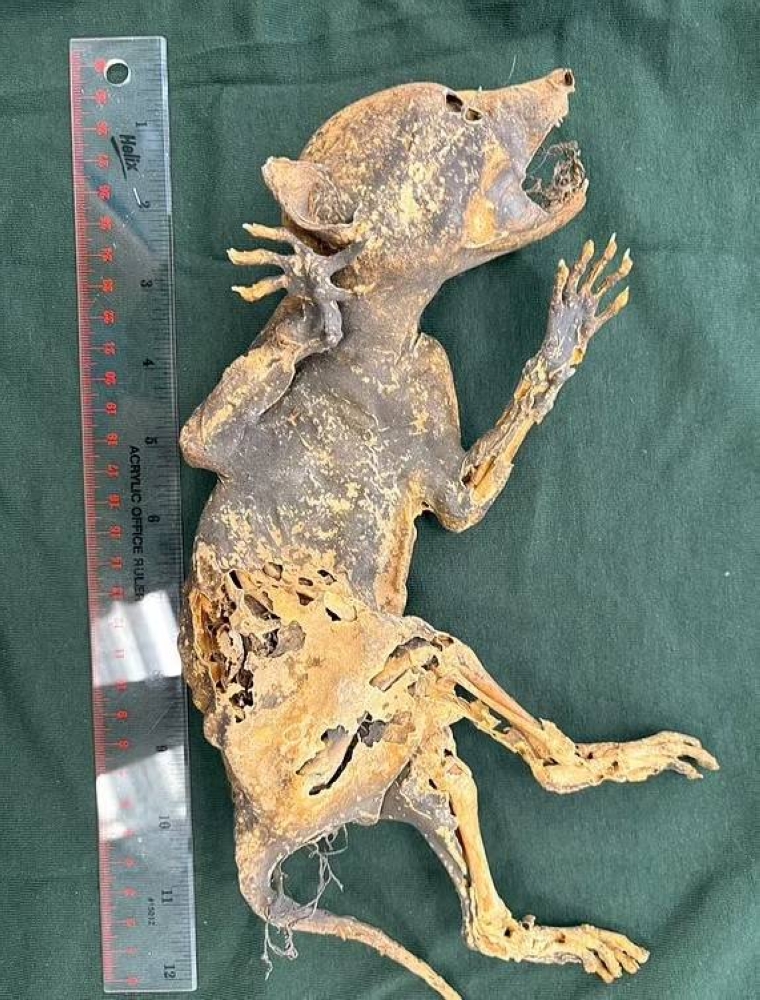
أثار اكتشاف مخلوق محنط يتميز بيدين تُشبهان أيدي البشر في جامعة ولاية ميشيغان حيرة العلماء، بعد العثور عليه خلال أعمال ترميم في مبنى «كوك-سيفرز» التاريخي بالجامعة.
وبحسب «ديلي ميل» البريطانية، أطلق على المخلوق الغريب اسم «كاباكابرا»، في إشارة إلى الكائن الأسطوري المعروف «تشوباكابرا»، واسم برنامج علم الآثار التابع للجامعة (CAP). ورغم أنه أصبح رمزاً غير رسمي للبرنامج، إلا أن هوية هذا الكائن لا تزال مجهولة حتى اليوم.
وتتولى الطالبة في مرحلة الدكتوراه في الأنثروبولوجيا الشرعية جيرييل كارتاليس قيادة التحقيق في هوية هذا المخلوق الغريب. ووصفته بأنه بحجم قطة صغيرة، وله ذيل طويل نحيف، وجلد رقيق للغاية يشبه الورق القديم. وأكثر ما لفت الانتباه هو يداه اللتان تحتويان على 5 أصابع وأظافر؛ ما يجعلها شبيهة بيد الإنسان.
وتم إخضاع الكائن للفحص بالأشعة وتحليل هيكله العظمي، إلا أن التحاليل لم تنجح بعد في تحديد نوعه بدقة.
وطرحت عدة فرضيات مبدئية، شملت كونه كلباً أو قطاً أو فأراً، لكن كارتاليس ترجح الآن أنه راكون، بسبب تشابه شكل الجمجمة والخطم. غير أن غياب أسنان العينة المحنطة أعاق التأكد من هذه الفرضية؛ ما دفعها للبحث عن نموذج مماثل لمقارنة شكل الأسنان (النتائج المتبقية).
وتعتقد كارتاليس أن الحيوان ربما دخل المبنى عبر فتحة تهوية، ثم علق هناك وتعرض للتحنيط الطبيعي بفعل الهواء الدافئ والجاف في الداخل. وعلى الرغم من أن عمر المبنى يعود إلى عام 1889، إلا أن عمر المخلوق المحنط لا يزال غير معروف.
وأوضحت الباحثة أن الظروف داخل أنابيب التهوية كانت مثالية لعملية التحنيط، خصوصاً خلال الشتاء البارد والجاف. وعلى الرغم من أنها ترجح بنسبة 75% أن الكائن هو راكون، إلا أنها أكدت أنها لن تجزم بأي نتيجة قبل الانتهاء من التحليل الكامل.
The discovery of a mummified creature with hands resembling human hands at Michigan State University has puzzled scientists, after it was found during restoration work in the historic "Cook-Servis" building on campus.
According to the British "Daily Mail," the strange creature has been named "Kapakabra," referencing the legendary creature known as "Chupacabra," and the name of the university's archaeology program (CAP). Although it has become an unofficial symbol of the program, the identity of this creature remains unknown to this day.
PhD student in forensic anthropology, Jeryell Kartalis, is leading the investigation into the identity of this strange creature. She described it as the size of a small cat, with a long, thin tail and extremely thin skin resembling old paper. What caught the most attention were its hands, which have 5 fingers and nails, making them similar to human hands.
The creature has undergone X-ray examination and skeletal analysis, but the tests have not yet succeeded in accurately determining its species.
Several initial hypotheses have been proposed, including that it could be a dog, cat, or mouse, but Kartalis now leans towards it being a raccoon, due to the similarity in the shape of the skull and snout. However, the absence of teeth in the mummified specimen has hindered confirmation of this hypothesis, prompting her to search for a similar model to compare the shape of the teeth (remaining results).
Kartalis believes that the animal may have entered the building through a ventilation opening, then got stuck there and underwent natural mummification due to the warm, dry air inside. Although the building dates back to 1889, the age of the mummified creature remains unknown.
The researcher explained that the conditions inside the ventilation ducts were ideal for the mummification process, especially during the cold, dry winter. While she estimates there is a 75% chance that the creature is a raccoon, she confirmed that she will not make any definitive conclusions until the complete analysis is finished.