


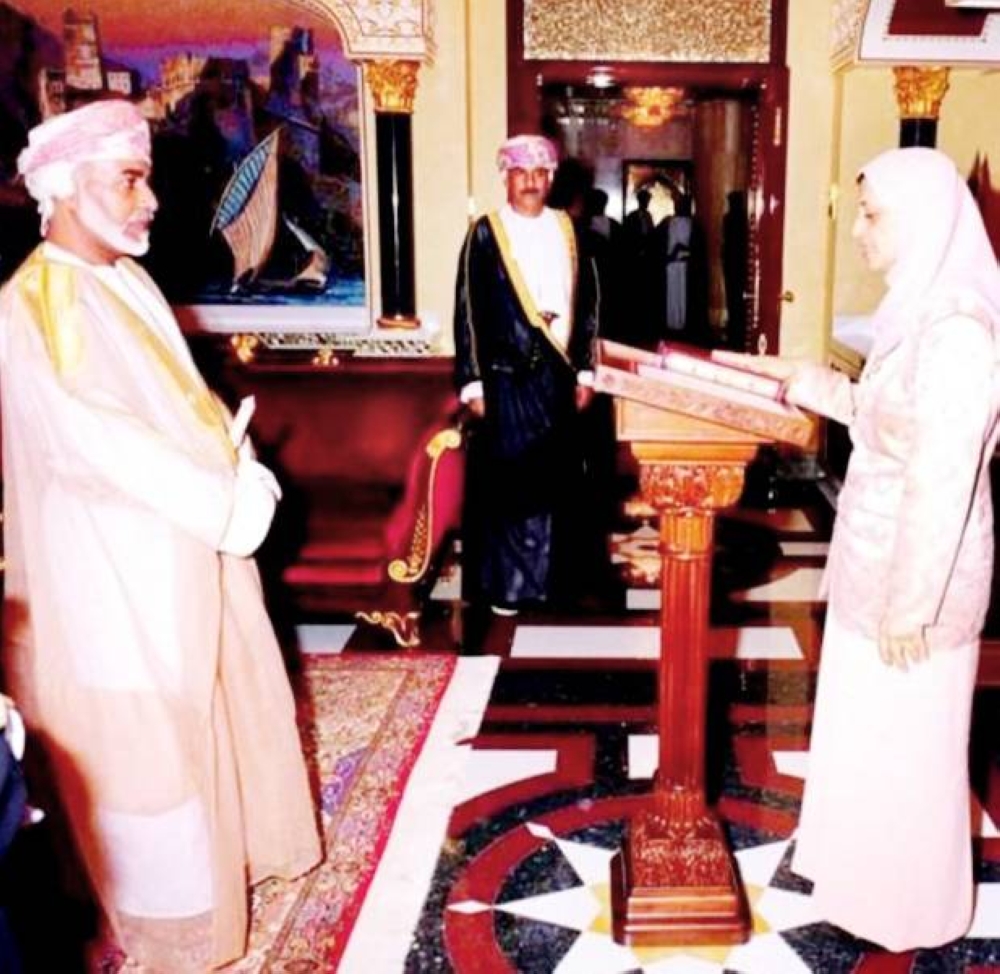
اهتم السلطان الراحل قابوس بن سعيد، رحمه الله، منذ اليوم الأول لتسلّمه قيادة سلطنة عمان في يوليو 1970 بالمرأة العمانية، فعمل جلالته على إخراجها من ظلمات القرون الوسطى إلى أنوار القرن العشرين، وتكفلها بالرعاية، وشدد على ضرورة تمكينها لتقف على قدم المساواة مع شقيقها الرجل في بناء عمان وتنميتها، وذلك من خلال إتاحة كافة الفرص أمامها كي تتبوأ أعلى مناصب الدولة، كحق من حقوقها، وتعويضاً لها عمّا واجهته من ظروف تاريخية ومعيشية صعبة في العهود السابقة.
يشهد على ذلك خطاب جلالته الأول في 27 يوليو 1970، الذي ورد فيه قوله: «إن الحكومة والشعب كالجسد الواحد، إذا لم يقم عضو منهم بواجبه اختلت بقية الأجزاء في ذلك الجسد»، ثم خطاب جلالته في 16 نوفمبر 2009، بمناسبة افتتاح الانعقاد السنوي لمجلس عمان، الذي قال فيه: «لقد أولينا، منذ هذا العهد اهتمامنا الكامل لمشاركة المرأة العمانية في مسيرة النهضة المباركة فوفرنا لها فرص التعليم والتدريب والتوظيف ودعمنا دورها ومكانتها في المجتمع وأكدنا ضرورة إسهامها في شتى مجالات التنمية».
وكان من ثمار هذه السياسة الحكيمة والرؤية السديدة أن تقدمت المرأة العمانية بخطى ثابتة وروح وثّابة لشغل حقائب وزارية ومناصب دبلوماسية وأكاديمية وإدارية وإعلامية وعسكرية وتشريعية.
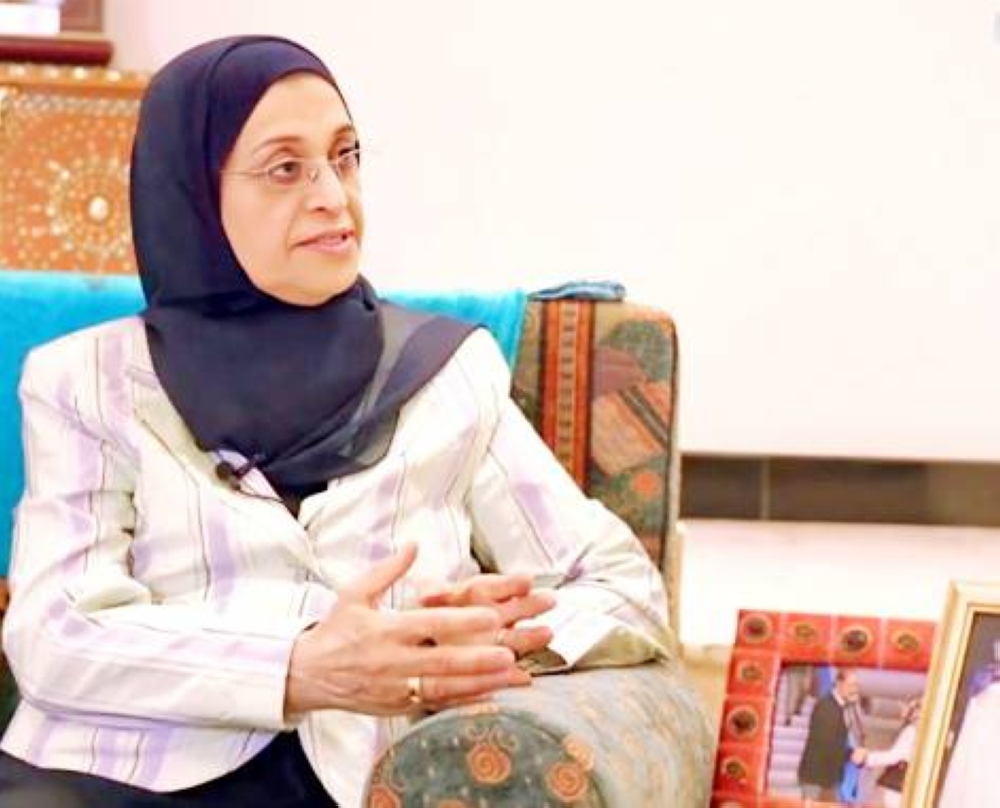
إحدى العمانيات الكثر اللواتي استفدن من هذا التوجه السلطاني، المستمر إلى اليوم في عهد السلطان هيثم بن طارق، هي السيدة خديجة حسن سليمان اللواتي، المنحدرة ــ بحسب لقبها ــ من طائفة اللواتيا التي استوطنت مسقط ومطرح، وانتشرت في باقي مناطق السلطنة منذ القرن السابع عشر الميلادي، وصارت اليوم جزءاً لا يتجزأ من مكونات الشعب العماني متعدد الطوائف والأعراق.
وُلدت خديجة بمدينة مطرح المجاورة للعاصمة مسقط في سنة 1952، ابنة لوالدين عُرف عنهما الحرص الشديد على تعليم وتأهيل أولادهما. ولمّا كانت عمان، تعيش وقت ميلاد ابنتهما خديجة، في عزلة وانغلاق تامين بسبب سياسات سلطانها الأسبق السيد سعيد بن تيمور، وكانت دور العلم فيها قليلة والحياة صعبة وفرص العمل نادرة، قرر والدها الحاج حسن سليمان اللواتي مغادرة البلاد، أسوة بما كان يفعله الكثيرون من مواطنيه في تلك الفترة الحرجة، من أجل العمل أو التعليم أو كليهما. وهكذا سافر الحاج حسن اللواتي من مسقط مع عائلته، وبرفقتهما خديجة البالغة وقتذاك سنة واحدة من العمر، إلى إمارة الكويت أولاً، ومنها انتقل إلى العراق، حيث عاش وعمل واستقر لسنوات طويلة كأحد عمانيي الشتات، وحيث نشأت وكبرت وتلقت خديجة تعليمها النظامي وأكملته حتى المرحلة الثانوية. ومن ثمّ التحقت بجامعة بغداد لإكمال تحصيلها الجامعي، فتخرجت في عام 1974 من كلية الآداب، حاملة درجة ليسانس آداب اللغة الإنجليزية. لم تكتفِ خديجة اللواتي بذلك القدر من التعليم، وإنما عززته بالسفر إلى المملكة المتحدة، حيث حصلت، بدعم من والديها، على دبلوم في إدارة الأعمال وتنمية المجتمعات المحلية من كلية «هيدرز فيلد». بعد ذلك عادت إلى بلادها بشوق لتساهم بعلمها في عملية النهضة والبناء والتنمية التي كانت وقتذاك عنواناً لعهد السلطان قابوس.
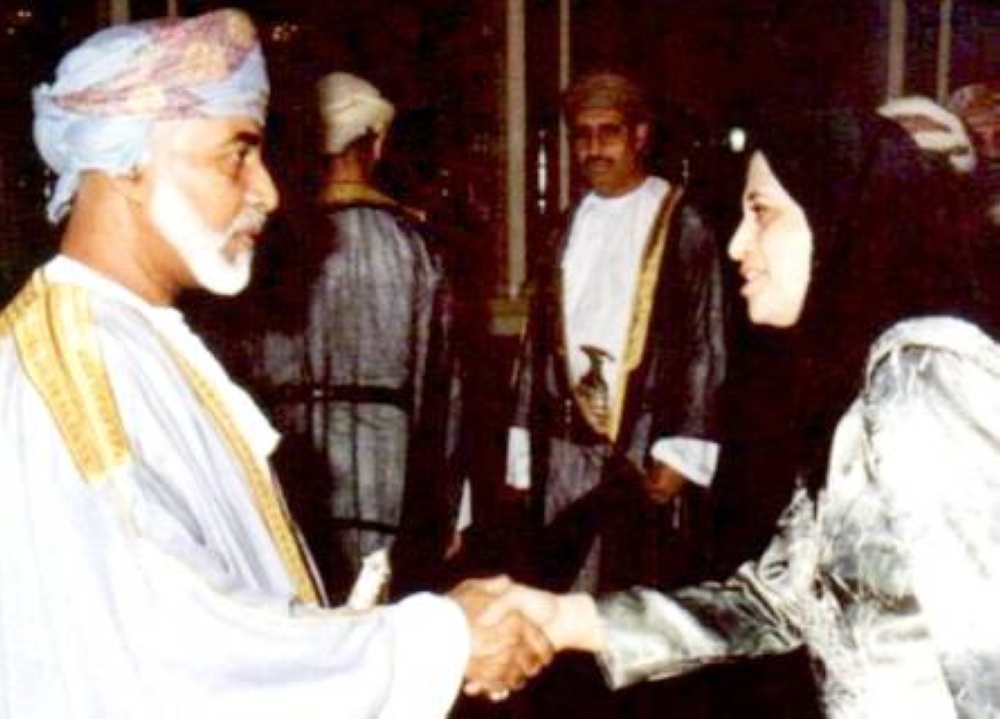
في عام 1975 بدأت خديجة مسيرتها العملية بالالتحاق في مسقط بوزارة التنمية التي لم تعمل بها سوى أشهر قليلة، تلاه انتقالها للعمل بوزارة الخارجية العمانية التي كان يقودها آنذاك السيد قيس بن عبدالمنعم الزواوي. حدث ذلك في وقت كانت الخارجية العمانية تفتقر إلى الكوادر المؤهلة، وفي فترة كانت السلطنة تسعى إلى تأسيس دبلوماسيتها وترسيخ علاقاتها الخارجية مع العالم. ولهذا بدأت العمل من الصفر، وراحت تتدرج في السلم الوظيفي خطوة خطوة: فمن سكرتير ثانٍ، إلى سكرتير أول، فمستشارة، فوزيرة مفوضة معنية بمتابعة علاقات بلادها مع المنظمات الدولية وبرامج الأمم المتحدة الإنمائية وصناديق التنمية الخليجية وغيرها. واستمرت على هذا الحال، تعمل بدأب ونشاط، وتكتسب الخبرات، وتؤسس العلاقات، إلى أن جاء يوم الرابع عشر من سبتمبر 1999، الذي صدر فيه مرسوم سلطاني، يقضي بتعيينها سفيرة فوق العادة لدى مملكة هولندا، قبل أن يصدر في مايو سنة 2000 المرسوم رقم 42 لعام 2000، الذي قضى بتعيينها ــ إلى جانب منصبها ــ سفيرة مفوضة غير مقيمة لدى مملكة بلجيكا ودقية لوكسمبورغ الكبرى.
وبهذا، دخلت خديجة تاريخ بلادها كأول عمانية تتولى منصب السفير. ومما لا شك فيه أن هذا التكليف السلطاني وضع على عاتقها مسؤولية كبيرة لجهة إثبات جدارتها كسيدة لم يسبقها في منصبها أحد من بنات جنسها. وقتها صرحت قائلة: «ليس بغريب أن تتولى المرأة العمانية منصباً رفيعاً، فكما أثبتت كفاءتها في الداخل، فقد حان الوقت لتثبت كفاءتها في العمل الدبلوماسي». لاحقاً سُجل عنها قولها: «كوني أول سفيرة عمانية كانت مسؤوليتي كبيرة جداً. كنت أقول إذا نجحت فإنني سأفتح باب التحاق العنصر النسائي في هذا السلك، وإنْ فشلت فسيكون انعكاساً سلبياً على زميلاتي».
والحقيقة أنها نجحت ولم تفشل، ليس فقط في قيادة سفارة بلادها، وإنما أيضاً في تولي عمادة السلك الدبلوماسي بمملكة هولندا، التي آلت إليها في عام 2004، بدليل توالي تعيينات النساء العمانيات كسفيرات، حتى بلغت نسبتهن في عام 2018 نحو 7% من إجمالي سفراء عمان في الخارج. فمن بعد خديجة، عينت السلطنة «السيدة حنينة بنت سالم المغيري» سفيرة مقيمة لها في واشنطن وسفيرة مفوضة غير مقيمة لدى كندا والمكسيك وكوبا، ثم عينت «كفاية بنت خميس الرئيسي» سفيرة فوق العادة لدى مملكة إسبانيا، ثم جاء تعيين «ليوثا بنت سلطان بن أحمد المغيري» سفيرة مقيمة لدى ألمانيا وسفيرة مفوضة غير مقيمة لدى كل من السويد والنرويج والدانمارك وبولندا وفنلندا وآيسلندا والكونفدرالية السويسرية.
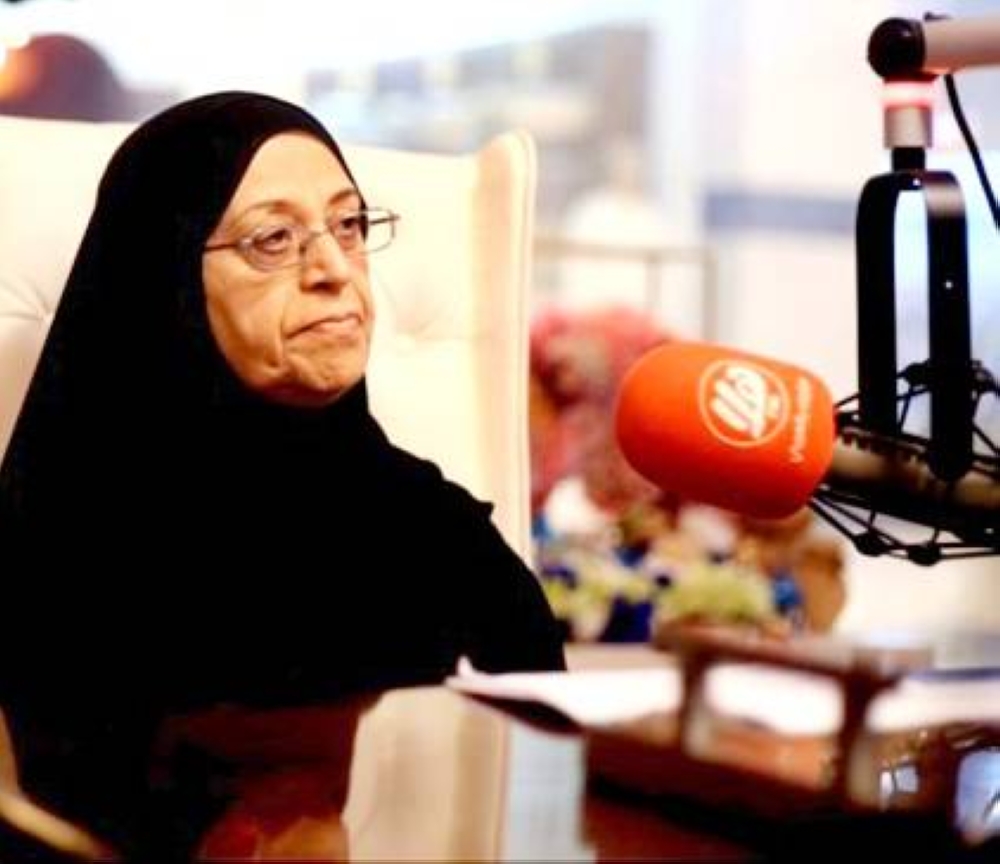
دعونا نتعرف على خلفيات عمل خديجة بوزارة الخارجية العمانية وقرار تعيينها كأول سفيرة، من خلال ما روته بنفسها في حوار نشره موقع «أثير» الإلكتروني (11/11/2020)، حيث أخبرتنا أنها رفضت منصب السفير في هولندا حينما عُرض عليها الموضوع أول مرة، ولم تتشجع له بسبب دراسة أبنائها واختلاف الثقافة وصعوبات التغرب، ناهيك عن عدم تحمس زوجها للفكرة. وأضافت أنه في العام التالي طلبها السلطان هيثم بن طارق، الذي كان آنذاك يشغل منصب أمين عام وزارة الخارجية، وعرض عليها مجدداً فكرة تمثيل عمان في مملكة هولندا سفيرة مفوضة، قائلاً لها: «أنا أراك إنسانة مؤهلة لهذا المنصب، وإذا لم توافقي هذه المرة سيكون الأمر صعباً لك في المرات القادمة». تقول خديجة إنها أخبرت زوجها بالأمر، فوافق وشجعها وكان داعماً لها، فسافرت إلى هولندا حيث ظلت تخدم بلدها هناك طوال عشر سنوات، فيما كان زوجها في السلطنة بحكم عمله الحكومي، وكان اثنان من أبنائها معها، واثنان آخران يكملان دراستهما في الخارج.
العمل في هولندا
وخلال الفترة التي أمضتها سفيرة في هولندا، نجحت خديجة في توثيق علاقات بلادها بمملكة هولندا، وهي علاقات قديمة يعود تاريخها إلى عام 1670، عنما أسست هولندا مكتباً لها في مسقط في عهد الإمام سلطان الأول بن سيف اليعربي (دام حكمه من 1649 إلى 1679)، بهدف تعزيز الصداقة والتفاهم والتعاون والتبادل التجاري، أي قبل أن يقرر البلدان إقامة علاقات دبلوماسية في العصر الحديث في عام 1972، (افتتحت هولندا سفارتها في مسقط عام 1982، وافتتحت عمان سفارتها في لاهاي عام 1999). كما أنها ساهمت في إبرام اتفاقيات هامة بين البلدين في مجالات مختلفة، لعل أهمها وأنجحها من الناحية الاقتصادية اتفاقية أبرمت في عام 2002، تأسست بموجبها شراكة اقتصادية وإستراتيجية بين الحكومة العمانية وسلطة ميناء روتردام الهولندي لنقل الخبرات المتقدمة لميناء روتردام، الذي يعد من أكبر وأهم موانئ أوروبا، إلى ميناء صحار الصناعي، بهدف بناء منظومة تشغيلية على مستوى عالمي، وبناء اقتصاد لوجستي حديث ينسجم مع رؤية عمان 2040، ويعزز من قدرة الميناء العماني على استقطاب خطوط الشحن الدولية، ومنافسة الموانئ الإقليمية، وتوجيه سلاسل الإمداد العالمية والتجارة البحرية.
ويتضح مدى أهمية هذه الاتفاقية، التي سعت السفيرة لإبرامها بنجاح وواكبت مراحل التفاوض حولها بحماس، مما قاله البروفيسور «جان فان هوفن» من جامعة إيراسموس في روتردام من أن «تكامل ميناء صحار مع ميناء روتردام ليس مجرد تعاون تجاري، وإنما هو انتقال للمعرفة الأوروبية إلى بيئة خليجية قادرة على المنافسة العالمية».
إلى ما سبق، نجحت خديجة في إقناع الحكومة الهولندية بإقامة قرية مصغرة في أحد المتاحف للترويج للثقافة والتاريخ العمانيَّين، وإقامة معرض للتراث العماني لمدة ستة أشهر بمتحف «نيوكرك» في أمستردام، وكان لها دور كبير في تنظيم أسبوع عماني ضمن فعاليات «روتردام، عاصمة الثقافة في أوروبا»، وتأليف كتاب للطفل الأوروبي عن عمان، والمساهمة في إعداد فيلم تعليمي سياحي تحت عنوان «صحراء على البحر» لتلاميذ المدارس الهولندية والأوروبية. هذا ناهيك عن نجاحها في إقامة كرسيَين للدراسات العليا باسم السلطان قابوس في اثنتين من أكبر الجامعات الهولندية، وتفعيل مذكرة التعاون الموقعة في عام 2001 بين جامعة السلطان قابوس والمؤسسة الهولندية للتعاون الدولي في مجال التعليم وتبادل البعثات الطلابية.
10 أعوام من الدبلوماسية
ومما لا جدال فيه أن خديجة اكتسبت من عملها الدبلوماسي الكثير من الخبرات والمعارف الإضافية، وبَنَت لوطنها علاقات وروابط متشعبة مع رموز المجتمع الهولندي وساسته وإعلامييه ورجال أعماله، كما أنها تدربت على المهام والأعباء والمسؤوليات الملقاة عادة على عاتق من يتولى عمادة السلك الدبلوماسي في بلد ما.
وبعد رحلتها الدبلوماسية الناجحة على مدار عشر سنوات، عادت خديجة إلى ديوان عام وزارة الخارجية لتشغل منصب مدير دائرة مكتب الوزير، ثم منصب مدير دائرة التعاون الثقافي حتى تاريخ تقاعدها من الخدمة المدنية.
على صعيد حالتها الاجتماعية، اقترنت خديجة بمواطنها الدكتور علي حسن العبدواني المتخصص في التدريب المهني، الذي عمل لسنوات مستشاراً لوزير القوى العاملة لشؤون التخطيط قبل أن يتقاعد. ولها منه أربعة أبناء، حصل الأكبر بينهم على شهادة الدكتوراه في مجال هندسة النفط من جامعة دلفت Delft للتكنولوجيا التي تعتبر من أعرق وأكبر جامعات هولندا التكنولوجية العامة، وحصلت ابنتهما الوسطى على شهادة الماجستير من جامعة ليدن Leiden في هولندا، بينما حصل ابنهما الأصغر على شهادة البكالوريوس في مجال الميكترونكس (تحويل الأجهزة والآلات من التشغيل الميكانيكي والكهربائي إلى التشغيل الآلي)، وشهادة الماجستير في إدارة الأعمال من جامعة ستراث كلايد Strathclyde الأسكتلندية في غلاسغو، وتخرجت ابنتهما الصغرى من جامعة أكسفورد بروكس Oxford Brooks المعروفة سابقاً بجامعة أكسفورد بوليتكنيك، في تخصص الأطفال في سن ما قبل المدرسة والأطفال من ذوي الاحتياجات الخاصة.
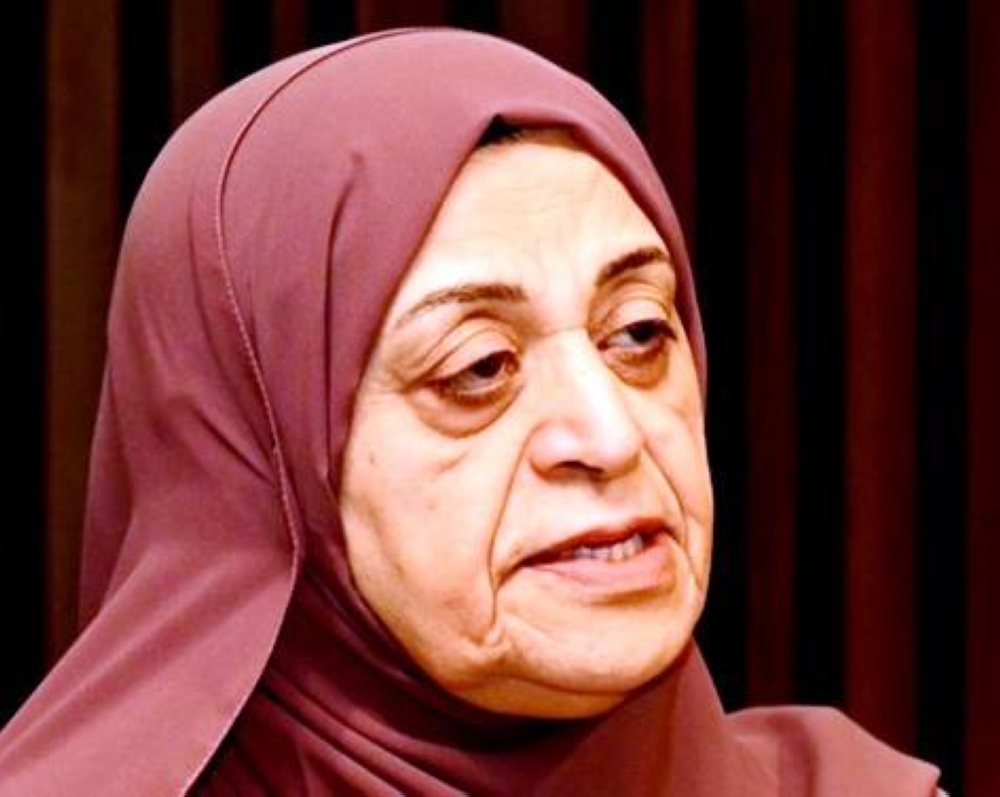
ونختتم بالإشارة إلى أن السفيرة المتقاعدة حالياً خديجة اللواتي، تمّ تكريمها في أكتوبر 2020 في يوم المرأة العمانية ضمن الشخصيات النسائية المثابرة. كما أن زوجها نال التكريم في عام 2010 ضمن المكرمين من قبل منظمة العمل العربية.
خديجة حسن اللواتي.. أول سفيرة في تاريخ عُمان
16 يونيو 2025 - 00:04
|
آخر تحديث 16 يونيو 2025 - 00:04


تابع قناة عكاظ على الواتساب
بقلم: د. عبدالله المدني abu_taymour@
The late Sultan Qaboos bin Said, may God rest his soul, paid great attention to Omani women from the very first day he took the helm of the Sultanate of Oman in July 1970. His Majesty worked to bring them out of the darkness of the Middle Ages into the light of the twentieth century, providing them with care and emphasizing the necessity of empowering them to stand on equal footing with their male counterparts in building and developing Oman. This was achieved by providing all opportunities for them to occupy the highest positions in the state, as a right of theirs and as compensation for the difficult historical and living conditions they faced in previous eras.
Evidence of this can be found in His Majesty's first speech on July 27, 1970, in which he stated: "The government and the people are like one body; if one member fails to fulfill its duty, the rest of the parts of that body will be disrupted." Then, in his speech on November 16, 2009, on the occasion of the annual meeting of the Oman Council, he said: "Since this era, we have given our full attention to the participation of Omani women in the blessed renaissance, providing them with opportunities for education, training, and employment, supporting their role and status in society, and emphasizing the necessity of their contribution in various fields of development."
As a result of this wise policy and clear vision, Omani women have made steady progress and a vigorous spirit in occupying ministerial portfolios and diplomatic, academic, administrative, media, military, and legislative positions.
One of the many Omani women who benefited from this ongoing royal approach, which continues today under Sultan Haitham bin Tariq, is Mrs. Khadija Hassan Suleiman Al-Lawati, who, according to her title, hails from the Al-Lawati community that settled in Muscat and Matrah and spread to other regions of the Sultanate since the seventeenth century. Today, she is an integral part of the Omani people, which is diverse in sects and ethnicities.
Khadija was born in the city of Matrah, adjacent to the capital Muscat, in 1952, to parents known for their strong commitment to educating and qualifying their children. At the time of Khadija's birth, Oman was living in complete isolation and closure due to the policies of its former Sultan, Sayyid Said bin Taimur. Educational institutions were few, life was difficult, and job opportunities were scarce. Her father, Hajj Hassan Suleiman Al-Lawati, decided to leave the country, following the example of many of his fellow citizens during that critical period, for work, education, or both. Thus, Hajj Hassan Al-Lawati traveled from Muscat with his family, including one-year-old Khadija, first to the Emirate of Kuwait, and then to Iraq, where he lived, worked, and settled for many years as one of the Omani diaspora. It was there that Khadija grew up and received her formal education, completing it up to the secondary level. She then enrolled at the University of Baghdad to continue her university studies, graduating in 1974 with a Bachelor’s degree in English Literature. Khadija did not stop at that level of education; she enhanced it by traveling to the United Kingdom, where, with her parents' support, she obtained a diploma in Business Administration and Community Development from Huddersfield College. After that, she returned to her homeland with a desire to contribute her knowledge to the renaissance, construction, and development that were then the hallmark of Sultan Qaboos's era.
In 1975, Khadija began her career by joining the Ministry of Development in Muscat, where she worked for only a few months before moving to the Omani Ministry of Foreign Affairs, which was then led by Sayyid Qais bin Abdul Moneim Al-Zawawi. This occurred at a time when the Omani Foreign Ministry lacked qualified personnel, and during a period when the Sultanate was striving to establish its diplomacy and strengthen its foreign relations with the world. Therefore, she started working from scratch, gradually climbing the career ladder step by step: from Second Secretary to First Secretary, then to Advisor, and finally to Minister Plenipotentiary responsible for following up her country's relations with international organizations, UN development programs, Gulf development funds, and more. She continued in this manner, working diligently and energetically, gaining experience, and establishing relationships, until the day of September 14, 1999, when a royal decree was issued appointing her as Ambassador Extraordinary and Plenipotentiary to the Kingdom of the Netherlands. In May 2000, Decree No. 42 of 2000 was issued, appointing her—alongside her position—as non-resident Ambassador Extraordinary to the Kingdom of Belgium and Grand Duchy of Luxembourg.
Thus, Khadija entered her country's history as the first Omani woman to hold the position of ambassador. Undoubtedly, this royal assignment placed a significant responsibility on her shoulders to prove her competence as a woman who had no predecessors in her position from her gender. At that time, she stated: "It is not strange for Omani women to hold a high position; just as they have proven their competence domestically, it is time to prove their competence in diplomatic work." Later, she was quoted saying: "Being the first Omani ambassador, my responsibility was very great. I used to say if I succeed, I will open the door for women to join this field, and if I fail, it will reflect negatively on my female colleagues."
In truth, she succeeded and did not fail, not only in leading her country's embassy but also in assuming the deanship of the diplomatic corps in the Kingdom of the Netherlands, which she took over in 2004. This is evidenced by the successive appointments of Omani women as ambassadors, reaching about 7% of the total Omani ambassadors abroad by 2018. Following Khadija, the Sultanate appointed "Mrs. Hanina bint Salem Al-Mughairi" as its resident ambassador in Washington and non-resident ambassador to Canada, Mexico, and Cuba, then appointed "Kifaya bint Khamees Al-Raisi" as Ambassador Extraordinary to the Kingdom of Spain, followed by the appointment of "Liyutha bint Sultan bin Ahmed Al-Mughairi" as resident ambassador to Germany and non-resident ambassador to Sweden, Norway, Denmark, Poland, Finland, Iceland, and the Swiss Confederation.
Let us learn about Khadija's work background at the Omani Ministry of Foreign Affairs and the decision to appoint her as the first ambassador through what she narrated herself in an interview published by the "Atheer" website (11/11/2020), where she told us that she initially refused the position of ambassador in the Netherlands when it was first offered to her, as she was not encouraged by the idea due to her children's studies, cultural differences, and the difficulties of living abroad, not to mention her husband's lack of enthusiasm for the idea. She added that the following year, Sultan Haitham bin Tariq, who was then serving as Secretary-General of the Ministry of Foreign Affairs, requested her and presented her again with the idea of representing Oman in the Kingdom of the Netherlands as a non-resident ambassador, saying to her: "I see you as a qualified person for this position, and if you do not agree this time, it will be difficult for you in the future." Khadija says she informed her husband about the matter, and he agreed, encouraged her, and supported her. She traveled to the Netherlands, where she served her country for ten years, while her husband remained in the Sultanate due to his government job, and two of her children were with her, while the other two completed their studies abroad.
Working in the Netherlands
During her time as an ambassador in the Netherlands, Khadija succeeded in strengthening her country's relations with the Kingdom of the Netherlands, which are historical relations dating back to 1670, when the Netherlands established an office in Muscat during the reign of Imam Sultan bin Saif Al-Yarubi (whose rule lasted from 1649 to 1679), aimed at enhancing friendship, understanding, cooperation, and trade exchange, long before the two countries decided to establish diplomatic relations in the modern era in 1972 (the Netherlands opened its embassy in Muscat in 1982, and Oman opened its embassy in The Hague in 1999). She also contributed to the conclusion of important agreements between the two countries in various fields, perhaps the most important and successful from an economic standpoint being an agreement concluded in 2002, which established an economic and strategic partnership between the Omani government and the Port Authority of Rotterdam to transfer advanced expertise from the Port of Rotterdam, one of the largest and most important ports in Europe, to the industrial Port of Sohar, with the aim of building a world-class operational system and establishing a modern logistics economy that aligns with Oman Vision 2040, enhancing the Omani port's ability to attract international shipping lines, compete with regional ports, and direct global supply chains and maritime trade.
The importance of this agreement, which the ambassador sought to successfully conclude and enthusiastically accompanied the negotiation stages, is evident from what Professor Jan van Hoven from Erasmus University in Rotterdam said, that "the integration of Sohar Port with Rotterdam Port is not just commercial cooperation, but a transfer of European knowledge to a Gulf environment capable of global competition."
In addition to the above, Khadija succeeded in convincing the Dutch government to establish a mini-village in one of the museums to promote Omani culture and history, and to hold an exhibition of Omani heritage for six months at the "Newkerk" Museum in Amsterdam. She played a significant role in organizing an Omani week as part of the events of "Rotterdam, Capital of Culture in Europe," authoring a book for European children about Oman, and contributing to the production of an educational tourism film titled "Desert by the Sea" for Dutch and European school students. Moreover, she succeeded in establishing two chairs for postgraduate studies named after Sultan Qaboos at two of the largest Dutch universities and activating the memorandum of cooperation signed in 2001 between Sultan Qaboos University and the Dutch organization for international cooperation in education and student exchange programs.
10 Years of Diplomacy
There is no doubt that Khadija gained a wealth of additional experiences and knowledge from her diplomatic work, building intricate relationships and connections for her country with figures in Dutch society, its politicians, media personnel, and business leaders. She also trained for the tasks and responsibilities typically assigned to those who hold the deanship of the diplomatic corps in a country.
After her successful diplomatic journey over ten years, Khadija returned to the General Diwan of the Ministry of Foreign Affairs to assume the position of Director of the Minister's Office, then the position of Director of the Cultural Cooperation Department until her retirement from civil service.
On a personal note, Khadija married her fellow citizen Dr. Ali Hassan Al-Abdawani, a specialist in vocational training, who worked for years as an advisor to the Minister of Manpower for planning before retiring. They have four children, the eldest of whom holds a Ph.D. in Petroleum Engineering from Delft University of Technology, one of the most prestigious and largest public technological universities in the Netherlands. Their middle daughter obtained a master's degree from Leiden University in the Netherlands, while their youngest son earned a bachelor's degree in Mechatronics (converting devices and machines from mechanical and electrical operation to automation) and a master's degree in Business Administration from Strathclyde University in Glasgow, Scotland. Their youngest daughter graduated from Oxford Brookes University, formerly known as Oxford Polytechnic, with a specialization in preschool children and children with special needs.
In conclusion, it is worth noting that the retired ambassador Khadija Al-Lawati was honored in October 2020 on Omani Women's Day among the persevering female figures. Additionally, her husband was honored in 2010 among those recognized by the Arab Labor Organization.
Evidence of this can be found in His Majesty's first speech on July 27, 1970, in which he stated: "The government and the people are like one body; if one member fails to fulfill its duty, the rest of the parts of that body will be disrupted." Then, in his speech on November 16, 2009, on the occasion of the annual meeting of the Oman Council, he said: "Since this era, we have given our full attention to the participation of Omani women in the blessed renaissance, providing them with opportunities for education, training, and employment, supporting their role and status in society, and emphasizing the necessity of their contribution in various fields of development."
As a result of this wise policy and clear vision, Omani women have made steady progress and a vigorous spirit in occupying ministerial portfolios and diplomatic, academic, administrative, media, military, and legislative positions.
One of the many Omani women who benefited from this ongoing royal approach, which continues today under Sultan Haitham bin Tariq, is Mrs. Khadija Hassan Suleiman Al-Lawati, who, according to her title, hails from the Al-Lawati community that settled in Muscat and Matrah and spread to other regions of the Sultanate since the seventeenth century. Today, she is an integral part of the Omani people, which is diverse in sects and ethnicities.
Khadija was born in the city of Matrah, adjacent to the capital Muscat, in 1952, to parents known for their strong commitment to educating and qualifying their children. At the time of Khadija's birth, Oman was living in complete isolation and closure due to the policies of its former Sultan, Sayyid Said bin Taimur. Educational institutions were few, life was difficult, and job opportunities were scarce. Her father, Hajj Hassan Suleiman Al-Lawati, decided to leave the country, following the example of many of his fellow citizens during that critical period, for work, education, or both. Thus, Hajj Hassan Al-Lawati traveled from Muscat with his family, including one-year-old Khadija, first to the Emirate of Kuwait, and then to Iraq, where he lived, worked, and settled for many years as one of the Omani diaspora. It was there that Khadija grew up and received her formal education, completing it up to the secondary level. She then enrolled at the University of Baghdad to continue her university studies, graduating in 1974 with a Bachelor’s degree in English Literature. Khadija did not stop at that level of education; she enhanced it by traveling to the United Kingdom, where, with her parents' support, she obtained a diploma in Business Administration and Community Development from Huddersfield College. After that, she returned to her homeland with a desire to contribute her knowledge to the renaissance, construction, and development that were then the hallmark of Sultan Qaboos's era.
In 1975, Khadija began her career by joining the Ministry of Development in Muscat, where she worked for only a few months before moving to the Omani Ministry of Foreign Affairs, which was then led by Sayyid Qais bin Abdul Moneim Al-Zawawi. This occurred at a time when the Omani Foreign Ministry lacked qualified personnel, and during a period when the Sultanate was striving to establish its diplomacy and strengthen its foreign relations with the world. Therefore, she started working from scratch, gradually climbing the career ladder step by step: from Second Secretary to First Secretary, then to Advisor, and finally to Minister Plenipotentiary responsible for following up her country's relations with international organizations, UN development programs, Gulf development funds, and more. She continued in this manner, working diligently and energetically, gaining experience, and establishing relationships, until the day of September 14, 1999, when a royal decree was issued appointing her as Ambassador Extraordinary and Plenipotentiary to the Kingdom of the Netherlands. In May 2000, Decree No. 42 of 2000 was issued, appointing her—alongside her position—as non-resident Ambassador Extraordinary to the Kingdom of Belgium and Grand Duchy of Luxembourg.
Thus, Khadija entered her country's history as the first Omani woman to hold the position of ambassador. Undoubtedly, this royal assignment placed a significant responsibility on her shoulders to prove her competence as a woman who had no predecessors in her position from her gender. At that time, she stated: "It is not strange for Omani women to hold a high position; just as they have proven their competence domestically, it is time to prove their competence in diplomatic work." Later, she was quoted saying: "Being the first Omani ambassador, my responsibility was very great. I used to say if I succeed, I will open the door for women to join this field, and if I fail, it will reflect negatively on my female colleagues."
In truth, she succeeded and did not fail, not only in leading her country's embassy but also in assuming the deanship of the diplomatic corps in the Kingdom of the Netherlands, which she took over in 2004. This is evidenced by the successive appointments of Omani women as ambassadors, reaching about 7% of the total Omani ambassadors abroad by 2018. Following Khadija, the Sultanate appointed "Mrs. Hanina bint Salem Al-Mughairi" as its resident ambassador in Washington and non-resident ambassador to Canada, Mexico, and Cuba, then appointed "Kifaya bint Khamees Al-Raisi" as Ambassador Extraordinary to the Kingdom of Spain, followed by the appointment of "Liyutha bint Sultan bin Ahmed Al-Mughairi" as resident ambassador to Germany and non-resident ambassador to Sweden, Norway, Denmark, Poland, Finland, Iceland, and the Swiss Confederation.
Let us learn about Khadija's work background at the Omani Ministry of Foreign Affairs and the decision to appoint her as the first ambassador through what she narrated herself in an interview published by the "Atheer" website (11/11/2020), where she told us that she initially refused the position of ambassador in the Netherlands when it was first offered to her, as she was not encouraged by the idea due to her children's studies, cultural differences, and the difficulties of living abroad, not to mention her husband's lack of enthusiasm for the idea. She added that the following year, Sultan Haitham bin Tariq, who was then serving as Secretary-General of the Ministry of Foreign Affairs, requested her and presented her again with the idea of representing Oman in the Kingdom of the Netherlands as a non-resident ambassador, saying to her: "I see you as a qualified person for this position, and if you do not agree this time, it will be difficult for you in the future." Khadija says she informed her husband about the matter, and he agreed, encouraged her, and supported her. She traveled to the Netherlands, where she served her country for ten years, while her husband remained in the Sultanate due to his government job, and two of her children were with her, while the other two completed their studies abroad.
Working in the Netherlands
During her time as an ambassador in the Netherlands, Khadija succeeded in strengthening her country's relations with the Kingdom of the Netherlands, which are historical relations dating back to 1670, when the Netherlands established an office in Muscat during the reign of Imam Sultan bin Saif Al-Yarubi (whose rule lasted from 1649 to 1679), aimed at enhancing friendship, understanding, cooperation, and trade exchange, long before the two countries decided to establish diplomatic relations in the modern era in 1972 (the Netherlands opened its embassy in Muscat in 1982, and Oman opened its embassy in The Hague in 1999). She also contributed to the conclusion of important agreements between the two countries in various fields, perhaps the most important and successful from an economic standpoint being an agreement concluded in 2002, which established an economic and strategic partnership between the Omani government and the Port Authority of Rotterdam to transfer advanced expertise from the Port of Rotterdam, one of the largest and most important ports in Europe, to the industrial Port of Sohar, with the aim of building a world-class operational system and establishing a modern logistics economy that aligns with Oman Vision 2040, enhancing the Omani port's ability to attract international shipping lines, compete with regional ports, and direct global supply chains and maritime trade.
The importance of this agreement, which the ambassador sought to successfully conclude and enthusiastically accompanied the negotiation stages, is evident from what Professor Jan van Hoven from Erasmus University in Rotterdam said, that "the integration of Sohar Port with Rotterdam Port is not just commercial cooperation, but a transfer of European knowledge to a Gulf environment capable of global competition."
In addition to the above, Khadija succeeded in convincing the Dutch government to establish a mini-village in one of the museums to promote Omani culture and history, and to hold an exhibition of Omani heritage for six months at the "Newkerk" Museum in Amsterdam. She played a significant role in organizing an Omani week as part of the events of "Rotterdam, Capital of Culture in Europe," authoring a book for European children about Oman, and contributing to the production of an educational tourism film titled "Desert by the Sea" for Dutch and European school students. Moreover, she succeeded in establishing two chairs for postgraduate studies named after Sultan Qaboos at two of the largest Dutch universities and activating the memorandum of cooperation signed in 2001 between Sultan Qaboos University and the Dutch organization for international cooperation in education and student exchange programs.
10 Years of Diplomacy
There is no doubt that Khadija gained a wealth of additional experiences and knowledge from her diplomatic work, building intricate relationships and connections for her country with figures in Dutch society, its politicians, media personnel, and business leaders. She also trained for the tasks and responsibilities typically assigned to those who hold the deanship of the diplomatic corps in a country.
After her successful diplomatic journey over ten years, Khadija returned to the General Diwan of the Ministry of Foreign Affairs to assume the position of Director of the Minister's Office, then the position of Director of the Cultural Cooperation Department until her retirement from civil service.
On a personal note, Khadija married her fellow citizen Dr. Ali Hassan Al-Abdawani, a specialist in vocational training, who worked for years as an advisor to the Minister of Manpower for planning before retiring. They have four children, the eldest of whom holds a Ph.D. in Petroleum Engineering from Delft University of Technology, one of the most prestigious and largest public technological universities in the Netherlands. Their middle daughter obtained a master's degree from Leiden University in the Netherlands, while their youngest son earned a bachelor's degree in Mechatronics (converting devices and machines from mechanical and electrical operation to automation) and a master's degree in Business Administration from Strathclyde University in Glasgow, Scotland. Their youngest daughter graduated from Oxford Brookes University, formerly known as Oxford Polytechnic, with a specialization in preschool children and children with special needs.
In conclusion, it is worth noting that the retired ambassador Khadija Al-Lawati was honored in October 2020 on Omani Women's Day among the persevering female figures. Additionally, her husband was honored in 2010 among those recognized by the Arab Labor Organization.


