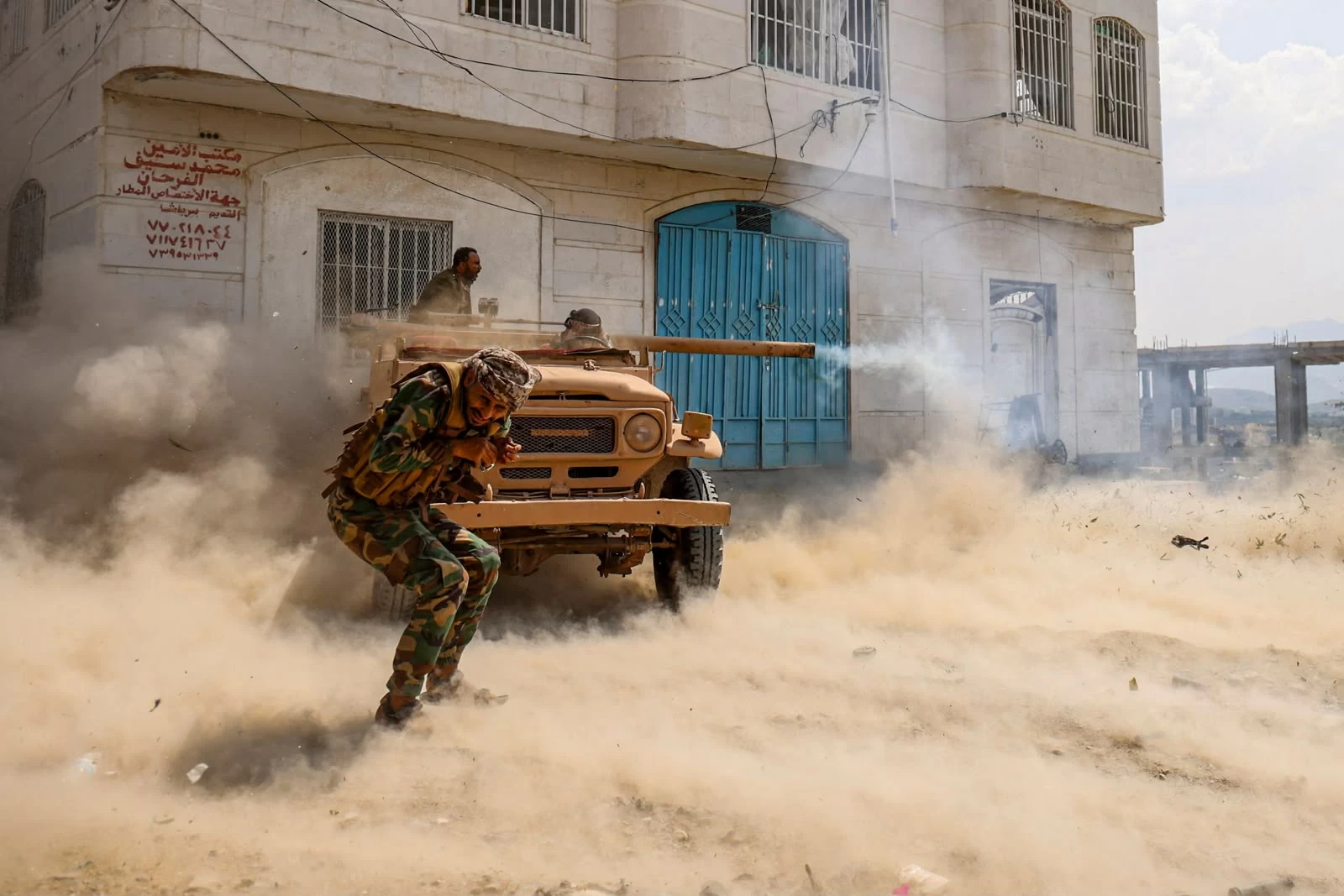
تتجه المواجهات في اليمن نحو تطورات ميدانية وسياسية جديدة، مع تقدم القوات الحكومية والقبائل المساندة في محافظة الجوف شمال شرقي البلاد، واستمرار المقاومة الشعبية والعسكرية في تعز جنوب غربي اليمن، في مشهد يعكس اتساع التحديات التي تواجه ميليشيا الحوثي على أكثر من جبهة، وسط تزايد الضغوط الإنسانية التي يدفع المدنيون ثمنها منذ سنوات.
وبينما تسعى القوات الحكومية إلى استثمار تقدمها في الجوف لفتح الطريق نحو مدينة الحزم، عاصمة المحافظة، تواصل تعز مقاومتها لمحاولات التمدد الحوثي، في وقت تتصاعد فيه المخاوف من تفاقم الأزمة الإنسانية نتيجة استمرار الحصار وتعثر وصول الإمدادات الأساسية.
الجوف.. اختراق التحصينات
في الجوف، أعلنت القوات الحكومية تحقيق تقدم ميداني ضمن عملية «فجر اليمن»، بعد السيطرة على مرتفعات ومواقع إستراتيجية شرقي مدينة الحزم، من بينها حويشان والدحيضة وميليفية وقرن الصيعري، وهي مناطق ظلت لسنوات جزءاً من منظومة الدفاعات التي أقامتها مليشيات الحوثي لحماية مواقعها وخطوط إمدادها.
وتكتسب هذه التطورات أهمية عسكرية بالنظر إلى الموقع الجغرافي للجوف، التي ترتبط بخمس محافظات يمنية هي صنعاء وصعدة وعمران ومأرب وحضرموت، إضافة إلى حدودها مع السعودية، ما يجعل السيطرة على مواقعها المؤثرة عاملاً مهماً في تحديد مسارات المواجهة شمال البلاد.
وتشير التقديرات العسكرية إلى أن تقدم القوات الحكومية في المرتفعات المحيطة بالحزم، يمنحها قدرة أكبر على مراقبة تحركات الحوثيين وتهديد خطوط إمدادهم، خصوصاً تلك المرتبطة بجبهات مأرب، التي تمثل إحدى أهم مناطق الثقل الاقتصادي والعسكري للحكومة اليمنية.
وبحسب مراقبين عسكريين فإن القوات الحكومية تمكنت من تجاوز تحصينات دفاعية عمل الحوثيون على إنشائها طوال ستة أعوام، شملت خنادق وشبكات ألغام ومواقع قتالية محصنة، قبل أن تتمكن القوات المهاجمة من اختراقها خلال ثلاثة أيام.
ويرى البعض أن السيطرة على هذه المواقع تفتح المجال أمام تقدم محتمل باتجاه مدينة الحزم، وقد تمنح القوات الحكومية خيارات عسكرية أوسع نحو محافظات عمران وصعدة وصنعاء، إذا تمكنت من تثبيت مواقعها وتأمين خطوط الإمداد.
تعز.. مقاومة تتجاوز الميدان
وعلى جبهة أخرى، تواصل مدينة تعز مواجهة الضغوط العسكرية والإنسانية التي فرضتها سنوات الصراع، وسط حضور لافت للمقاومة المجتمعية إلى جانب القوات الحكومية.
وتتميز تعز بخصوصية سياسية واجتماعية ارتبطت بتاريخ الحركة الوطنية اليمنية، ودورها في ثورتي سبتمبر وأكتوبر خلال ستينيات القرن الماضي، الأمر الذي أسهم في تشكيل بيئة اجتماعية معارضة للمشروع السياسي والفكري الذي تتبناه جماعة الحوثي.
وتتجلى هذه المعارضة في أشكال متعددة من المشاركة الشعبية، تتجاوز المواجهات العسكرية المباشرة إلى إسناد المقاتلين، وتوفير الاحتياجات الغذائية والطبية، وتنظيم المبادرات التطوعية، ومساندة الأسر المتضررة من الحرب.
ويعكس استمرار المقاومة في تعز صعوبة فرض سيطرة عسكرية مستقرة على محافظة تتمتع بتركيبة اجتماعية وسياسية مختلفة عن مناطق النفوذ التقليدية للجماعة، خصوصاً مع استمرار رفض قطاعات واسعة من سكانها للأفكار المرتبطة بحصر السلطة في سلالة أو جماعة بعينها.
الحصار يفاقم المعاناة
في موازاة المواجهات العسكرية، تواجه تعز أزمة إنسانية متفاقمة نتيجة القيود المفروضة على حركة السكان والبضائع وتعطل عدد من الطرق الحيوية، بما فيها طريق هيجة العبد، الذي يمثل أحد مسارات الربط المهمة بين المحافظة والمناطق المجاورة.
وتزيد صعوبات التنقل ونقل السلع من الأعباء المعيشية على السكان، في ظل تراجع القدرة الشرائية وارتفاع تكاليف النقل والإمداد، وتضرر الخدمات الأساسية بفعل استمرار الحرب.
وكان برنامج الأغذية العالمي حذر من أخطار تعثر وصول المساعدات الغذائية إلى نحو 600 ألف شخص في تعز و800 ألف آخرين في مناطق الساحل الغربي، نتيجة التحديات الأمنية ونقص الإمدادات، وهي مؤشرات تكشف حجم التأثير الإنساني لاستمرار الصراع.
جبهتان بحسابات مختلفة
ورغم التباعد الجغرافي بين الجوف وتعز، فإن التطورات في المحافظتين تكشف طبيعة المواجهة التي تخوضها القوات الحكومية والقوى المحلية ضد الحوثيين.
ففي الجوف، تتركز العمليات على استعادة المواقع الإستراتيجية وتفكيك التحصينات العسكرية وتهديد خطوط الإمداد، بينما تقوم المواجهة في تعز على مزيج من الصمود العسكري والرفض المجتمعي المستمر لسلطة الجماعة.
ويمنح هذا الاختلاف كل جبهة أهمية خاصة؛ إذ تمثل الجوف بوابة محتملة لتغيير موازين القوى شمال اليمن، في حين تشكل تعز إحدى أبرز ساحات المواجهة التي تعكس حدود قدرة الحوثيين على توسيع نفوذهم في البيئات الاجتماعية المناوئة لهم.
كما أن استمرار الضغط على أكثر من جبهة قد يفرض على الميليشيا إعادة توزيع قواتها ومواردها العسكرية، خصوصاً إذا تحولت المكاسب الميدانية في الجوف إلى تقدم مستدام، بالتزامن مع استمرار المقاومة في تعز.
وبين تقدم الجوف وصمود تعز، يجد الحوثيون أنفسهم أمام جبهتين مختلفتين في طبيعتهما، لكنهما تلتقيان عند هدف واحد يتمثل في الحد من نفوذ الميليشيا، واستعادة سلطة الدولة اليمنية على أراضيها.
The confrontations in Yemen are heading towards new field and political developments, with the advance of government forces and supporting tribes in Al-Jawf governorate in the northeast of the country, and the continued popular and military resistance in Taiz in the southwest of Yemen. This scene reflects the widening challenges facing the Houthi militia on multiple fronts, amidst increasing humanitarian pressures that civilians have been paying the price for over the years.
While the government forces are trying to capitalize on their advance in Al-Jawf to open the road towards Al-Hazm city, the capital of the governorate, Taiz continues its resistance against Houthi expansion attempts, at a time when fears are rising over the worsening humanitarian crisis due to the ongoing siege and the failure to deliver essential supplies.
Al-Jawf.. Breaching the Fortifications
In Al-Jawf, government forces announced achieving field progress as part of the "Dawn of Yemen" operation, after taking control of strategic heights and sites east of Al-Hazm city, including Huwaishan, Al-Duhayda, Maylifia, and Qarn Al-Suyari. These areas had remained part of the defensive system established by the Houthi militias to protect their positions and supply lines for years.
These developments gain military significance considering the geographical location of Al-Jawf, which is connected to five Yemeni governorates: Sana'a, Saada, Amran, Marib, and Hadramout, in addition to its borders with Saudi Arabia. This makes controlling its influential sites an important factor in determining the course of confrontations in the north of the country.
Military estimates indicate that the advance of government forces in the heights surrounding Al-Hazm grants them greater ability to monitor Houthi movements and threaten their supply lines, especially those linked to the Marib fronts, which represent one of the most important areas of economic and military weight for the Yemeni government.
According to military observers, government forces managed to surpass defensive fortifications that the Houthis had been building for six years, which included trenches, mine networks, and fortified combat sites, before the attacking forces were able to breach them within three days.
Some believe that controlling these sites opens the door for a potential advance towards Al-Hazm city and may grant government forces broader military options towards the governorates of Amran, Saada, and Sana'a, if they can secure their positions and supply lines.
Taiz.. Resistance Beyond the Battlefield
On another front, the city of Taiz continues to face the military and humanitarian pressures imposed by years of conflict, with a notable presence of community resistance alongside government forces.
Taiz is characterized by a political and social specificity linked to the history of the Yemeni national movement and its role in the September and October revolutions during the 1960s, which contributed to forming a social environment opposed to the political and ideological project adopted by the Houthi group.
This opposition manifests in various forms of popular participation, extending beyond direct military confrontations to support fighters, providing food and medical needs, organizing volunteer initiatives, and assisting families affected by the war.
The continued resistance in Taiz reflects the difficulty of imposing stable military control over a governorate that has a social and political structure different from the traditional areas of influence of the group, especially with the ongoing rejection by large sectors of its population of ideas related to concentrating power in a specific lineage or group.
The Siege Aggravates Suffering
Alongside the military confrontations, Taiz faces an escalating humanitarian crisis due to the restrictions imposed on the movement of people and goods and the disruption of several vital roads, including the Heijjat Al-Abd road, which represents one of the important linking routes between the governorate and neighboring areas.
The difficulties of movement and transporting goods increase the living burdens on the population, amid declining purchasing power and rising transportation and supply costs, and the deterioration of essential services due to the ongoing war.
The World Food Programme warned of the dangers of the disruption of food aid reaching about 600,000 people in Taiz and 800,000 others in the western coastal areas, due to security challenges and supply shortages, indicators that reveal the extent of the humanitarian impact of the ongoing conflict.
Two Fronts with Different Calculations
Despite the geographical distance between Al-Jawf and Taiz, developments in both governorates reveal the nature of the confrontation being waged by government forces and local powers against the Houthis.
In Al-Jawf, operations focus on regaining strategic sites, dismantling military fortifications, and threatening supply lines, while the confrontation in Taiz is based on a mix of military resilience and ongoing community rejection of the group's authority.
This difference gives each front a special significance; Al-Jawf represents a potential gateway to changing the balance of power in northern Yemen, while Taiz constitutes one of the most prominent arenas of confrontation that reflects the limits of the Houthis' ability to expand their influence in socially opposing environments.
Moreover, the continued pressure on multiple fronts may force the militia to redistribute its forces and military resources, especially if the field gains in Al-Jawf turn into sustainable progress, coinciding with the ongoing resistance in Taiz.
Between the advance in Al-Jawf and the resilience in Taiz, the Houthis find themselves facing two fronts that differ in nature, yet converge on a single goal: to limit the militia's influence and restore the authority of the Yemeni state over its territories.