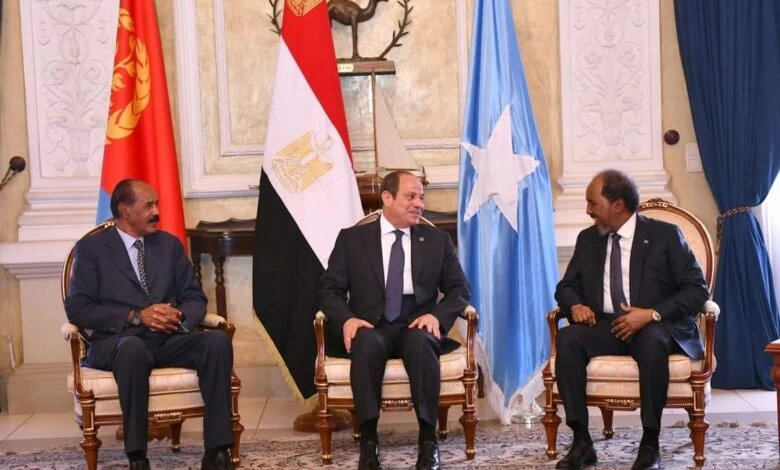
أعلنت مصر والسودان والصومال وإريتريا، (الأحد)، مواقف مشتركة بشأن أمن القرن الأفريقي والبحر الأحمر والنيل، مع التشديد على احترام سيادة الدول ورفض التدخلات والإجراءات الأحادية، وإنشاء آلية لمتابعة مخرجات قمة العلمين.
وجاء ذلك في «إعلان العلمين» الصادر عقب القمة الرباعية التشاورية التي جمعت الرئيس المصري عبد الفتاح السيسي، ورئيس مجلس السيادة السوداني عبد الفتاح البرهان، والرئيس الإريتري أسياس أفورقي، والرئيس الصومالي حسن شيخ محمود، في مدينة العلمين الجديدة، بالتزامن مع أعمال القمة التنسيقية الثامنة لمنتصف العام للاتحاد الأفريقي. وكانت الرئاسة المصرية قد أعلنت أن القمة تهدف إلى التشاور والتنسيق بشأن القضايا الإقليمية ذات الاهتمام المشترك.
وأكد القادة أن احترام مبادئ القانون الدولي، وفي مقدمتها سيادة الدول واستقلالها ووحدة أراضيها، يمثل أساسًا للاستقرار والتعاون الإقليمي، مع رفض التدخلات في الشؤون الداخلية لدول المنطقة تحت أي ذريعة، ودعم المؤسسات الوطنية والحلول السياسية والسلمية للنزاعات.
وفي الملف السوداني، شددت الدول الأربع على دعم وحدة السودان وسيادته وسلامة أراضيه ومؤسساته الوطنية، ورفض إنشاء أي كيانات موازية، داعية إلى استئناف العملية السياسية بقيادة وملكية سودانية، إلى جانب الرفض الكامل لأي دعم للمرتزقة.
ويأتي هذا الموقف في وقت تواصل فيه مصر التأكيد على دعم وحدة الدولة السودانية ومؤسساتها، بالتوازي مع مساعيها لدفع مسار سياسي ينهي الحرب ويخفف التداعيات الإنسانية الناجمة عنها.
وفي الشأن الصومالي، أكد القادة دعم وحدة وسيادة جمهورية الصومال الفيدرالية، ورفض أي تدخل أو إجراءات تستهدف وحدة أراضيها، كما رفضوا أي اعتراف أو دعم لما يسمى «أرض الصومال»، معتبرين أن ذلك يمثل مساسًا بسيادة الصومال ووحدة أراضيه.
ويكتسب هذا الموقف أهمية خاصة في ظل الخلافات التي شهدتها المنطقة على خلفية تحركات إثيوبيا تجاه «أرض الصومال» وسعيها إلى تأمين منفذ بحري، وهي قضية أثارت توترًا مع مقديشو وأصبحت أحد الملفات الرئيسية في معادلات القرن الأفريقي.
كما أعلنت الدول الأربع دعم جهود الصومال في مكافحة الإرهاب وتمكين مؤسسات الدولة من بسط سيطرتها على كامل أراضي البلاد، ودعت الشركاء الإقليميين والدوليين إلى توفير تمويل مستدام وقابل للتنبؤ لبعثة الاتحاد الأفريقي للدعم والاستقرار في الصومال «AUSSOM»، بما يساعد على تنفيذ عملية الانتقال الأمني وتسليم المسؤوليات تدريجيًا إلى القوات الصومالية.
وفي ملف البحر الأحمر، أكد القادة مبدأ حرية الملاحة، وشددوا على أن حوكمة البحر الأحمر مسؤولية حصرية للدول المشاطئة، في رسالة تؤكد أهمية الدور المباشر لدول المنطقة في تحديد ترتيبات أمن هذا الممر البحري الاستراتيجي.
أما ملف مياه النيل، فحظي بحضور واضح في الإعلان، إذ أكدت الدول الأربع أهمية احترام القانون الدولي للأنهار العابرة للحدود، بما في ذلك مبدأ عدم الإضرار، وضرورة التعاون عبر الإخطار المسبق والتشاور والتوافق، مع رفض أي إجراءات أحادية من شأنها الإضرار بالاستخدامات المائية القائمة لدولتي المصب.
ويأتي هذا الموقف في ظل استمرار الخلاف المصري الإثيوبي بشأن سد النهضة، بعد سنوات من المفاوضات حول قواعد ملء وتشغيل السد وآليات التعامل مع المشاريع المائية المستقبلية على النيل. وتتمسك القاهرة بضرورة وجود قواعد ملزمة تضمن عدم الإضرار بحقوقها المائية، بينما تؤكد أديس أبابا حقها في استغلال مواردها المائية وفق رؤيتها للتنمية.
وفي ختام القمة، اتفق القادة على إنشاء آلية لمتابعة تنفيذ مخرجات الاجتماع، على أن تُعقد القمة التشاورية بصورة دورية وكلما دعت الحاجة، بما يعزز التشاور والتنسيق بين الدول الأربع وباقي الدول الأفريقية.
Egypt, Sudan, Somalia, and Eritrea announced on Sunday their joint positions regarding the security of the Horn of Africa, the Red Sea, and the Nile, emphasizing respect for the sovereignty of states and rejecting interventions and unilateral actions, as well as establishing a mechanism to follow up on the outcomes of the Alamein Summit.
This was stated in the "Alamein Declaration" issued following the consultative quadripartite summit that brought together Egyptian President Abdel Fattah el-Sisi, Sudanese Sovereign Council Chairman Abdel Fattah al-Burhan, Eritrean President Isaias Afwerki, and Somali President Hassan Sheikh Mohamud in the new city of Alamein, coinciding with the eighth mid-year coordination summit of the African Union. The Egyptian presidency had announced that the summit aims to consult and coordinate on regional issues of common interest.
The leaders affirmed that respect for the principles of international law, foremost among them the sovereignty of states, their independence, and the integrity of their territories, constitutes a foundation for stability and regional cooperation, while rejecting interventions in the internal affairs of the countries in the region under any pretext, and supporting national institutions and political and peaceful solutions to conflicts.
Regarding the Sudanese issue, the four countries emphasized their support for the unity of Sudan, its sovereignty, the integrity of its territory, and its national institutions, rejecting the establishment of any parallel entities, and calling for the resumption of the political process led and owned by Sudanese parties, alongside a complete rejection of any support for mercenaries.
This position comes at a time when Egypt continues to affirm its support for the unity of the Sudanese state and its institutions, alongside its efforts to promote a political path that ends the war and alleviates the resulting humanitarian consequences.
On the Somali issue, the leaders affirmed their support for the unity and sovereignty of the Federal Republic of Somalia, rejecting any intervention or actions targeting the integrity of its territory, as well as rejecting any recognition or support for what is called "Somaliland," considering that such actions undermine Somalia's sovereignty and territorial integrity.
This stance gains particular importance in light of the disputes that have arisen in the region due to Ethiopia's movements towards "Somaliland" and its efforts to secure a maritime outlet, a matter that has caused tension with Mogadishu and has become one of the main issues in the equations of the Horn of Africa.
The four countries also announced their support for Somalia's efforts to combat terrorism and empower state institutions to assert their control over the entire territory of the country, calling on regional and international partners to provide sustainable and predictable funding for the African Union Mission in Support and Stabilization in Somalia (AUSSOM), which would assist in implementing the security transition process and gradually transferring responsibilities to Somali forces.
On the Red Sea issue, the leaders affirmed the principle of freedom of navigation, stressing that the governance of the Red Sea is the exclusive responsibility of the coastal states, in a message that underscores the importance of the direct role of the countries in the region in determining the security arrangements for this strategic maritime corridor.
As for the Nile waters issue, it was clearly present in the declaration, as the four countries affirmed the importance of respecting international law for transboundary rivers, including the principle of no harm, and the necessity of cooperation through prior notification, consultation, and consensus, while rejecting any unilateral actions that could harm the existing water uses of the downstream countries.
This position comes amid the ongoing Egyptian-Ethiopian dispute over the Grand Ethiopian Renaissance Dam, following years of negotiations regarding the rules for filling and operating the dam and mechanisms for dealing with future water projects on the Nile. Cairo insists on the necessity of having binding rules that guarantee its water rights are not harmed, while Addis Ababa asserts its right to exploit its water resources according to its vision for development.
At the conclusion of the summit, the leaders agreed to establish a mechanism to follow up on the implementation of the meeting's outcomes, with the consultative summit to be held periodically and whenever necessary, enhancing consultation and coordination between the four countries and other African nations.