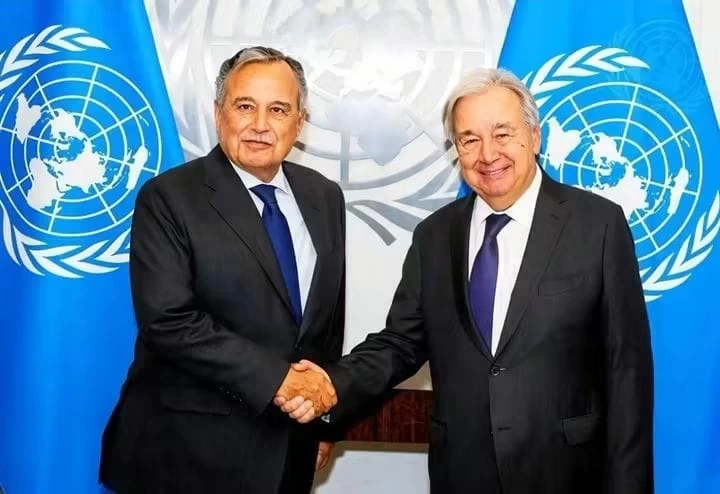
بحث الأمين العام لجامعة الدول العربية، نبيل فهمي، مع الأمين العام للأمم المتحدة، أنطونيو غوتيريش، مستجدات التصعيد الخطير الذي تشهده المنطقة، وذلك خلال لقاء جمعهما في نيويورك على هامش أعمال الشق رفيع المستوى للدورة الـ81 للجمعية العامة للأمم المتحدة.
وتصدر التصعيد الإقليمي أجندة المباحثات، حيث استعرض الجانبان تداعيات التطورات المتسارعة على أمن المنطقة العربية واستقرارها، إلى جانب انعكاساتها على حركة الملاحة الدولية وأمن الطاقة والتجارة العالمية.
وأكد فهمي تضامن جامعة الدول العربية مع دولها الأعضاء في جهودها الرامية إلى صون أمنها وسيادتها وسلامة منشآتها الحيوية، مشددًا على أهمية التعامل مع التطورات الإقليمية بما يحول دون اتساع نطاق التوتر.
مضيق هرمز والبحر الأحمر
وشدد الأمين العام لجامعة الدول العربية على أن حرية الملاحة في مضيق هرمز والبحر الأحمر تمثل مبدأ راسخًا في القانون الدولي، مؤكدًا أن احتواء التصعيد لا يقتصر على التعامل مع تداعياته، وإنما يتطلب تحركًا دوليًا جادًا لمعالجة أسبابه.
القضية الفلسطينية
كما تناول اللقاء تطورات الأوضاع في الأراضي الفلسطينية المحتلة، وفي مقدمتها الوضع الإنساني في قطاع غزة، إلى جانب التطورات المتصلة بالضفة الغربية والقدس المحتلة.
وشدد فهمي على ضرورة امتثال إسرائيل للقانون الدولي والقانون الدولي الإنساني، معتبرًا أن اتساع الاعتراف الدولي بالدولة الفلسطينية يتطلب خطوات تنفيذية لإنهاء الاحتلال وتجسيد الدولة الفلسطينية المستقلة على حدود الرابع من يونيو 1967 وعاصمتها القدس الشرقية.
وأكد أن قطاع غزة جزء لا يتجزأ من الأرض الفلسطينية المحتلة، رافضًا أي ترتيبات من شأنها فصله عن الضفة الغربية.
وامتدت المباحثات إلى عدد من الملفات الإقليمية الأخرى، من بينها الأوضاع في سوريا ولبنان واليمن وليبيا والسودان، في ظل استمرار التحديات السياسية والأمنية والإنسانية التي تواجهها المنطقة.
دعوة لوقف إطلاق النار في السودان
وفيما يتعلق بالسودان، جدد فهمي وغوتيريش الدعوة إلى وقف إطلاق النار، والعمل على فتح ممرات آمنة تتيح إيصال المساعدات الإنسانية إلى المدنيين، في ظل تدهور الأوضاع الإنسانية والحاجة إلى ضمان وصول الإغاثة إلى المناطق المتضررة.
وأكد الجانبان في ختام اللقاء أهمية مواصلة التنسيق والتشاور بين جامعة الدول العربية والأمم المتحدة، وتعزيز الشراكة القائمة بين المنظمتين في التعامل مع الأزمات والملفات الإقليمية والدولية.
وشدد فهمي وغوتيريش على أهمية دعم الجهود الرامية إلى تحقيق السلام والاستقرار، والتعامل مع الأزمات الإقليمية من خلال التحرك الدبلوماسي والتنسيق الدولي.
ويأتي اللقاء على هامش اجتماعات الدورة الـ81 للجمعية العامة للأمم المتحدة في نيويورك، التي تشكل منصة سنوية لبحث أبرز القضايا الدولية والإقليمية، في وقت تشهد فيه منطقة الشرق الأوسط تطورات متسارعة تمتد تداعياتها إلى ملفات الأمن والملاحة والطاقة والتجارة، إلى جانب الأزمات الإنسانية والسياسية في عدد من دول المنطقة.
وتكتسب المباحثات العربية الأممية أهمية في ظل تعدد الأزمات الإقليمية وتداخل تداعياتها، ما يجعل استمرار التنسيق بين جامعة الدول العربية والأمم المتحدة أحد مسارات التعامل مع الملفات المطروحة على الساحة الدولية.
The Secretary-General of the Arab League, Nabil Fahmy, discussed with the Secretary-General of the United Nations, Antonio Guterres, the latest developments regarding the serious escalation in the region during a meeting held in New York on the sidelines of the high-level segment of the 81st session of the United Nations General Assembly.
The regional escalation was at the forefront of the discussions, as both sides reviewed the implications of the rapid developments on the security and stability of the Arab region, as well as their reflections on international navigation, energy security, and global trade.
Fahmy affirmed the solidarity of the Arab League with its member states in their efforts to preserve their security, sovereignty, and the safety of their vital facilities, emphasizing the importance of addressing regional developments in a way that prevents the escalation of tensions.
The Strait of Hormuz and the Red Sea
The Secretary-General of the Arab League stressed that freedom of navigation in the Strait of Hormuz and the Red Sea represents a fundamental principle in international law, asserting that containing the escalation is not limited to addressing its consequences but requires serious international action to address its causes.
The Palestinian Issue
The meeting also addressed the developments in the occupied Palestinian territories, particularly the humanitarian situation in the Gaza Strip, along with developments related to the West Bank and occupied Jerusalem.
Fahmy emphasized the necessity for Israel to comply with international law and international humanitarian law, considering that the increasing international recognition of the Palestinian state requires executive steps to end the occupation and realize an independent Palestinian state based on the borders of June 4, 1967, with East Jerusalem as its capital.
He affirmed that the Gaza Strip is an integral part of the occupied Palestinian land, rejecting any arrangements that would separate it from the West Bank.
The discussions extended to several other regional files, including the situations in Syria, Lebanon, Yemen, Libya, and Sudan, amidst the ongoing political, security, and humanitarian challenges facing the region.
Call for a Ceasefire in Sudan
Regarding Sudan, Fahmy and Guterres renewed their call for a ceasefire and for the establishment of safe corridors to allow humanitarian aid to reach civilians, in light of the deteriorating humanitarian conditions and the need to ensure relief reaches the affected areas.
Both sides emphasized at the conclusion of the meeting the importance of continuing coordination and consultation between the Arab League and the United Nations, and enhancing the existing partnership between the two organizations in addressing regional and international crises and files.
Fahmy and Guterres stressed the importance of supporting efforts aimed at achieving peace and stability, and addressing regional crises through diplomatic action and international coordination.
This meeting comes on the sidelines of the 81st session of the United Nations General Assembly in New York, which serves as an annual platform for discussing the most pressing international and regional issues, at a time when the Middle East is witnessing rapid developments whose repercussions extend to security, navigation, energy, and trade files, alongside humanitarian and political crises in several countries in the region.
The Arab-UN discussions gain significance in light of the multiplicity of regional crises and the interconnection of their repercussions, making the continued coordination between the Arab League and the United Nations one of the pathways for addressing the issues presented on the international stage.