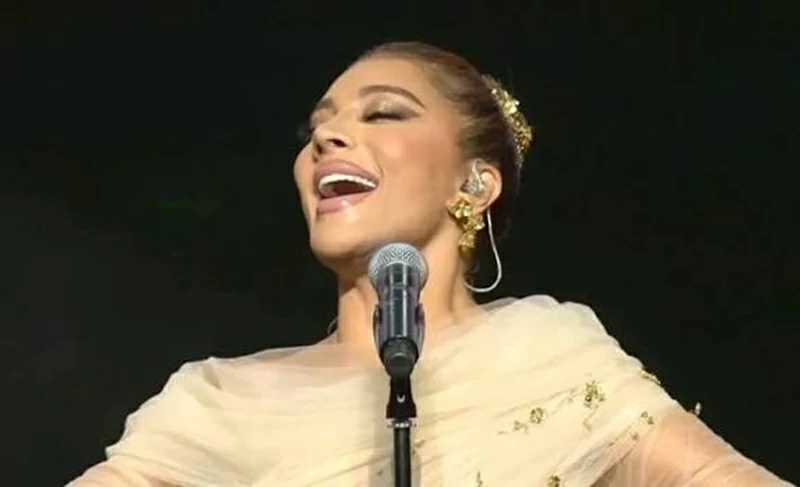
قالت الفنانة السورية أصالة نصري إنها مدينة لمصر وشعبها، مؤكدة أن السنوات التي عاشتها في القاهرة شكّلت جزءًا أساسيًا من مسيرتها الفنية، وأنها شعرت خلالها بأنها في بلدها تمامًا.
وأوضحت خلال مداخلة هاتفية مع الإعلامي عمرو أديب: «أنا تربية وصناعة مصرية.. ربنا يديم مصر ويديم كل الشعب المصري»، مشيرة إلى أنها كانت تعيش في القاهرة كما لو كانت في دمشق.
وجاءت تصريحات أصالة بعد حفلها الكبير في دمشق، الذي أقيم في صالة الفيحاء الرياضية ليلة الخميس، وشهد حضور الآلاف من محبيها الذين تمايلوا على أغانيها وردّدوا كلماتها، فيما غلبت الدموع على عددٍ من الحاضرين بعد غياب دام 15 عامًا عن المسارح السورية.
وقدّمت أصالة خلال الحفل أعمالًا من ألبومها الجديد الألبوم السوري الذي يضم 14 أغنية مستوحاة من التراث المحلي لمختلف المحافظات السورية، إضافة إلى أغنية باللغة الكردية، في مشروع وصفته بأنه احتفاء بالتنوع الثقافي والاجتماعي في البلاد.
وأعربت أصالة عن سعادتها الكبيرة بالعودة إلى بلدها، مؤكدةً أن نجاح الحفل جاء بجهود فريق واسع من محبيها ومساعديها؛ وعلى رأسهم زوجها وأخوها، مشيرة إلى أن المشروع أعاد ألوانًا غنائية ولهجات من دمشق وحلب وحوران والسويداء والساحل والجزيرة والبادية، في عمل اكتسب رمزية خاصة في بلد يحاول تجاوز انقسامات سنوات النزاع.
The Syrian artist Assala Nasri stated that she owes a debt to Egypt and its people, emphasizing that the years she spent in Cairo formed an essential part of her artistic journey, and that during that time she felt completely at home.
She explained during a phone call with the media personality Amr Adib: "I am a product of Egypt... May God preserve Egypt and all the Egyptian people," noting that she lived in Cairo as if she were in Damascus.
Assala's statements came after her grand concert in Damascus, which took place at the Al-Faiha Sports Hall on Thursday night, attended by thousands of her fans who swayed to her songs and sang along with the lyrics, while tears overwhelmed many attendees after a 15-year absence from Syrian stages.
During the concert, Assala presented works from her new album, the Syrian album, which includes 14 songs inspired by the local heritage of various Syrian provinces, in addition to a song in Kurdish, in a project she described as a celebration of the cultural and social diversity in the country.
Assala expressed her great happiness at returning to her country, affirming that the success of the concert came through the efforts of a wide team of her fans and assistants; led by her husband and brother, noting that the project revived musical colors and dialects from Damascus, Aleppo, Horan, Sweida, the coast, the island, and the Badia, in a work that gained special symbolism in a country trying to overcome the divisions of years of conflict.