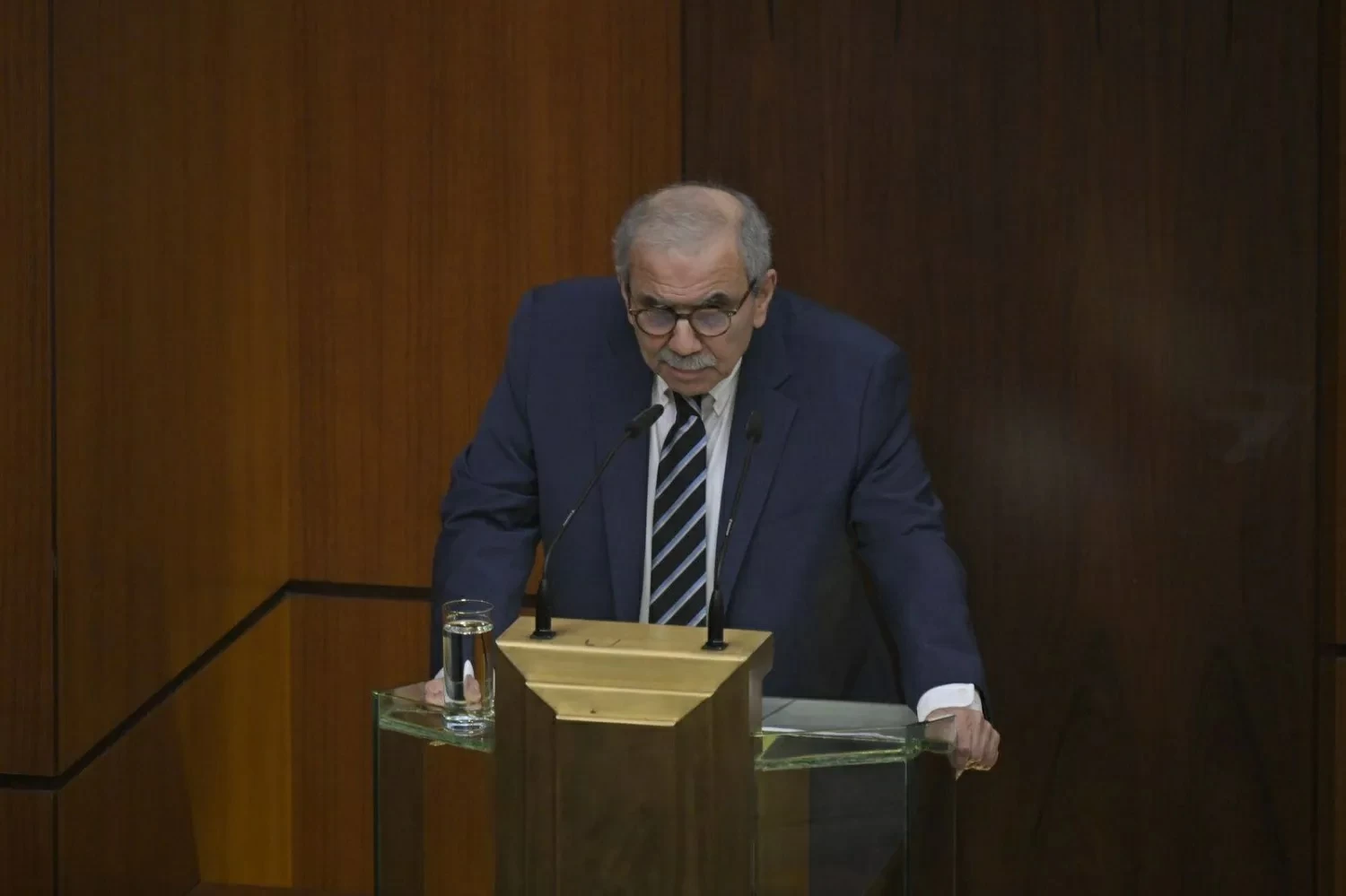
أنهى مجلس النواب اللبناني جلساته المخصصة لمناقشة الحكومة وسياساتها العامة، اليوم (الأربعاء)، بتجديد الثقة بحكومة رئيس الوزراء نواف سلام، إذ نالت 68 صوتاً مقابل 12 صوتاً بحجب الثقة وامتناع نائبين، فيما غادر نواب حزب الله القاعة قبيل طرح التصويت.
وكان سلام قد ردّ على مداخلات النواب السياسية والأمنية والسيادية، ولا سيما الحرب والمفاوضات وحصرية قرار السلم والحرب والعلاقة مع سورية وملف النازحين.
وفي الملف الإسرائيلي والمفاوضات، أكد سلام أن الإطار الثلاثي هو إطار سياسي للتفاوض وليس اتفاقاً أو معاهدة بالمعنى القانوني، مشيراً إلى أنه يتضمن انسحاباً إسرائيلياً على مراحل، ويدعو إلى بسط سيادة الدولة اللبنانية دون سواها على أراضيها. وشدد على أن هذا المسار لا يتعارض مع التزام لبنان بالقرارات الدولية أو مبادرة السلام العربية والثوابت اللبنانية.
ولفت إلى أن المفاوضات لم تنتهِ بعد، وأن لبنان لم يحصل بعد على النتائج التي يريدها، في ظل استمرار الاعتداءات الإسرائيلية وعدم الانسحاب الكامل من الأراضي اللبنانية واستمرار احتجاز أسرى وعدم تمكّن الأهالي من العودة إلى قراهم. وقال إن قوة الموقف اللبناني في التفاوض ترتبط بتعزيز الوحدة الوطنية وتمكين الجيش وبسط سلطة الدولة على كامل الأراضي واستعادة ثقة الدول العربية والمجتمع الدولي بالدولة اللبنانية ومؤسساتها.
وفي هذا السياق، أكد سلام العمل مع الشركاء الدوليين لضمان استمرار حضور دولي فاعل في الجنوب بعد انتهاء ولاية اليونيفيل بما يواكب الجيش اللبناني ويساهم في تثبيت الاستقرار.
وشدد على أن هدف حكومته هو قيام دولة واحدة وجيش واحد وبسط سلطة الدولة على كامل أراضيها، رافضاً اعتبار حشد الدعم العربي والدولي انخراطاً في محاور أو استقواءً بالخارج، ومؤكداً أن الحكومة ترفض أن يكون لبنان ساحة لصراع المحاور.
وفي ما يتعلق بالعلاقة مع سورية، أكد سلام أن الحكومة تعمل على بناء علاقة تقوم على الاحترام المتبادل لسيادة البلدين والمصالح المشتركة وعدم التدخل في الشؤون الداخلية، مشيراً إلى العمل على مراجعة الاتفاقات الثنائية السابقة وتكريس مبدأ المعاملة بالمثل.
أما في ملف النازحين السوريين، فأعلن أن الحكومة وضعت خطة لتسهيل عودتهم، وأنها نسّقت مع الحكومة السورية وحشدت الدعم الدولي لهذا المسار، مشيراً إلى أن تبادل المعلومات بين الأمن العام اللبناني والمفوضية السامية للأمم المتحدة لشؤون اللاجئين أصبح متاحاً، وأن نحو 700 ألف سوري عادوا إلى سورية، فيما تستمر العملية بالتوازي مع تنظيم العمالة السورية وفق حاجات سوق العمل اللبناني.
The Lebanese Parliament concluded its sessions dedicated to discussing the government and its general policies today (Wednesday) by renewing confidence in Prime Minister Nawaf Salam's government, which received 68 votes in favor, 12 votes against, and two abstentions, while Hezbollah deputies left the hall just before the vote was cast.
Salam responded to the political, security, and sovereignty interventions of the deputies, particularly regarding the war, negotiations, the exclusivity of the decision on peace and war, the relationship with Syria, and the issue of displaced persons.
Regarding the Israeli file and negotiations, Salam confirmed that the tripartite framework is a political framework for negotiation and not an agreement or treaty in the legal sense, noting that it includes a phased Israeli withdrawal and calls for the sovereignty of the Lebanese state alone over its territory. He emphasized that this path does not contradict Lebanon's commitment to international resolutions, the Arab peace initiative, or Lebanese constants.
He pointed out that negotiations have not yet concluded, and Lebanon has not yet achieved the results it desires, amid ongoing Israeli assaults, the lack of complete withdrawal from Lebanese territories, the continued detention of prisoners, and the inability of families to return to their villages. He stated that the strength of the Lebanese position in negotiations is linked to enhancing national unity, empowering the army, establishing state authority over all territories, and restoring the trust of Arab countries and the international community in the Lebanese state and its institutions.
In this context, Salam confirmed working with international partners to ensure the continued effective international presence in the south after the UNIFIL mandate ends, in a manner that supports the Lebanese army and contributes to stabilizing security.
He stressed that his government's goal is to establish one state and one army and to assert state authority over all its territories, rejecting the notion that gathering Arab and international support is an engagement in axes or reliance on external powers, and affirming that the government refuses to allow Lebanon to become a battleground for conflicts between axes.
Regarding the relationship with Syria, Salam confirmed that the government is working to build a relationship based on mutual respect for the sovereignty of both countries, shared interests, and non-interference in internal affairs, pointing out that they are reviewing previous bilateral agreements and establishing the principle of reciprocity.
As for the issue of Syrian refugees, he announced that the government has developed a plan to facilitate their return and has coordinated with the Syrian government and garnered international support for this path, noting that the exchange of information between the Lebanese General Security and the United Nations High Commissioner for Refugees has become possible, and that about 700,000 Syrians have returned to Syria, while the process continues in parallel with organizing Syrian labor according to the needs of the Lebanese labor market.