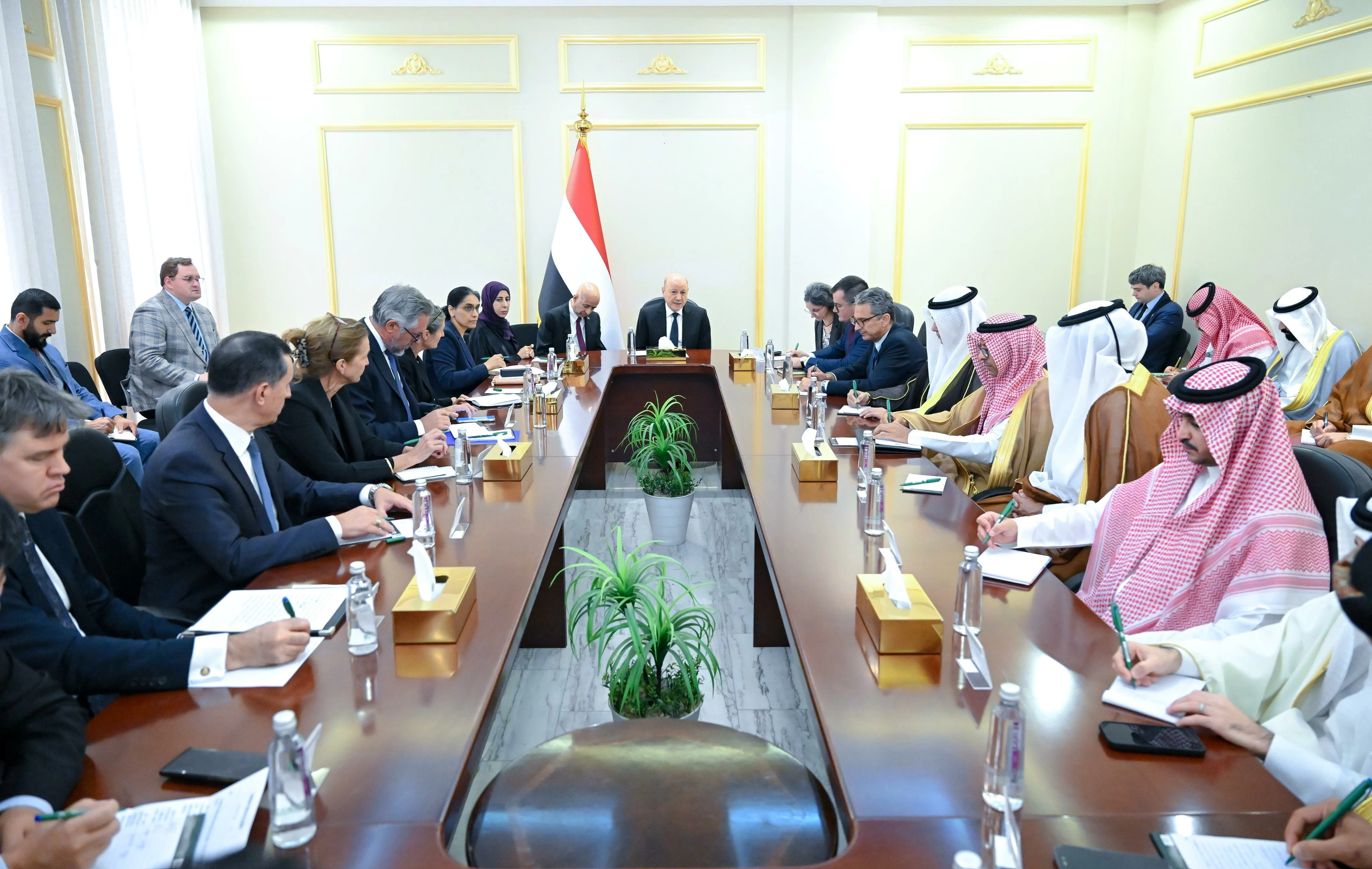
دعا رئيس مجلس القيادة الرئاسي اليمني الدكتور رشاد العليمي اليوم (الأربعاء)، المجتمع الدولي إلى إعادة النظر في مقاربته للأزمة اليمنية التي اكتفت في مراحل سابقة باحتواء التصعيد دون معالجة أسبابه، موضحاً أن التجربة أثبتت أن التهدئة التي لا تقترن بالتزامات قابلة للتحقق، ولا تمنع إعادة التسلح واستئناف الهجمات، غالباً ما تتحول إلى فرصة لإعداد جولة جديدة من الحرب.
وأوضح العليمي خلال لقائه سفراء الدول الراعية للعملية السياسية في اليمن، أن التصعيد هو سلوك متكرر للمليشيا الحوثية المارقة عندما تفهم أن السلام هو رسالة ضعف، مبيناً أنه لا يجوز أن تتحول الدعوات إلى التهدئة إلى مساواة بين من يعتدي ومن يدافع عن مواطنيه، أو أن يُطلب من الدولة الامتناع عن أداء واجبها بينما تستمر المليشيات في استخدام القوة لفرض أمر واقع.
وقال العليمي: الحكومة لم تبدأ هذه الجولة، ولم تكن تسعى إليها، وأن المليشيا الحوثية هي التي اختارت التصعيد وعليها أن تتحمل المسؤولية عن نتائجه وتداعياته الإنسانية والأمنية، مضيفاً: "لذا ننتظر من المجتمع الدولي أن يقول بوضوح من بدأ التصعيد، وأن يحمل المليشيا مسؤولية ما ترتب عليه، وأن يدعم حق الدولة في حماية مواطنيها وسيادتها وفق القانون الدولي".
وشدد العليمي بالقول: "نحن لا نطلب من المجتمع الدولي أن يحارب بدلاً عن اليمنيين، بل أن ينفذ قراراته، وأن يدعم جهود الدولة اليمنية لاستعادة مؤسساتها، وحصر السلاح وقرار الحرب والسلم بيدها، وإنهاء التهديد الذي طال اليمنيين والمنطقة والملاحة الدولية".
واعتبر رئيس مجلس القيادة الرئاسي أن تنفيذ قرارات مجلس الأمن ذات الصلة، وفي مقدمتها القرارات 2140 و2216، و2722، ليس مطلباً يمنياً منفصلاً عن الإرادة الدولية، بل هو التزام قائم ينبغي أن يجد طريقه إلى التنفيذ الفعال.
وعرض رئيس مجلس القيادة الرئاسي على السفراء التطورات على الساحة الوطنية، وفي مقدمتها تصعيد المليشيا الحوثية لهجماتها الإرهابية التي لم تقتصر على الداخل اليمني، بل امتدت إلى استهداف أراضي السعودية، في إمعان لنهجها الابتزازي المكشوف.
ولفت إلى أن هذه الجولة من التصعيد تعكس بوضوح الارتهان للأجندة الإيرانية التي بدأت بمحاولة تسيير رحلات غير مصرحة إلى صنعاء، ضمن سلم تصعيد هدفه النهائي هو الوصول إلى باب المندب، وجعل الملاحة الدولية رهينة لتحسين الشروط التفاوضية لداعميها.
وأشار العليمي إلى أن هذه الجولة من التصعيد الحوثي، أعادت آلاف المدنيين إلى دائرة النزوح بعد سنوات من التهدئة النسبية، من خلال هجمات مروعة شنتها المليشيا الحوثية على الأحياء السكنية ومخيمات النازحين في مأرب، والمناطق المأهولة والمنشآت المدنية والخدمية في تعز والحديدة ومحافظات أخرى، مؤكداً أن حماية المدنيين ستظل في صميم واجبات الدولة، وأن القوات المسلحة والتشكيلات العسكرية الحكومية ملتزمة بالقانون الدولي الإنساني وقواعد الاشتباك، وحماية الأعيان المدنية، وحسن معاملة المحتجزين، وتسهيل وصول المساعدات.
وأوضح العليمي أن المعركة ليست مع أبناء المناطق الخاضعة لسيطرة المليشيا، ولا مع أي مكون اجتماعي أو مذهبي، بل مع مشروع مسلح يقوض الدولة ويصادر حق اليمنيين في السلام والحرية والحياة الطبيعية، مشدداً بالقول: الدولة كررت نداءاتها للمواطنين في مناطق سيطرة المليشيا والمغرر بهم إلى عدم الزج بأبنائهم في هذه الحرب، وإلى تغليب المصلحة الوطنية.
وأشاد العليمي بأداء القوات المسلحة اليمنية وكافة التشكيلات العسكرية، التي أثبتت قدرتها على التصدي للهجمات الحوثية واستعادة المبادرة، وحماية المواطنين، مؤكداً أن استمرار الدعم العسكري والتقني الإيراني للمليشيا الإرهابية، وتدفق الأسلحة والخبرات والتكنولوجيا إليها، يسهم في توسيع نطاق التهديد الحوثي، ويقوض من فرص استعادة مؤسسات الدولة عبر خيار السلام.
وأضاف: "إن دعم الدولة اليمنية في حماية سواحلها وموانئها ومياهها الإقليمية، ومنع تهريب الأسلحة، ليس شأناً يمنياً فحسب، بل جزء من مسؤولية مشتركة عن أمن المنطقة والممرات البحرية"، مثمناً عالياً الدعم السخي والمتواصل من السعودية، ودورها المحوري في دعم الاستقرار الاقتصادي والمالي، وصرف الرواتب، وتحسين الخدمات، ومساندة برنامج الإصلاحات والتعافي.
وأكد العليمي التزام الحكومة بتعظيم أثر هذا الدعم، والمضي في الإصلاحات ومكافحة الفساد وتعزيز الشفافية، بما يجعل الشراكة مع المملكة نموذجاً يمكن البناء عليه لاستعادة ثقة المانحين وتوسيع الدعم الدولي للتعافي وإعادة الإعمار.
كما جدد العليمي التأكيد على أن أمن اليمن وأمن المملكة ودول الجوار مترابط، وأن استمرار استخدام الأراضي اليمنية لتهديد المصالح الإقليمية والدولية لن يخدم أي فرصة جادة للسلام.
وفي اللقاء أعرب سفراء الدول الراعية للعملية السياسية، عن إدانتهم الشديدة للتصعيد الحوثي، والهجمات التي تستهدف السعودية واليمن، بما في ذلك مصادر الطاقة والأعيان المدنية، وتهديد أمن الملاحة والتجارة الدولية.
وأكدوا أن هذه الهجمات تشكل تهديداً خطيراً لأمن اليمن والمنطقة واستقرارها، وتزيد من مخاطر اتساع النزاع واضطراب إمدادات الطاقة وسلاسل التجارة العالمية، مشددين على ضرورة وقف التصعيد، وتحميل المليشيا الحوثية مسؤولية تداعياته الإنسانية، وما يتسبب به من سقوط ضحايا مدنيين ونزوح ومعاناة إضافية للسكان.
جدد السفراء دعم بلدانهم لمجلس القيادة الرئاسي والحكومة، ووحدة اليمن وسيادته وسلامة أراضيه، مؤكدين حق الدولة اليمنية المشروع في حماية أراضيها ومواطنيها، وفقاً للقانون الدولي والقانون الدولي الإنساني.
The President of the Yemeni Presidential Leadership Council, Dr. Rashad Al-Alimi, today (Wednesday), called on the international community to reconsider its approach to the Yemeni crisis, which in previous stages has only contained escalation without addressing its causes. He explained that experience has shown that a ceasefire not accompanied by verifiable commitments, which does not prevent rearmament and the resumption of attacks, often turns into an opportunity to prepare for a new round of war.
Al-Alimi clarified during his meeting with ambassadors of the countries sponsoring the political process in Yemen that escalation is a recurring behavior of the rogue Houthi militia when it perceives that peace is a message of weakness. He pointed out that calls for de-escalation should not equate between the aggressor and those defending their citizens, nor should the state be asked to refrain from fulfilling its duty while militias continue to use force to impose a fait accompli.
Al-Alimi stated: "The government did not initiate this round, nor was it seeking it, and it is the Houthi militia that chose escalation and must bear the responsibility for its consequences and humanitarian and security ramifications." He added, "Therefore, we expect the international community to clearly state who initiated the escalation, to hold the militia accountable for what ensued, and to support the state's right to protect its citizens and its sovereignty in accordance with international law."
Al-Alimi emphasized: "We do not ask the international community to fight on behalf of Yemenis, but to implement its resolutions and support the Yemeni state's efforts to restore its institutions, to confine weapons and the decision of war and peace to its hands, and to end the threat that has long affected Yemenis, the region, and international navigation."
The President of the Presidential Leadership Council considered that the implementation of relevant Security Council resolutions, foremost among them resolutions 2140, 2216, and 2722, is not a separate Yemeni demand from international will, but rather an existing commitment that should find its way to effective implementation.
He briefed the ambassadors on developments in the national arena, particularly the escalation of the Houthi militia's terrorist attacks, which have not been limited to Yemen's interior but have extended to targeting Saudi territory, in a blatant continuation of its extortionist approach.
He pointed out that this round of escalation clearly reflects subservience to the Iranian agenda, which began with attempts to operate unauthorized flights to Sanaa, as part of an escalation ladder aimed ultimately at reaching Bab al-Mandab and making international navigation hostage to improve the negotiating conditions of its supporters.
Al-Alimi noted that this round of Houthi escalation has returned thousands of civilians to the cycle of displacement after years of relative calm, through horrific attacks launched by the Houthi militia on residential neighborhoods and displacement camps in Marib, as well as populated areas and civilian and service facilities in Taiz, Hodeidah, and other provinces. He affirmed that the protection of civilians will remain at the core of the state's duties, and that the armed forces and government military formations are committed to international humanitarian law and rules of engagement, protecting civilian objects, treating detainees humanely, and facilitating the delivery of aid.
Al-Alimi clarified that the battle is not with the people of the areas under militia control, nor with any social or sectarian component, but rather with an armed project that undermines the state and usurps the Yemenis' right to peace, freedom, and normal life. He stressed that the state has repeatedly called on citizens in militia-controlled areas and those misled to refrain from involving their children in this war and to prioritize national interest.
Al-Alimi praised the performance of the Yemeni armed forces and all military formations, which have proven their ability to confront Houthi attacks, regain the initiative, and protect citizens. He affirmed that the continued Iranian military and technical support for the terrorist militia, along with the influx of weapons, expertise, and technology to it, contributes to expanding the scope of the Houthi threat and undermines the chances of restoring state institutions through the option of peace.
He added: "Supporting the Yemeni state in protecting its coasts, ports, and territorial waters, and preventing arms smuggling, is not solely a Yemeni matter, but part of a shared responsibility for the security of the region and maritime corridors," highly appreciating the generous and ongoing support from Saudi Arabia, and its pivotal role in supporting economic and financial stability, paying salaries, improving services, and assisting in the reform and recovery program.
Al-Alimi confirmed the government's commitment to maximizing the impact of this support, proceeding with reforms, combating corruption, and enhancing transparency, making the partnership with the Kingdom a model that can be built upon to restore donor confidence and expand international support for recovery and reconstruction.
He also reiterated that the security of Yemen, the Kingdom, and neighboring countries is interconnected, and that the continued use of Yemeni territory to threaten regional and international interests will not serve any serious opportunity for peace.
During the meeting, the ambassadors of the countries sponsoring the political process expressed their strong condemnation of the Houthi escalation and the attacks targeting Saudi Arabia and Yemen, including energy sources and civilian objects, and threatening the security of navigation and international trade.
They affirmed that these attacks pose a serious threat to the security and stability of Yemen and the region, increasing the risks of conflict expansion and disrupting energy supplies and global trade chains, stressing the need to stop the escalation and hold the Houthi militia accountable for its humanitarian consequences, including civilian casualties, displacement, and additional suffering for the population.
The ambassadors renewed their countries' support for the Presidential Leadership Council and the government, for the unity of Yemen, its sovereignty, and the integrity of its territory, affirming the legitimate right of the Yemeni state to protect its land and citizens in accordance with international law and international humanitarian law.