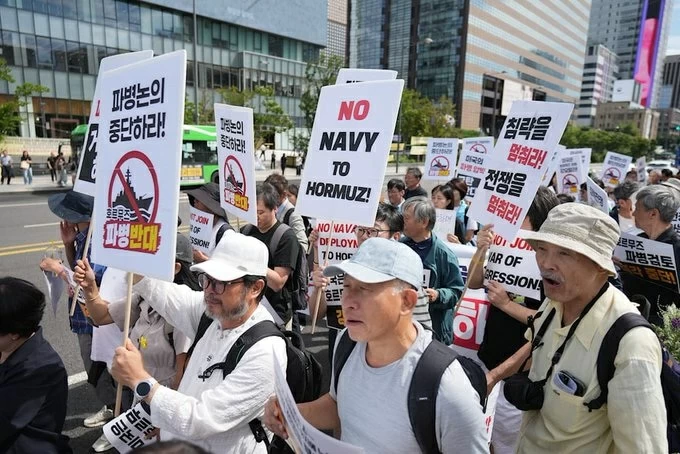
شهدت العاصمة الكورية الجنوبية (سيئول) احتجاجات أمام مجمع السفارة الأمريكية، رفض خلالها متظاهرون أي مشاركة عسكرية لبلادهم في الحرب الدائرة في الشرق الأوسط، محذرين من إرسال قوات كورية إلى مضيق هرمز.
وتأتي الاحتجاجات بعد يوم من إعلان السلطات الدفاعية في كوريا الجنوبية إرسال بعثة لتقييم الوضع الأمني في مضيق هرمز، في وقت أكدت فيه الحكومة أن أي قرار بشأن نشر قوات عسكرية لم يُتخذ بعد.
وأوضحت سيئول أن دراسة أي مشاركة محتملة ستأخذ في الاعتبار الحفاظ على الجاهزية العسكرية للقوات الكورية الجنوبية، فيما حذرت إيران من أن نشر قوات كورية في المنطقة سيُعد «دعمًا مباشرًا للعدوان»، متوعدةً بأن تكون لذلك «عواقب وخيمة».
وخلال الاحتجاج، رفع المشاركون لافتات رافضة للتدخل العسكري، ورددوا هتافات من بينها: «لا نستطيع إرسال شبابنا إلى بحر من الموت»، في إشارة إلى مخاوفهم من تداعيات أي انخراط كوري في العمليات العسكرية بالمنطقة.
وقال جونغ كيونغ-جيك، من مجموعة «تضامن الشعب من أجل الديمقراطية التشاركية»، لوكالة (فرانس برس): إن نشر قوات كورية في المنطقة سيمثل «مشاركة مباشرة في حرب غير قانونية»، معربًا عن تفهمه للموقف الإيراني الرافض لأي انتشار عسكري كوري.
واتهم الناشط الولايات المتحدة بارتكاب انتهاكات للقانون الدولي خلال هجماتها على إيران، مشيرًا إلى استهداف منشآت مدنية وبنى تحتية للطاقة، ومحذرًا من أن مشاركة كوريا الجنوبية عسكريًا قد تعرض قواتها لخسائر بشرية.
وتضع التطورات حكومة سيئول أمام معادلة أمنية وسياسية حساسة، إذ تدرس المشاركة في مهمة مرتبطة بأحد أهم الممرات البحرية في العالم، بينما تواجه في الداخل اعتراضات على الانخراط في حرب بعيدة عن شبه الجزيرة الكورية.
ويكتسب مضيق هرمز أهمية استراتيجية بالغة لكونه ممرًا رئيسيًا لحركة صادرات النفط والغاز من منطقة الخليج إلى الأسواق العالمية، ما يجعل أي اضطراب أمني فيه ذا انعكاسات مباشرة على إمدادات الطاقة وحركة التجارة الدولية.
ويأتي بحث كوريا الجنوبية للمشاركة في المنطقة في وقت تعتمد فيه البلاد بدرجة كبيرة على استقرار طرق التجارة والطاقة الخارجية، فيما تترقب الأوساط السياسية الكورية طبيعة المهمة التي ستحددها السلطات وحدود أي وجود عسكري محتمل، في ظل استمرار التوترات الإقليمية.
The South Korean capital (Seoul) witnessed protests in front of the U.S. embassy, where demonstrators rejected any military involvement of their country in the ongoing war in the Middle East, warning against sending Korean troops to the Strait of Hormuz.
The protests came a day after South Korean defense authorities announced the dispatch of a mission to assess the security situation in the Strait of Hormuz, while the government confirmed that no decision had yet been made regarding the deployment of military forces.
Seoul clarified that any potential participation would take into account maintaining the military readiness of South Korean forces, while Iran warned that the deployment of Korean troops in the region would be considered "direct support for aggression," threatening that it would have "severe consequences."
During the protest, participants raised banners rejecting military intervention and chanted slogans including: "We cannot send our youth to a sea of death," referring to their concerns about the repercussions of any Korean involvement in military operations in the region.
Jung Kyung-jik, from the "People's Solidarity for Participatory Democracy" group, told the (AFP) agency that the deployment of Korean forces in the region would represent "direct participation in an illegal war," expressing his understanding of the Iranian position rejecting any Korean military presence.
The activist accused the United States of committing violations of international law during its attacks on Iran, pointing to the targeting of civilian facilities and energy infrastructure, warning that South Korea's military participation could expose its forces to human losses.
The developments place the Seoul government in a sensitive security and political equation, as it considers participation in a mission related to one of the world's most important maritime corridors, while facing domestic objections to engaging in a war far from the Korean Peninsula.
The Strait of Hormuz holds significant strategic importance as it is a key passage for the export of oil and gas from the Gulf region to global markets, making any security disruption there have direct implications for energy supplies and international trade.
South Korea's consideration of participation in the region comes at a time when the country heavily relies on the stability of external trade and energy routes, while Korean political circles await the nature of the mission that the authorities will define and the limits of any potential military presence, amid ongoing regional tensions.